












Study of reactor-NO2-gas diffusion in a porous glass chip by near-infrared Raman spectroscopy
Literature Information
Publication Date
2002-04-30
DOI
10.1039/B200510G
Impact Factor
3.676
Authors
Yuko Ueno, Katsuhiro Ajito, Yasuko Yamada Maruo
View Original
Abstract
We have used near-infrared (NIR) Raman spectroscopy to study a coloration reaction that occurs in nano-sized pores in a porous glass chip. This coloration reaction is a modified Saltzman reaction that produces an azo dye by selective reaction with nitrogen dioxide gas (NO2). Neither the details of the reaction mechanisms in the nano-sized pores nor the interaction between the products and the pore surface have previously been investigated. We analyzed the mechanism by measuring the Raman intensity of the azo dye produced in the pores. We found that, in the early stages of NO2 exposure, the NO2 gas reacts at the surface of the porous glass chip, while in the later stages more NO2 gas diffuses into deeper areas without reacting with the reagent. We estimated the limit of the NO2 gas diffusion distance to be about 500 μm. We also analyzed the interaction between the azo dye and the surface of the pores by comparing the Raman spectrum in the porous glass chip with that in a bulk d4-methanol solution. The azo dye is mainly adsorbed as a result of hydrogen bonding between the π-electrons of the phenyl group and the silanol of the glass surface. We also determined that the azo dye has a trans-conformation molecular structure by calculating the total steric energy. The interaction between the azo group and the silanol is weaker in the adsorbed state than in bulk, due to the steric effect of the bulky substituents around the azo group. Our proposed geometry for the azo dye adsorbed on the surface of the pores has a flatter orientation.
Related Literature
Decomposition of hydrogen sulfide in non-thermal plasma aided by supported CdS and ZnS semiconductors
Lu Zhao, Yao Wang, Liang Jin, Minglei Qin, Xiang Li, Anjie Wang, Yongkang Hu
2013-04-09
Communication
DOI: 10.1039/C3GC00092C
Palladium-, ligand-, and solvent-free synthesis of ynones by the coupling of acyl chlorides and terminal alkynes in the presence of a reusable copper nanoparticle catalyst
Weijiang Sun, Yan Wang, Xuan Wu, Xiaoquan Yao
2013-07-17
Communication
DOI: 10.1039/C3GC40980E
Olefin metathesis in aqueous media
Jasmine Tomasek, Jürgen Schatz
2013-07-15
Critical Review
DOI: 10.1039/C3GC41042K
Non-catalytic synthesis of Chromogen I and III from N-acetyl-d-glucosamine in high-temperature water
Mitsumasa Osada, Kazushi Kikuta, Kohei Yoshida, Kazuhide Totani, Makoto Ogata, Taichi Usui
2013-08-14
Paper
DOI: 10.1039/C3GC41161C
Cycloaddition of CO2 to epoxides catalyzed by imidazolium-based polymeric ionic liquids
Hongbing Song, Emilia Păunescu, Félix D. Bobbink, Huizhen Liu, Zhaofu Fei, Gabor Laurenczy, Mojtaba Bagherzadeh, Paul J. Dyson
2013-04-12
Paper
DOI: 10.1039/C3GC37085B
A palladium complex with functionalized β-cyclodextrin: a promising catalyst featuring recognition abilities for Suzuki–Miyaura coupling reactions in water
Guofu Zhang, Yuxin Luan, Xingwang Han, Yong Wang, Xin Wen, Chengrong Ding, Jianrong Gao
2013-06-04
Communication
DOI: 10.1039/C3GC40645H
Merrifield resin supported peroxomolybdenum(vi) compounds: recoverable heterogeneous catalysts for the efficient, selective and mild oxidation of organic sulfides with H2O2
Jeena Jyoti Boruah, Siva Prasad Das, Seshadri Reddy Ankireddy, Sandhya Rani Gogoi, Nashreen S. Islam
2013-08-30
Paper
DOI: 10.1039/C3GC40304A
Nanocatalysis in continuous flow: supported iron oxide nanoparticles for the heterogeneous aerobic oxidation of benzyl alcohol
David Obermayer, Alina M. Balu, Antonio A. Romero, Walter Goessler, Rafael Luque, C. Oliver Kappe
2013-03-19
Paper
DOI: 10.1039/C3GC40307F
You might also like
Compound Q&A
What precautions should be taken when handling 4-Methyl-6-(trifluoromethyl)quinoline (CAS: 40716-16-3)?
When handling 4-Methyl-6-(trifluoromethyl)quinoline (CAS: 40716-16-3), safety go...
40716-16-34-Methyl-6-(trifluor...
Compound Q&A
What is 4-(3,5-Difluorophenyl)aniline (CAS: 405058-00-6)?
4-(3,5-Difluorophenyl)aniline is an aromatic organic compound with the CAS numbe...
405058-00-64-(3,5-Difluoropheny...
Compound Q&A
How is 5-{[4-(Trifluoromethyl)phenyl]sulfanyl}-1,2,3-thiadiazole-4-carboxylic acid (CAS: 338982-07-3) typically synthesized?
5-{[4-(Trifluoromethyl)phenyl]sulfanyl}-1,2,3-thiadiazole-4-carboxylic acid can ...
338982-07-35-{[4-(Trifluorometh...
Compound Q&A
What is the market or research trend for 4-Benzylaniline hydrochloride (CAS: 6317-57-3)?
The market for 4-Benzylaniline hydrochloride (CAS: 6317-57-3) is steadily growin...
6317-57-34-Benzylaniline hydr...
Compound Q&A
Is [3-(Diethylsulfamoyl)phenyl]boronic acid (CAS: 871329-58-7) safe?
[3-(Diethylsulfamoyl)phenyl]boronic acid is generally considered safe when handl...
871329-58-7[3-(Diethylsulfamoyl...
Compound Q&A
What are the main uses of 3-Bromo-2,5-dimethoxyaniline (CAS: 115929-62-9)?
3-Bromo-2,5-dimethoxyaniline is mainly used in the pharmaceutical and chemical i...
115929-62-93-Bromo-2,5-dimethox...
Compound Q&A
What regulatory guidelines apply to N-Methyl-1-(5-methyl-1H-indol-3-yl)methanamine (CAS: 915922-67-7)?
N-Methyl-1-(5-methyl-1H-indol-3-yl)methanamine (CAS: 915922-67-7) is subject to ...
915922-67-7N-Methyl-1-(5-methyl...
Compound Q&A
What industries use Carbamic acid, N-[(5S)-5,6-diamino-6-oxohexyl]-, 1,1-dimethylethyl ester (CAS: 24828-96-4)?
This compound is primarily used in the pharmaceutical industry for the synthesis...
24828-96-4Carbamic acid, N-[(5...
Compound Q&A
How should 2-Methyl-2-propanyl [(1S,3R)-3-aminocyclohexyl]carbamate (CAS: 1298101-47-9) be stored?
2-Methyl-2-propanyl [(1S,3R)-3-aminocyclohexyl]carbamate (CAS: 1298101-47-9) sho...
1298101-47-92-Methyl-2-propanyl ...
Compound Q&A
What industries use Ethyl 2-bromo-4,4,4-trifluorobutanoate (CAS: 367-33-9)?
Ethyl 2-bromo-4,4,4-trifluorobutanoate (CAS: 367-33-9) is utilized in the pharma...
367-33-9Ethyl 2-bromo-4,4,4-...
Source Journal
Physical Chemistry Chemical Physics

CiteScore:
5.5
Self-citation Rate:
10.3%
Articles per Year:
3036
Physical Chemistry Chemical Physics (PCCP) is an international journal co-owned by 19 physical chemistry and physics societies from around the world. This journal publishes original, cutting-edge research in physical chemistry, chemical physics and biophysical chemistry. To be suitable for publication in PCCP, articles must include significant innovation and/or insight into physical chemistry; this is the most important criterion that reviewers and Editors will judge against when evaluating submissions. The journal has a broad scope and welcomes contributions spanning experiment, theory, computation and data science. Topical coverage includes spectroscopy, dynamics, kinetics, statistical mechanics, thermodynamics, electrochemistry, catalysis, surface science, quantum mechanics, quantum computing and machine learning. Interdisciplinary research areas such as polymers and soft matter, materials, nanoscience, energy, surfaces/interfaces, and biophysical chemistry are welcomed if they demonstrate significant innovation and/or insight into physical chemistry. Joined experimental/theoretical studies are particularly appreciated when complementary and based on up-to-date approaches.
Recommended Compounds
![2-[(5Z,8Z,11Z,14Z)-5,8,11,14-Icosatetraen-1-yloxy]-1,3-propanediol structure](https://static.chemtradehub.com/structs/222/222723-55-9-0348.webp "2-[(5Z,8Z,11Z,14Z)-5,8,11,14-Icosatetraen-1-yloxy]-1,3-propanediol structure")
2-[(5Z,8Z,11Z,14Z)-5,8,11,14-Icosatetraen-1-yloxy]-1,3-propanediol
CAS Number:
222723-55-9
Molecular Formula:
C23H40O3
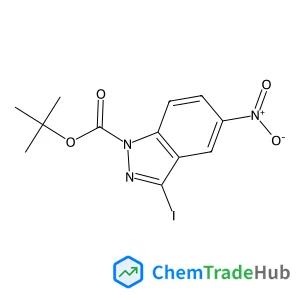
Tert-butyl 3-iodo-5-nitro-1H-indazole-1-carboxylate
CAS Number:
459133-69-8
Molecular Formula:
C12H12IN3O4
![Imidazo[1,2-c]pyrimidine structure](https://static.chemtradehub.com/structs/274/274-78-2-8b4c.webp "Imidazo[1,2-c]pyrimidine structure")
Recommended Suppliers





Disclaimer
This page provides academic journal information for reference and research purposes only. We are not affiliated with any journal publishers and do not handle publication submissions. For publication-related inquiries, please contact the respective journal publishers directly.
If you notice any inaccuracies in the information displayed, please contact us at support@chemtradehub.com. We will promptly review and address your concerns.