













Synergism of cobalt and palladium in MFI zeolite of relevance to NO reduction with methane
Literature Information
Publication Date
2002-04-05
DOI
10.1039/B111200G
Impact Factor
3.676
Authors
Bin Wen, Jifei Jia, Shuyou Li, Tao Liu, Lin X. Chen, Wolfgang M. H. Sachtler
View Original
Abstract
A series of MFI supported bimetallic catalysts with high Co/Pd ratios and high metal loading was prepared by first subliming CoBr2 vapor onto H/MFI, followed by ion exchange of some Pd from an aqueous solution of Pd(NH3)4(NO3)2. They were tested for NO reduction with CH4 in the presence of 2% O2. Best performance was observed with Co/Pd = 14/1. In this catalyst Pd0 sites are assumed to activate methane. At higher Pd loading the catalytic selectivity is lower because large PdO particles are formed, which catalyze methane combustion. The reducibility of Co is significantly enhanced by small amounts of Pd. At 55 °C, the Pd and a comparable amount of Co are co-reduced. The particles consist of two phases, including a phase of almost pure Pd capable of forming Pd hydride. Metal reduction is complete at 550 °C. Many reduced particles are biphasic, with a Pd-rich kernel and Co-rich mantle. EXAFS reveals Pd–Co bonds at the interface. A substantial reorganization of the metal particles takes place at 800 °C, Pd-rich large alloy particles coexist with small particles of Co and Co-rich alloy. The alloy particles exhibit high and stable activity for NO reduction to N2 with CH4 at 300 °C, but lose this activity at high reaction temperature.
Related Literature
Palladium on iron oxide nanoparticles: the morphological effect of the support in glycerol hydrogenolysis
Junwei Ge, Ziyan Zeng, Fenglin Liao, Xinlin Hong
2013-06-18
Communication
DOI: 10.1039/C3GC40712H
Palladium-, ligand-, and solvent-free synthesis of ynones by the coupling of acyl chlorides and terminal alkynes in the presence of a reusable copper nanoparticle catalyst
Weijiang Sun, Yan Wang, Xuan Wu, Xiaoquan Yao
2013-07-17
Communication
DOI: 10.1039/C3GC40980E
Merrifield resin supported peroxomolybdenum(vi) compounds: recoverable heterogeneous catalysts for the efficient, selective and mild oxidation of organic sulfides with H2O2
Jeena Jyoti Boruah, Siva Prasad Das, Seshadri Reddy Ankireddy, Sandhya Rani Gogoi, Nashreen S. Islam
2013-08-30
Paper
DOI: 10.1039/C3GC40304A
NHC-catalyzed reactions of enals with water as a solvent
Wendy Wen Yi Leong, Xingkuan Chen, Yonggui Robin Chi
2013-04-09
Communication
DOI: 10.1039/C3GC40397A
Sulfonated surfactants obtained from furfural
Abdoulaye Gassama, Cédric Ernenwein, Ali Youssef, Mickaël Agach, Emmanuel Riguet, Siniša Marinković, Boris Estrine, Norbert Hoffmann
2013-04-10
Paper
DOI: 10.1039/C3GC00062A
Benzylic hydroxylation of aromatic compounds by P450 BM3
Katharina Neufeld, Jan Marienhagen, Ulrich Schwaneberg
2013-07-08
Paper
DOI: 10.1039/C3GC40838H
Evaluation of deep eutectic solvent–water binary mixtures for lipase-catalyzed lipophilization of phenolic acids
Erwann Durand, Jérôme Lecomte, Bruno Baréa, Eric Dubreucq, Robert Lortie, Pierre Villeneuve
2013-06-24
Paper
DOI: 10.1039/C3GC40899J
Reactions of hydrophobic organic nanoparticle mixtures in water: nanoparticle-on-nanoparticle oxidative dye bleaching
Marco Giardiello, Tom O. McDonald, Jet-Sing Lee, Aled D. Roberts, Andrew Owen, Steve P. Rannard
2013-04-12
Paper
DOI: 10.1039/C3GC40573G
A straightforward double coupling of furan moieties onto epoxidized triglycerides: synthesis of monomers based on two renewable resources
Antonio J. F. Carvalho
2013-04-18
Communication
DOI: 10.1039/C3GC40358K
You might also like
Compound Q&A
What precautions should be taken when handling 4-Methyl-6-(trifluoromethyl)quinoline (CAS: 40716-16-3)?
When handling 4-Methyl-6-(trifluoromethyl)quinoline (CAS: 40716-16-3), safety go...
40716-16-34-Methyl-6-(trifluor...
Compound Q&A
What is 4-(3,5-Difluorophenyl)aniline (CAS: 405058-00-6)?
4-(3,5-Difluorophenyl)aniline is an aromatic organic compound with the CAS numbe...
405058-00-64-(3,5-Difluoropheny...
Compound Q&A
How is 5-{[4-(Trifluoromethyl)phenyl]sulfanyl}-1,2,3-thiadiazole-4-carboxylic acid (CAS: 338982-07-3) typically synthesized?
5-{[4-(Trifluoromethyl)phenyl]sulfanyl}-1,2,3-thiadiazole-4-carboxylic acid can ...
338982-07-35-{[4-(Trifluorometh...
Compound Q&A
What is the market or research trend for 4-Benzylaniline hydrochloride (CAS: 6317-57-3)?
The market for 4-Benzylaniline hydrochloride (CAS: 6317-57-3) is steadily growin...
6317-57-34-Benzylaniline hydr...
Compound Q&A
Is [3-(Diethylsulfamoyl)phenyl]boronic acid (CAS: 871329-58-7) safe?
[3-(Diethylsulfamoyl)phenyl]boronic acid is generally considered safe when handl...
871329-58-7[3-(Diethylsulfamoyl...
Compound Q&A
What are the main uses of 3-Bromo-2,5-dimethoxyaniline (CAS: 115929-62-9)?
3-Bromo-2,5-dimethoxyaniline is mainly used in the pharmaceutical and chemical i...
115929-62-93-Bromo-2,5-dimethox...
Compound Q&A
What regulatory guidelines apply to N-Methyl-1-(5-methyl-1H-indol-3-yl)methanamine (CAS: 915922-67-7)?
N-Methyl-1-(5-methyl-1H-indol-3-yl)methanamine (CAS: 915922-67-7) is subject to ...
915922-67-7N-Methyl-1-(5-methyl...
Compound Q&A
What industries use Carbamic acid, N-[(5S)-5,6-diamino-6-oxohexyl]-, 1,1-dimethylethyl ester (CAS: 24828-96-4)?
This compound is primarily used in the pharmaceutical industry for the synthesis...
24828-96-4Carbamic acid, N-[(5...
Compound Q&A
How should 2-Methyl-2-propanyl [(1S,3R)-3-aminocyclohexyl]carbamate (CAS: 1298101-47-9) be stored?
2-Methyl-2-propanyl [(1S,3R)-3-aminocyclohexyl]carbamate (CAS: 1298101-47-9) sho...
1298101-47-92-Methyl-2-propanyl ...
Compound Q&A
What industries use Ethyl 2-bromo-4,4,4-trifluorobutanoate (CAS: 367-33-9)?
Ethyl 2-bromo-4,4,4-trifluorobutanoate (CAS: 367-33-9) is utilized in the pharma...
367-33-9Ethyl 2-bromo-4,4,4-...
Source Journal
Physical Chemistry Chemical Physics

CiteScore:
5.5
Self-citation Rate:
10.3%
Articles per Year:
3036
Physical Chemistry Chemical Physics (PCCP) is an international journal co-owned by 19 physical chemistry and physics societies from around the world. This journal publishes original, cutting-edge research in physical chemistry, chemical physics and biophysical chemistry. To be suitable for publication in PCCP, articles must include significant innovation and/or insight into physical chemistry; this is the most important criterion that reviewers and Editors will judge against when evaluating submissions. The journal has a broad scope and welcomes contributions spanning experiment, theory, computation and data science. Topical coverage includes spectroscopy, dynamics, kinetics, statistical mechanics, thermodynamics, electrochemistry, catalysis, surface science, quantum mechanics, quantum computing and machine learning. Interdisciplinary research areas such as polymers and soft matter, materials, nanoscience, energy, surfaces/interfaces, and biophysical chemistry are welcomed if they demonstrate significant innovation and/or insight into physical chemistry. Joined experimental/theoretical studies are particularly appreciated when complementary and based on up-to-date approaches.
Recommended Compounds
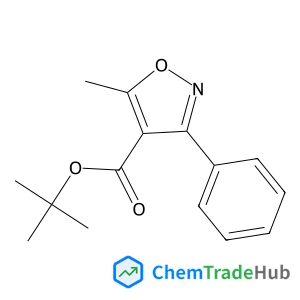
2-Methyl-2-propanyl 5-methyl-3-phenyl-1,2-oxazole-4-carboxylate
CAS Number:
211429-79-7
Molecular Formula:
C15H17NO3

Recommended Suppliers




Disclaimer
This page provides academic journal information for reference and research purposes only. We are not affiliated with any journal publishers and do not handle publication submissions. For publication-related inquiries, please contact the respective journal publishers directly.
If you notice any inaccuracies in the information displayed, please contact us at support@chemtradehub.com. We will promptly review and address your concerns.