












Diary of conferences and courses
Literature Information
Publication Date
DOI
10.1039/B110278H
Impact Factor
4.023
Authors
View Original
Abstract
Diary of conferences and courses
Related Literature
Ab initio modelling of methane hydrate thermophysical properties
Z. M. Jendi, P. Servio, A. D. Rey
2016-03-14
Paper
DOI: 10.1039/C5CP06530E
Nitrogen content and morphology dependent field emission properties of nitrogen-doped SiC nanowires and density functional calculations
Jian Zhao, Alan Meng, Meng Zhang, Zhenjiang Li
2015-09-28
Paper
DOI: 10.1039/C5CP04064G
Saturn-like charge-transfer complexes Li4&B36, Li5&B36+, and Li6&B362+: exohedral metalloborospherenes with a perfect cage-like B364− core
Wen-Juan Tian, Qiang Chen, Hai-Ru Li, Miao Yan, Yue-Wen Mu, Hai-Gang Lu, Hua-Jin Zhai, Si-Dian Li
2016-03-21
Communication
DOI: 10.1039/C6CP01279E
Sulfur antisite-induced intrinsic high-temperature ferromagnetism in Ag2S:Y nanocrystals
Pan Wang, Tianye Yang, Rui Zhao, Mingzhe Zhang
2016-03-10
Paper
DOI: 10.1039/C5CP07690K
Improvement of the electron collection efficiency in porous hematite using a thin iron oxide underlayer: towards efficient all-iron based photoelectrodes
Nicola Dalle Carbonare, Stefano Carli, Roberto Argazzi, Michele Orlandi, Nicola Bazzanella, Antonio Miotello, Stefano Caramori, Carlo A. Bignozzi
2015-10-19
Paper
DOI: 10.1039/C5CP04152J
Glass polymorphism in glycerol–water mixtures: I. A computer simulation study
David A. Jahn, Jessina Wong, Johannes Bachler, Thomas Loerting
2016-03-17
Paper
DOI: 10.1039/C6CP00075D
Kinetic isotope effects for fast deuterium and proton exchange rates
Daniele Mammoli
2016-03-09
Paper
DOI: 10.1039/C5CP07459B
Efficient intersystem crossing using singly halogenated carbomethoxyphenyl porphyrins measured using delayed fluorescence, chemical quenching, and singlet oxygen emission
Dawn M. Marin, Sonia Payerpaj, Graham S. Collier, Angy L. Ortiz, Gaurav Singh, Marcus Jones, Michael G. Walter
2015-10-06
Paper
DOI: 10.1039/C5CP04359J
Improved charge carrier separation in barium tantalate composites investigated by laser flash photolysis
Jenny Schneider, Michael Wark, Roland Marschall
2015-12-15
Paper
DOI: 10.1039/C5CP07115A
Long-term stability of phase-separated half-Heusler compounds
B. Balke, S. Ouardi, S. Selle, T. Höche, C. Felser, W. Hermes, M. Schwind
2015-10-15
Paper
DOI: 10.1039/C4CP04875J
You might also like
Compound Q&A
What are the main uses of (3.beta.)-3-Hydroxy-N,N-dimethyl-chol-5-en-24-amide (CAS: 79066-03-8)?
(3.beta.)-3-Hydroxy-N,N-dimethyl-chol-5-en-24-amide (CAS: 79066-03-8) is primari...
79066-03-8(3.beta.)-3-Hydroxy-...
Compound Q&A
What regulatory guidelines apply to 5-(aminomethyl)-2-methoxyphenol (CAS: 89702-89-6)?
5-(Aminomethyl)-2-methoxyphenol (CAS: 89702-89-6) is classified under GHS as a s...
89702-89-65-(aminomethyl)-2-me...
Compound Q&A
What is Thieno[2,3-c]pyridin-7(6H)-one (CAS: 28981-13-7)?
Thieno[2,3-c]pyridin-7(6H)-one (CAS: 28981-13-7) is a heterocyclic organic compo...
28981-13-7Thieno[2,3-c]pyridin...
Compound Q&A
Is 1-[(6-Methoxy-3-pyridinyl)methyl]-4-piperidinamine dihydrochloride (CAS: 1185311-28-7) safe?
1-[(6-Methoxy-3-pyridinyl)methyl]-4-piperidinamine dihydrochloride is generally ...
1185311-28-71-[(6-Methoxy-3-pyri...
Compound Q&A
What regulatory guidelines apply to [(2E)-3-Phenyl-2-propen-1-yl]phosphonic acid (CAS: 146404-58-2)?
[(2E)-3-Phenyl-2-propen-1-yl]phosphonic acid (CAS: 146404-58-2) is regulated und...
146404-58-2[(2E)-3-Phenyl-2-pro...
Compound Q&A
What regulatory guidelines apply to 6-Bromo-7-methoxyquinoline (CAS: 1620515-86-7)?
6-Bromo-7-methoxyquinoline (CAS: 1620515-86-7) falls under the scope of the Glob...
1620515-86-76-Bromo-7-methoxyqui...
Compound Q&A
What industries use (2R)-1-(1-Benzofuran-2-yl)-N-propyl-2-pentanamine (CAS: 260550-89-8)?
This compound is primarily used in the pharmaceutical industry for the developme...
260550-89-8(2R)-1-(1-Benzofuran...
Compound Q&A
What are the main uses of 1-Ethyl-7-[2-methyl-6-(4H-1,2,4-triazol-3-yl)-3-pyridinyl]-3,5-dihydropyrazino[2,3-b]pyrazin-2(1H)-one (CAS: 1228013-15-7)?
1-Ethyl-7-[2-methyl-6-(4H-1,2,4-triazol-3-yl)-3-pyridinyl]-3,5-dihydropyrazino[2...
1228013-15-71-Ethyl-7-[2-methyl-...
Compound Q&A
Are there alternatives to {5-(Acryloylamino)-2-[(dimethylamino)methyl]phenyl}boronic acid (CAS: 1217500-78-1) in synthesis?
Alternative reagents such as 2-[(dimethylamino)methyl]phenylboronic acid or rela...
1217500-78-1{5-(Acryloylamino)-2...
Compound Q&A
What is 3-(Piperidin-4-yloxy)pyridine (CAS: 310881-48-2)?
3-(Piperidin-4-yloxy)pyridine (CAS: 310881-48-2) is an organic compound with the...
310881-48-23-(Piperidin-4-yloxy...
Source Journal
Journal of Analytical Atomic Spectrometry

CiteScore:
6.2
Self-citation Rate:
25.8%
Articles per Year:
254
The Journal of Analytical Atomic Spectrometry (JAAS) is the central journal for publishing innovative research on fundamentals, instrumentation, and methods in the determination, speciation and isotopic analysis of (trace) elements within all fields of application. This includes, but is not restricted to, the most recent progress, developments and achievements in all forms of atomic and elemental detection, isotope ratio determination, molecular analysis, plasma-based analysis and X-ray techniques. The journal welcomes full papers, communications, technical notes, critical and tutorial review articles, editorials, and comments, in addition to the Atomic Spectrometry Updates (ASU) literature reviews that are prepared by an expert panel. Submissions are welcome in the following areas, but note this list reflects the current scope and authors are strongly encouraged to contact the Editorial team if they believe that their work offers potentially new and emerging research relevant to the journal remit: Fundamental studies in the following. New and existing sources for atomic emission, absorption, fluorescence and mass spectrometry and those that provide both atomic and molecular information Sample introduction techniques for solids, liquids, gases Improvements in sensitivity, selectivity, precision, accuracy and/or robustness Isotope ratio measurements, including techniques for improving precision and mass bias correction Single channel and multichannel simultaneous detection systems Chemometrics, statistics, calibration techniques and internal standardisation Theoretical and numerical modelling of fundamental processes related to all of the above methodologies Novel or improved methodologies in areas of application including, but not limited to the following. Biosciences, including elemental, speciation and isotopic analysis in biological systems, immunoassays based on metal-labeled antibodies, bio-imaging, and nanoparticle toxicology Geochemistry Environmental science Materials science, including engineered nanoparticles and quantum dots Metrology, including reference materials Forensic analysis Food and agricultural sciences Energy Archaeometry Molecular analysis. Molecular sources for elemental and isotopic analysis Atomic sources for molecular analysis Atomic and molecular techniques simultaneously used for complementary chemical information All contributions are judged on originality and quality of scientific content, and appropriateness of length to content of new science.
Recommended Compounds

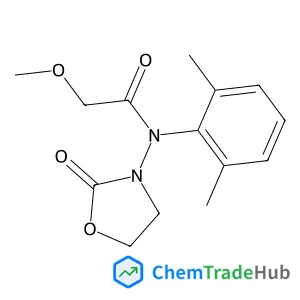
N-(2,6-Dimethylphenyl)-2-methoxy-N-(2-oxo-1,3-oxazolidin-3-yl)acetamide
CAS Number:
77732-09-3
Molecular Formula:
C14H18N2O4

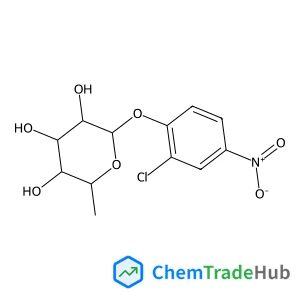
2-Chloro-4-nitrophenyl 6-deoxy-alpha-L-galactopyranoside
CAS Number:
157843-41-9
Molecular Formula:
C12H14ClNO7
Recommended Suppliers




Disclaimer
This page provides academic journal information for reference and research purposes only. We are not affiliated with any journal publishers and do not handle publication submissions. For publication-related inquiries, please contact the respective journal publishers directly.
If you notice any inaccuracies in the information displayed, please contact us at support@chemtradehub.com. We will promptly review and address your concerns.