



Correlation functions of singly and multiply scattered light analysed by the 3-D cross-correlation technique
Literature Information
Publication Date
2002-04-18
DOI
10.1039/B109479C
Impact Factor
3.676
Authors
View Original
Abstract
The 3-D cross-correlation method is a light-scattering technique, which allows to separate the singly scattered light from the multiple scattering contributions. The intensities and the time-correlation functions for both, the singly and multiply scattered light, are determined by evaluating the scattering intensity, the auto-correlation function and the 3-D cross-correlation function. The 3-D cross-correlation function is determined by the single scattering only. We report experiments on solutions of Latex (126 nm, transmission 7–99%) at different scattering angles (30–150°) in a cylindrical sample and at various positions in a square sample. The field-correlation function of the multiply scattered light is determined as difference of the auto-correlation function, corrected for the detector deficiencies, and the 3-D cross-correlation function. The cross-correlation function is a single exponential with the angle dependence, characteristic for particle diffusion. The first cumulant of the multiple-scattering correlation function is given by the angle averaged exponent of the single-scattering correlation function multiplied by the average number of the scattering events along the light-path; it is found to be almost independent of the scattering angle and of the position inside the sample, even if double scattering is the major multiple scattering contribution. The spurious dependencies of the diffusion coefficient from concentration, scattering angle and location in the sample obtained from the analysis of the auto-correlation function are explained quantitatively.
Recommended Journals

Russian Journal of Bioorganic Chemistry

Saudi Pharmaceutical Journal

Current Opinion in Solid State & Materials Science

Russian Chemical Bulletin

Journal of Natural Medicines

Russian Journal of Organic Chemistry

Drug Discovery Today

Current Opinion in Colloid & Interface Science

Chemistry Education Research and Practice

Russian Journal of General Chemistry
Related Literature
A low-self-discharge high-loading polysulfide cathode design for lithium–sulfur cells
Cheng-Che Wu, Yun-Chung Ho
2023-11-01
Paper
DOI: 10.1039/D3TA05632E
Crystal structure, infrared spectroscopy and thermodynamic properties of a manganese member of the ellenbergerite family
Larisa V. Shvanskaya, Polina V. Krikunova, Tatyana M. Vasilchikova, Elena Y. Borovikova, Olga S. Volkova, Alexander N. Vasiliev
2023-12-22
Paper
DOI: 10.1039/D3NJ05142K
Nanoscale Horizons Emerging Investigator Series: Dr Ahu Gümrah Dumanli-Parry, University of Manchester, UK
2023-10-17
Editorial
DOI: 10.1039/D3NH90048G
Enhancing paracellular and transcellular permeability using nanotechnological approaches for the treatment of brain and retinal diseases
Asmaa Khalil, Alexandre Barras, Rabah Boukherroub, David Devos, Sabine Szunerits
2023-09-13
Review Article
DOI: 10.1039/D3NH00306J
Boosting the in-plane thermal conductivity of nanofibrillated cellulose films: alignment engineering of cross-linked AlN whiskers
Mengyang Niu, Zheng Zhao, Baokai Wang, Chang Yu, Mengyi Li, Jiajun Hu, Lifeng Zhu, Xu Hao, Shiqin Wan, Ming Yue, Weiwei Xuan, Qipeng Lu, Wenbin Cao, Kexin Chen, Qi Wang
2023-10-04
Paper
DOI: 10.1039/D3TA04770A
Construction of a hierarchical BiOBr/C3N4 S-scheme heterojunction for selective photocatalytic CO2 reduction towards CO
Wei Tao, Qiaoya Tang, Jianqiang Hu, Zhipeng Wang, Baojiang Jiang, Yuting Xiao, Renjie Song, Shien Guo
2023-11-02
Paper
DOI: 10.1039/D3TA05388A
Ultrahigh-quality graphene resonators by liquid-based strain-engineering
Mario Hofmann, Chi-Te Liang, Ya-Ping Hsieh
2023-11-02
Communication
DOI: 10.1039/D3NH00420A
Defect engineering enhances plasmonic-hot electrons exploitation for CO2 reduction over polymeric catalysts
Zhehao Sun, Kaili Liu, Ary Anggara Wibowo, Julien Langley, Chao Zhang, Sandra E. Saji, Felipe Kremer, Dmitri Golberg, Hieu T. Nguyen, Nicholas Cox
2023-09-05
Communication
DOI: 10.1039/D3NH00348E
You might also like
Compound Q&A
What regulatory guidelines apply to 6-Bromo-2-methylimidazo[1,2-a]pyrimidine (CAS: 1111638-05-1)?
6-Bromo-2-methylimidazo[1,2-a]pyrimidine (CAS: 1111638-05-1) falls under various...
1111638-05-16-Bromo-2-methylimid...
Compound Q&A
Are there alternatives to 1-Pyrrolidineethanol, β-methyl-α-phenyl-, (αS,βR) (CAS: 123620-80-4) in synthesis?
While there are no direct alternatives, similar compounds like 1-Pyrrolidineetha...
123620-80-41-Pyrrolidineethanol...
Compound Q&A
Is 4-Methyl-2,6-bis(2-methyl-2-propanyl)phenyl methylcarbamate (CAS: 1918-11-2) safe?
4-Methyl-2,6-bis(2-methyl-2-propanyl)phenyl methylcarbamate (CAS: 1918-11-2) is ...
1918-11-24-Methyl-2,6-bis(2-m...
Compound Q&A
How should 2-(3-Bromo-4-fluorophenyl)-1,3-dioxolane (CAS: 77771-04-1) be stored?
2-(3-Bromo-4-fluorophenyl)-1,3-dioxolane (CAS: 77771-04-1) should be stored in a...
77771-04-12-(3-Bromo-4-fluorop...
Compound Q&A
What are the physical and chemical properties of 4,5,6,7-Tetrahydro-1H-indazole hydrochloride (CAS: 18161-11-0)?
4,5,6,7-Tetrahydro-1H-indazole hydrochloride is a white crystalline solid with a...
18161-11-04,5,6,7-Tetrahydro-1...
Compound Q&A
What is (2R)-1-Methoxy-3-phenyl-2-propanamine (CAS: 59919-07-2)?
(2R)-1-Methoxy-3-phenyl-2-propanamine is a chiral organic compound with the CAS ...
59919-07-2(2R)-1-Methoxy-3-phe...
Compound Q&A
What industries use Ethyl 1-(1-phenylethyl)-1H-imidazole-5-carboxylate (CAS: 56649-47-9)?
Ethyl 1-(1-phenylethyl)-1H-imidazole-5-carboxylate is used in various industries...
56649-47-9Ethyl 1-(1-phenyleth...
Compound Q&A
What regulatory guidelines apply to 4-[(1E,3S)-1-(4-Hydroxyphenyl)-1,4-pentadien-3-yl]phenol (CAS: 17676-24-3)?
4-[(1E,3S)-1-(4-Hydroxyphenyl)-1,4-pentadien-3-yl]phenol (CAS: 17676-24-3) falls...
17676-24-34-[(1E,3S)-1-(4-Hydr...
Compound Q&A
What industries use (S)-3-Amino-5-phenylpentanoic acid hydrochloride (CAS: 331846-97-0)?
(S)-3-Amino-5-phenylpentanoic acid hydrochloride is primarily used in the pharma...
331846-97-0(S)-3-Amino-5-phenyl...
Compound Q&A
How is 7-methoxy-1-benzothiophene-2-carboxylic acid (CAS: 88791-07-5) typically synthesized?
7-Methoxy-1-benzothiophene-2-carboxylic acid is typically synthesized by reactin...
88791-07-57-methoxy-1-benzothi...
Source Journal
Physical Chemistry Chemical Physics

CiteScore:
5.5
Self-citation Rate:
10.3%
Articles per Year:
3036
Physical Chemistry Chemical Physics (PCCP) is an international journal co-owned by 19 physical chemistry and physics societies from around the world. This journal publishes original, cutting-edge research in physical chemistry, chemical physics and biophysical chemistry. To be suitable for publication in PCCP, articles must include significant innovation and/or insight into physical chemistry; this is the most important criterion that reviewers and Editors will judge against when evaluating submissions. The journal has a broad scope and welcomes contributions spanning experiment, theory, computation and data science. Topical coverage includes spectroscopy, dynamics, kinetics, statistical mechanics, thermodynamics, electrochemistry, catalysis, surface science, quantum mechanics, quantum computing and machine learning. Interdisciplinary research areas such as polymers and soft matter, materials, nanoscience, energy, surfaces/interfaces, and biophysical chemistry are welcomed if they demonstrate significant innovation and/or insight into physical chemistry. Joined experimental/theoretical studies are particularly appreciated when complementary and based on up-to-date approaches.
Recommended Compounds

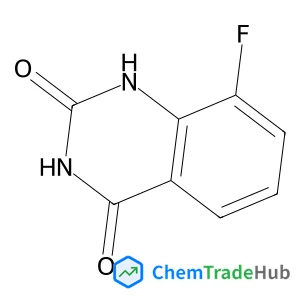
![Benzeneacetic acid, 2-[(2,6-dichlorophenyl)amino]-, compd. with 1-pyrrolidineethanol (1:1) structure](https://static.chemtradehub.com/structs/119/119623-66-4-5301.webp "Benzeneacetic acid, 2-[(2,6-dichlorophenyl)amino]-, compd. with 1-pyrrolidineethanol (1:1) structure")
Benzeneacetic acid, 2-[(2,6-dichlorophenyl)amino]-, compd. with 1-pyrrolidineethanol (1:1)
CAS Number:
119623-66-4
Molecular Formula:
C20H24Cl2N2O3
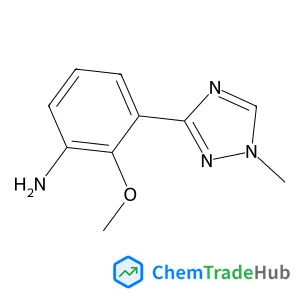
2-Methoxy-3-(1-methyl-1H-1,2,4-triazol-3-yl)aniline
CAS Number:
1609394-10-6
Molecular Formula:
C10H12N4O
Recommended Suppliers





Disclaimer
This page provides academic journal information for reference and research purposes only. We are not affiliated with any journal publishers and do not handle publication submissions. For publication-related inquiries, please contact the respective journal publishers directly.
If you notice any inaccuracies in the information displayed, please contact us at support@chemtradehub.com. We will promptly review and address your concerns.