












Acyl/aroylperoxyl radicals: a comparative study of the reactivity of peroxyl radicals resulting from the α-cleavage of ketones
Literature Information
Publication Date
2002-03-22
DOI
10.1039/B109309F
Impact Factor
3.676
Authors
Ali El-Agamey, David J. McGarvey
View Original
Abstract
Employing 2,2′-azinobis(3-ethylbenzothiazoline-6-sulfonic acid) diammonium salt (ABTS2−) as a selective radical probe, nanosecond laser flash photolysis (LFP) and competitive kinetic methods have been used to investigate the reactions of acyl/aroylperoxyl radicals derived from the addition of oxygen to the α-cleavage products of various ketones in methanol. The selectivity of ABTS2− for acyl/aroylperoxyl radicals (as opposed to alkylperoxyl radicals), under the experimental conditions used, is supported by the oxygen concentration dependence of the ABTS˙− radical ion absorption amplitudes for acyl radicals that undergo decarbonylation on sub-microsecond timescales. The oxygen concentration dependence of the ABTS˙− transient absorption reflects the competition between decarbonylation and oxygen addition and therefore this data also provides information on decarbonylation and oxygen addition rates. Further evidence in support of the selectivity of ABTS2− for acyl/aroylperoxyl radicals is the agreement between results obtained from using different ketone precursors for specific acyl/aroylperoxyl radicals. The order of reactivity of the peroxyl radicals towards ABTS2− is found to be aroylperoxyl > acylperoxyl ≫ alkylperoxyl. The use of ABTS2− as a monitor for acyl/aroylperoxyl radicals has been exploited by using competitive kinetics to obtain rate constants for the reactions of various acyl/aroylperoxyl radicals with vitamin E and trolox.
Related Literature
Sulfonated surfactants obtained from furfural
Abdoulaye Gassama, Cédric Ernenwein, Ali Youssef, Mickaël Agach, Emmanuel Riguet, Siniša Marinković, Boris Estrine, Norbert Hoffmann
2013-04-10
Paper
DOI: 10.1039/C3GC00062A
Rhodium-catalyzed hydrogenation of olefins in γ-valerolactone-based ionic liquids
Andrea Strádi, Márk Molnár, Mihály Óvári, Gábor Dibó, Frank U. Richter, László T. Mika
2013-05-13
Communication
DOI: 10.1039/C3GC40360B
Nanocatalysis in continuous flow: supported iron oxide nanoparticles for the heterogeneous aerobic oxidation of benzyl alcohol
David Obermayer, Alina M. Balu, Antonio A. Romero, Walter Goessler, Rafael Luque, C. Oliver Kappe
2013-03-19
Paper
DOI: 10.1039/C3GC40307F
Hydrogen production from solar driven glucoseoxidation over Ni(OH)2 functionalized electroreduced-TiO2nanowire arrays
Shilei Xie, Teng Zhai, Wei Li, Minghao Yu, Jiayong Gan, Xihong Lu, Yexiang Tong
2013-06-18
Paper
DOI: 10.1039/C3GC40973B
Catalytic conversion of biomass-derived levulinic acid to valerate esters as oxygenated fuels using supported ruthenium catalysts
Tao Pan, Jin Deng, Qing Xu, Yang Xu, Qing-Xiang Guo, Yao Fu
2013-08-13
Paper
DOI: 10.1039/C3GC40927A
Visible-light mediated heterogeneous C–H functionalization: oxidative multi-component reactions using a recyclable titanium dioxide (TiO2) catalyst
Carlos Vila, Magnus Rueping
2013-06-10
Communication
DOI: 10.1039/C3GC40587G
Flower-like mesoporous silica: a bifunctionalized catalyst for rhodium-catalyzed asymmetric transfer hydrogenation of aromatic ketones in aqueous medium
Fei Gao, Ronghua Jin, Dacheng Zhang, Quanxi Liang, Qunqun Ye, Guohua Liu
2013-05-13
Paper
DOI: 10.1039/C3GC40547H
Palladium-, ligand-, and solvent-free synthesis of ynones by the coupling of acyl chlorides and terminal alkynes in the presence of a reusable copper nanoparticle catalyst
Weijiang Sun, Yan Wang, Xuan Wu, Xiaoquan Yao
2013-07-17
Communication
DOI: 10.1039/C3GC40980E
Organocatalytic 1,3-dipolar cycloaddition reactions of ketones and azides with water as a solvent
Dwun Kit Jonathan Yeung, Tao Gao, Jiayao Huang, Shaofa Sun, Haibing Guo, Jian Wang
2013-07-22
Communication
DOI: 10.1039/C3GC41126E
Palladium on iron oxide nanoparticles: the morphological effect of the support in glycerol hydrogenolysis
Junwei Ge, Ziyan Zeng, Fenglin Liao, Xinlin Hong
2013-06-18
Communication
DOI: 10.1039/C3GC40712H
You might also like
Compound Q&A
What precautions should be taken when handling 4-Methyl-6-(trifluoromethyl)quinoline (CAS: 40716-16-3)?
When handling 4-Methyl-6-(trifluoromethyl)quinoline (CAS: 40716-16-3), safety go...
40716-16-34-Methyl-6-(trifluor...
Compound Q&A
What is 4-(3,5-Difluorophenyl)aniline (CAS: 405058-00-6)?
4-(3,5-Difluorophenyl)aniline is an aromatic organic compound with the CAS numbe...
405058-00-64-(3,5-Difluoropheny...
Compound Q&A
How is 5-{[4-(Trifluoromethyl)phenyl]sulfanyl}-1,2,3-thiadiazole-4-carboxylic acid (CAS: 338982-07-3) typically synthesized?
5-{[4-(Trifluoromethyl)phenyl]sulfanyl}-1,2,3-thiadiazole-4-carboxylic acid can ...
338982-07-35-{[4-(Trifluorometh...
Compound Q&A
What is the market or research trend for 4-Benzylaniline hydrochloride (CAS: 6317-57-3)?
The market for 4-Benzylaniline hydrochloride (CAS: 6317-57-3) is steadily growin...
6317-57-34-Benzylaniline hydr...
Compound Q&A
Is [3-(Diethylsulfamoyl)phenyl]boronic acid (CAS: 871329-58-7) safe?
[3-(Diethylsulfamoyl)phenyl]boronic acid is generally considered safe when handl...
871329-58-7[3-(Diethylsulfamoyl...
Compound Q&A
What are the main uses of 3-Bromo-2,5-dimethoxyaniline (CAS: 115929-62-9)?
3-Bromo-2,5-dimethoxyaniline is mainly used in the pharmaceutical and chemical i...
115929-62-93-Bromo-2,5-dimethox...
Compound Q&A
What regulatory guidelines apply to N-Methyl-1-(5-methyl-1H-indol-3-yl)methanamine (CAS: 915922-67-7)?
N-Methyl-1-(5-methyl-1H-indol-3-yl)methanamine (CAS: 915922-67-7) is subject to ...
915922-67-7N-Methyl-1-(5-methyl...
Compound Q&A
What industries use Carbamic acid, N-[(5S)-5,6-diamino-6-oxohexyl]-, 1,1-dimethylethyl ester (CAS: 24828-96-4)?
This compound is primarily used in the pharmaceutical industry for the synthesis...
24828-96-4Carbamic acid, N-[(5...
Compound Q&A
How should 2-Methyl-2-propanyl [(1S,3R)-3-aminocyclohexyl]carbamate (CAS: 1298101-47-9) be stored?
2-Methyl-2-propanyl [(1S,3R)-3-aminocyclohexyl]carbamate (CAS: 1298101-47-9) sho...
1298101-47-92-Methyl-2-propanyl ...
Compound Q&A
What industries use Ethyl 2-bromo-4,4,4-trifluorobutanoate (CAS: 367-33-9)?
Ethyl 2-bromo-4,4,4-trifluorobutanoate (CAS: 367-33-9) is utilized in the pharma...
367-33-9Ethyl 2-bromo-4,4,4-...
Source Journal
Physical Chemistry Chemical Physics

CiteScore:
5.5
Self-citation Rate:
10.3%
Articles per Year:
3036
Physical Chemistry Chemical Physics (PCCP) is an international journal co-owned by 19 physical chemistry and physics societies from around the world. This journal publishes original, cutting-edge research in physical chemistry, chemical physics and biophysical chemistry. To be suitable for publication in PCCP, articles must include significant innovation and/or insight into physical chemistry; this is the most important criterion that reviewers and Editors will judge against when evaluating submissions. The journal has a broad scope and welcomes contributions spanning experiment, theory, computation and data science. Topical coverage includes spectroscopy, dynamics, kinetics, statistical mechanics, thermodynamics, electrochemistry, catalysis, surface science, quantum mechanics, quantum computing and machine learning. Interdisciplinary research areas such as polymers and soft matter, materials, nanoscience, energy, surfaces/interfaces, and biophysical chemistry are welcomed if they demonstrate significant innovation and/or insight into physical chemistry. Joined experimental/theoretical studies are particularly appreciated when complementary and based on up-to-date approaches.
Recommended Compounds
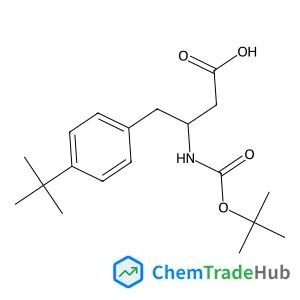
(S)-3-((tert-Butoxycarbonyl)amino)-4-(4-(tert-butyl)phenyl)butanoic acid
CAS Number:
403661-85-8
Molecular Formula:
C19H29NO4
![[3-(2,6-Dichlorophenyl)-5-isopropyl-1,2-oxazol-4-yl]methanol structure](https://static.chemtradehub.com/structs/278/278597-30-1-5c79.webp "[3-(2,6-Dichlorophenyl)-5-isopropyl-1,2-oxazol-4-yl]methanol structure")
[3-(2,6-Dichlorophenyl)-5-isopropyl-1,2-oxazol-4-yl]methanol
CAS Number:
278597-30-1
Molecular Formula:
C13H13Cl2NO2
Recommended Suppliers



Disclaimer
This page provides academic journal information for reference and research purposes only. We are not affiliated with any journal publishers and do not handle publication submissions. For publication-related inquiries, please contact the respective journal publishers directly.
If you notice any inaccuracies in the information displayed, please contact us at support@chemtradehub.com. We will promptly review and address your concerns.