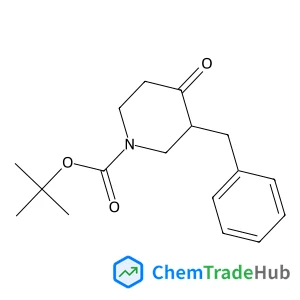
2-Methyl-2-propanyl 3-benzyl-4-oxo-1-piperidinecarboxylate
CAS Number:
193274-82-7
Molecular Formula:
C17H23NO3
Susy Branco Lopes, Leszek Lapinski, Rui Fausto
Infrared spectra of dimethyl oxalate isolated in low-temperature argon matrix and of the compound in the solid amorphous and crystalline state are reported. The experimental observations are interpreted in terms of a large amplitude, low frequency vibration along the torsional coordinate OC–CO. Assumption of the large amplitude vibration allows consistent explanation of the spectra observed in matrixes and in the gas phase, and the differences between these and the spectrum of the compound in the crystalline state, in which the planar trans structure is fixed. IR spectra of crystalline dimethyl oxalate clearly show that in the relaxed crystal lattice only the trans form is populated. Davydov splitting, due to the presence of two molecules per unit cell, was observed for several bands in the IR spectrum of the crystalline compound.

Journal of Natural Medicines

Russian Journal of Bioorganic Chemistry

Nature Medicine

Chemistry Education Research and Practice

Current Opinion in Solid State & Materials Science

Russian Chemical Bulletin

Drug Discovery Today

Russian Journal of Organic Chemistry

Journal of Peptide Science

Journal of Saudi Chemical Society
Po Jen Wang, Sheng Lung Chang, Shao-Ju Shih
DOI: 10.1039/C2PY20156A
Ribhu Gautam, R. Vinu
DOI: 10.1039/C8RE00227D
Abdulkadir Tanimu, Sagir Adamu, Khalid Alhooshani
DOI: 10.1039/C8RE00330K
Xiao-Ding Xu, Jing-Xiao Chen, Han Cheng, Xian-Zheng Zhang, Ren-Xi Zhuo
DOI: 10.1039/C2PY20299A
Tobias Müller, John Thomas Dixon, Marco Haumann, Peter Wasserscheid
DOI: 10.1039/C8RE00179K
Yannick P. Borguet, Nicolay V. Tsarevsky
DOI: 10.1039/C2PY20303K
Florian Herbst, Wolfgang H. Binder
DOI: 10.1039/C2PY20265D
6-Bromo-2-methylimidazo[1,2-a]pyrimidine (CAS: 1111638-05-1) falls under various...
While there are no direct alternatives, similar compounds like 1-Pyrrolidineetha...
4-Methyl-2,6-bis(2-methyl-2-propanyl)phenyl methylcarbamate (CAS: 1918-11-2) is ...
2-(3-Bromo-4-fluorophenyl)-1,3-dioxolane (CAS: 77771-04-1) should be stored in a...
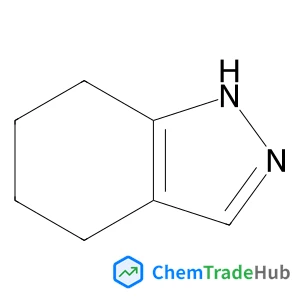
4,5,6,7-Tetrahydro-1H-indazole hydrochloride is a white crystalline solid with a...
(2R)-1-Methoxy-3-phenyl-2-propanamine is a chiral organic compound with the CAS ...
Ethyl 1-(1-phenylethyl)-1H-imidazole-5-carboxylate is used in various industries...
4-[(1E,3S)-1-(4-Hydroxyphenyl)-1,4-pentadien-3-yl]phenol (CAS: 17676-24-3) falls...
(S)-3-Amino-5-phenylpentanoic acid hydrochloride is primarily used in the pharma...
7-Methoxy-1-benzothiophene-2-carboxylic acid is typically synthesized by reactin...

Physical Chemistry Chemical Physics (PCCP) is an international journal co-owned by 19 physical chemistry and physics societies from around the world. This journal publishes original, cutting-edge research in physical chemistry, chemical physics and biophysical chemistry. To be suitable for publication in PCCP, articles must include significant innovation and/or insight into physical chemistry; this is the most important criterion that reviewers and Editors will judge against when evaluating submissions. The journal has a broad scope and welcomes contributions spanning experiment, theory, computation and data science. Topical coverage includes spectroscopy, dynamics, kinetics, statistical mechanics, thermodynamics, electrochemistry, catalysis, surface science, quantum mechanics, quantum computing and machine learning. Interdisciplinary research areas such as polymers and soft matter, materials, nanoscience, energy, surfaces/interfaces, and biophysical chemistry are welcomed if they demonstrate significant innovation and/or insight into physical chemistry. Joined experimental/theoretical studies are particularly appreciated when complementary and based on up-to-date approaches.
![2-Methyl-2-propanyl 4-{2-fluoro-5-[(4-oxo-3,4-dihydro-1-phthalazinyl)methyl]benzoyl}-1-piperazinecarboxylate structure](https://static.chemtradehub.com/structs/763/763114-04-1-65a9.webp "2-Methyl-2-propanyl 4-{2-fluoro-5-[(4-oxo-3,4-dihydro-1-phthalazinyl)methyl]benzoyl}-1-piperazinecarboxylate structure")