












Localization energies for graphite and fullerenes
Literature Information
Publication Date
2001-08-21
DOI
10.1039/B103886A
Impact Factor
3.676
Authors
Kenji Fujine, Toshimasa Ishida, Jun-ichi Aihara
View Original
Abstract
The localization energy (LE) for carbon atoms in a graphite sheet was estimated using Hosoya's hypothetical carbon molecules, benzenoid tori. The LE approaches 2.720 ∣β ∣ on going to higher members of the toroidal molecules. This value was used as an approximation of the LE for graphite. For all isolated-pentagon isomers of fullerenes but C60(Ih), the minimum cation LE in a molecule (min cation LE) is smaller than the graphite value. It is noteworthy that all fullerene isomers have a very small minimum anion LE (min anion LE), which is much smaller than the min cation LE. Thus, fullerenes are predicted to be much more reactive than graphite. In fact, they are very susceptible to nucleophilic attack. C60(Ih) has larger cation and anion LEs than the graph-theoretically defined polyene reference, which indicates that this molecule is not only energetically but also kinetically stabilized by cyclic conjugation.
Related Literature
MRCI investigation of different isomers of Ni2O2H2+‡
Olaf Hübner, Hans-Jörg Himmel
2010-12-08
Paper
DOI: 10.1039/C0CP01170C
Molecular spin conversion in solid deuterated methane
Piotr Stachowiak
2010-12-20
Paper
DOI: 10.1039/C0CP00943A
One-pot generation of mesoporous carbon supported nanocrystalline calcium oxides capable of efficient CO2 capture over a wide range of temperatures
Na Hao, Gongkui Xiao, Liying Liu, Paul Webley
2010-12-06
Paper
DOI: 10.1039/C0CP01807D
Translation-rotation energy levels of one H2 molecule inside the small, medium and large cages of the structure H clathrate hydrate
Álvaro Valdés, Geert-Jan Kroes
2010-12-16
Paper
DOI: 10.1039/C0CP01804J
Phosphorylated mesoporous carbon as a solid acid catalyst
Richard T. Mayes, Pasquale F. Fulvio, Zhen Ma
2010-12-16
Communication
DOI: 10.1039/C0CP01861A
The role of hydrogen bonding in water–metal interactions
Adrien Poissier, Sriram Ganeshan, M. V. Fernández-Serra
2010-12-22
Paper
DOI: 10.1039/C0CP00994F
Mapping the frontier electronic structures of triphenylamine based organic dyes at TiO2 interfaces
Maria Hahlin, Michael Odelius, Martin Magnuson, Erik M. J. Johansson, Stefan Plogmaker, Daniel P. Hagberg, Licheng Sun, Hans Siegbahn, Håkan Rensmo
2010-12-20
Paper
DOI: 10.1039/C0CP01491E
Elastic deformations in hexagonal phases studied by small-angle X-ray diffraction and simulations
Šárka Perutková, Matej Daniel, Michael Rappolt, Georg Pabst, Gregor Dolinar, Veronika Kralj-Iglič, Aleš Iglič
2010-11-09
Paper
DOI: 10.1039/C0CP01187H
Ion conducting particle networks in liquids: modeling of network percolation and stability
Anna Jarosik, Uwe Traub, Joachim Maier, Armin Bunde
2010-12-23
Communication
DOI: 10.1039/C0CP01870H
Encapsulation of chiral Fe(salan) in nanocages with different microenvironments for asymmetric sulfide oxidation
Bo Li, Shiyang Bai, Peng Wang, Hengquan Yang, Qihua Yang, Can Li
2010-12-09
Paper
DOI: 10.1039/C0CP01828G
You might also like
Compound Q&A
What are the main uses of 1H-Indazole-6-carbonitrile (CAS: 141290-59-7)?
1H-Indazole-6-carbonitrile finds applications in pharmaceuticals, where it serve...
141290-59-71H-Indazole-6-carbon...
Compound Q&A
How should waste containing Dioctyl (2E)-2-butenedioate (CAS: 2997-85-5) be handled?
Waste containing Dioctyl (2E)-2-butenedioate (CAS: 2997-85-5) should be collecte...
2997-85-5Dioctyl (2E)-2-buten...
Compound Q&A
What industries use Sodium [(1,2-benzoxazol-3-ylmethyl)sulfonyl]azanide (CAS: 68291-98-5)?
Sodium [(1,2-benzoxazol-3-ylmethyl)sulfonyl]azanide is primarily used in pharmac...
68291-98-5Sodium [(1,2-benzoxa...
Compound Q&A
Are there alternatives to Dimethyl 4-(4,4,5,5-tetramethyl-1,3,2-dioxaborolan-2-yl)-2,6-pyridinedicarboxylate (CAS: 741709-66-0) in synthesis?
Dimethyl 4-(4,4,5,5-tetramethyl-1,3,2-dioxaborolan-2-yl)-2,6-pyridinedicarboxyla...
741709-66-0Dimethyl 4-(4,4,5,5-...
Compound Q&A
How should waste containing 2-Fluoro-6-hydrazinopyridine (CAS: 80714-39-2) be handled?
Waste containing 2-Fluoro-6-hydrazinopyridine (CAS: 80714-39-2) should be manage...
80714-39-22-Fluoro-6-hydrazino...
Compound Q&A
What is 6-Formyl-2-pyridinecarboxylic acid (CAS: 499214-11-8)?
6-Formyl-2-pyridinecarboxylic acid is an organic compound with the molecular for...
499214-11-86-Formyl-2-pyridinec...
Compound Q&A
What is the market or research trend for 3-(3,4-dimethoxyphenyl)-2,5-dimethyl-N-(2-morpholin-4-ylethyl)pyrazolo[1,5-a]pyrimidin-7-amine (CAS: 900874-91-1)?
Research trends for this compound indicate a focus on its potential applications...
900874-91-13-(3,4-dimethoxyphen...
Compound Q&A
How is 9H-Tribenzo[b,d,f]azepine (CAS: 29875-73-8) typically synthesized?
9H-Tribenzo[b,d,f]azepine is typically synthesized via a multi-step process invo...
29875-73-89H-Tribenzo[b,d,f]az...
Compound Q&A
How is 1-Cyclopropyl-7-ethoxy-6-fluoro-8-methoxy-4-oxo-1,4-dihydro-3-quinolinecarboxylic acid (CAS: 1797982-51-4) typically synthesized?
1-Cyclopropyl-7-ethoxy-6-fluoro-8-methoxy-4-oxo-1,4-dihydro-3-quinolinecarboxyli...
1797982-51-41-Cyclopropyl-7-etho...
Compound Q&A
How should waste containing Methyl 3-oxo-1,2,3,4-tetrahydro-6-quinoxalinecarboxylate (CAS: 671820-52-3) be handled?
Waste containing Methyl 3-oxo-1,2,3,4-tetrahydro-6-quinoxalinecarboxylate (CAS: ...
671820-52-3Methyl 3-oxo-1,2,3,4...
Source Journal
Physical Chemistry Chemical Physics

CiteScore:
5.5
Self-citation Rate:
10.3%
Articles per Year:
3036
Physical Chemistry Chemical Physics (PCCP) is an international journal co-owned by 19 physical chemistry and physics societies from around the world. This journal publishes original, cutting-edge research in physical chemistry, chemical physics and biophysical chemistry. To be suitable for publication in PCCP, articles must include significant innovation and/or insight into physical chemistry; this is the most important criterion that reviewers and Editors will judge against when evaluating submissions. The journal has a broad scope and welcomes contributions spanning experiment, theory, computation and data science. Topical coverage includes spectroscopy, dynamics, kinetics, statistical mechanics, thermodynamics, electrochemistry, catalysis, surface science, quantum mechanics, quantum computing and machine learning. Interdisciplinary research areas such as polymers and soft matter, materials, nanoscience, energy, surfaces/interfaces, and biophysical chemistry are welcomed if they demonstrate significant innovation and/or insight into physical chemistry. Joined experimental/theoretical studies are particularly appreciated when complementary and based on up-to-date approaches.
Recommended Compounds
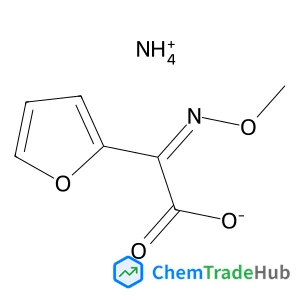
Ammonium (Z)-2-(furan-2-yl)-2-(methoxyimino)acetate
CAS Number:
97148-39-5
Molecular Formula:
C7H10N2O4
Recommended Suppliers








Disclaimer
This page provides academic journal information for reference and research purposes only. We are not affiliated with any journal publishers and do not handle publication submissions. For publication-related inquiries, please contact the respective journal publishers directly.
If you notice any inaccuracies in the information displayed, please contact us at support@chemtradehub.com. We will promptly review and address your concerns.