



The second virial coefficient of quadrupolar two center Lennard-Jones models
Literature Information
Publication Date
2001-03-07
DOI
10.1039/B009509P
Impact Factor
3.676
Authors
View Original
Abstract
The second virial coefficient of 2-center Lennard-Jones molecules which have an embedded point quadrupole has been determined ia numerical integration. A number of models with different reduced bond lengths and quadrupole moments have been considered. For each model the second virial coefficient has been determined for a range of temperatures. It is shown that the presence of the quadrupole moment significantly raises the Boyle temperature and, for a certain temperature, reduces the value of the second virial coefficient with respect to the non-polar model. Empirical fits for B2 are given which reproduce the generated data. It is also shown that the inclusion of the quadrupole considerably improves the description of B2 for real substances which have a significant quadrupole moment, as is the case for CO2 . The inclusion of the quadrupole is also required for understanding the cross virial coefficient between a spherical and a quadrupolar molecule, for example the interaction between Xe and CO2.
Recommended Journals

Bioorganic & Medicinal Chemistry

Biocatalysis and Biotransformation

Topics in Catalysis

Heteroatom Chemistry

Journal of Asian Natural Products Research

Journal of Chemical Sciences

Electroanalysis

Critical Reviews in Solid State and Materials Sciences

Herald of the Russian Academy of Sciences

Acta Metallurgica Sinica-English Letters
Related Literature
Computational design of pH-switchable control agents for nitroxide mediated polymerization
Ganna Gryn’ova, Leesa M. Smith, Michelle L. Coote
2017-08-09
Paper
DOI: 10.1039/C7CP04337F
Structural, optical and phonon properties of formate-based MOF phosphors with ethylammonium cations
M. Ptak, K. Pasińska, P. Głuchowski, A. Łukowiak, A. Ciupa
2017-08-14
Paper
DOI: 10.1039/C7CP04005A
Concerted transfer of multiple protons in acid–water clusters: [(HCl)(H2O)]2 and [(HF)(H2O)]4
I. Zakai, M. E. Varner, R. B. Gerber
2017-07-12
Paper
DOI: 10.1039/C7CP04006G
Complexation induced aggregation and deaggregation of acridine orange with sulfobutylether-β-cyclodextrin
Mhejabeen Sayed, Shruti Jha, Haridas Pal
2017-08-17
Paper
DOI: 10.1039/C7CP03135A
Rare-earth doped fluoride phosphate glasses: structural foundations of their luminescence properties
Marcos de Oliveira, Jr.
2017-08-02
Paper
DOI: 10.1039/C7CP03927A
Self-thermophoretic motion of controlled assembled micro-/nanomotors
Xiankun Lin, Tieyan Si, Zhiguang Wu, Qiang He
2017-05-22
Perspective
DOI: 10.1039/C7CP02561K
Enhancement in thermoelectric performance of SiGe nanoalloys dispersed with SiC nanoparticles
M. Jayasimhadri, Bhasker Gahtori, Anil Kumar, A. K. Srivastava, Ajay Dhar
2017-08-31
Paper
DOI: 10.1039/C7CP04240J
Unveiling anomalous CO2-to-N2 selectivity of graphene oxide
Ji Hoon Lee, Hyeon Jeong Lee, Jang Wook Choi
2017-08-08
Paper
DOI: 10.1039/C7CP04318J
Understanding CO2 capture mechanisms in aqueous hydrazine via combined NMR and first-principles studies
Byeongno Lee, Haley M. Stowe, Kyu Hyung Lee, Nam Hwi Hur, Son-Jong Hwang, Eunsu Paek, Gyeong S. Hwang
2017-08-18
Paper
DOI: 10.1039/C7CP03803H
Electronic non-adiabatic dynamics in enhanced ionization of isotopologues of hydrogen molecular ions from the exact factorization perspective
Elham Khosravi, Ali Abedi, Neepa T. Maitra
2017-03-09
Paper
DOI: 10.1039/C6CP08539C
You might also like
Compound Q&A
What are the main uses of 4-Nitrophenyl phosphate disodium salt hexahydrate (CAS: 333338-18-4)?
4-Nitrophenyl phosphate disodium salt hexahydrate is primarily used as a substra...
333338-18-44-Nitrophenyl phosph...
Compound Q&A
What are the main uses of 2-(Trifluoromethyl)-1,3-oxazole-4-carboxylic Acid (CAS: 1060816-01-4)?
2-(Trifluoromethyl)-1,3-oxazole-4-carboxylic Acid (CAS: 1060816-01-4) is widely ...
1060816-01-42-(Trifluoromethyl)-...
Compound Q&A
How should 2-Fluoro-4-biphenylcarboxylic acid (CAS: 137045-30-8) be stored?
2-Fluoro-4-biphenylcarboxylic acid should be stored in a cool, dry place at room...
137045-30-82-Fluoro-4-biphenylc...
Compound Q&A
What industries use Prednisolone-21-Carboxylic Acid (CAS: 61549-70-0)?
Prednisolone-21-Carboxylic Acid is primarily used in the pharmaceutical industry...
61549-70-0Prednisolone-21-Carb...
Compound Q&A
How should 4-(Hydrazinomethyl)-1,2,3-benzenetriol (CAS: 3614-72-0) be stored?
4-(Hydrazinomethyl)-1,2,3-benzenetriol (CAS: 3614-72-0) should be stored in a co...
3614-72-04-(Hydrazinomethyl)-...
Compound Q&A
What industries use 4-Amino-1-methyl-1H-pyrazole-5-carboxylic acid hydrochloride (CAS: 92534-70-8)?
4-Amino-1-methyl-1H-pyrazole-5-carboxylic acid hydrochloride (CAS: 92534-70-8) i...
92534-70-84-Amino-1-methyl-1H-...
Compound Q&A
What regulatory guidelines apply to dehydropachymic acid (CAS: 77012-31-8)?
Dehydropachymic acid (CAS: 77012-31-8) is regulated by various agencies. It fall...
77012-31-8Dehydropachymic acid
Compound Q&A
What is the market or research trend for 6-[(2,2-Dimethylpropanoyl)amino]nicotinic acid (CAS: 898561-66-5)?
The market and research trends for 6-[(2,2-Dimethylpropanoyl)amino]nicotinic aci...
898561-66-56-[(2,2-Dimethylprop...
Compound Q&A
How should 1,10-Phenanthroline-2,9-dicarbaldehyde (CAS: 57709-62-3) be stored?
1,10-Phenanthroline-2,9-dicarbaldehyde should be stored in a cool, dry place awa...
57709-62-31,10-Phenanthroline-...
Compound Q&A
How is 5-Carbamoyl-11-oxo-10,11-dihydro-5H-dibenzo[b,f]azepin-10-yl acetate (CAS: 113952-21-9) typically synthesized?
5-Carbamoyl-11-oxo-10,11-dihydro-5H-dibenzo[b,f]azepin-10-yl acetate can be synt...
113952-21-95-Carbamoyl-11-oxo-1...
Source Journal
Physical Chemistry Chemical Physics

CiteScore:
5.5
Self-citation Rate:
10.3%
Articles per Year:
3036
Physical Chemistry Chemical Physics (PCCP) is an international journal co-owned by 19 physical chemistry and physics societies from around the world. This journal publishes original, cutting-edge research in physical chemistry, chemical physics and biophysical chemistry. To be suitable for publication in PCCP, articles must include significant innovation and/or insight into physical chemistry; this is the most important criterion that reviewers and Editors will judge against when evaluating submissions. The journal has a broad scope and welcomes contributions spanning experiment, theory, computation and data science. Topical coverage includes spectroscopy, dynamics, kinetics, statistical mechanics, thermodynamics, electrochemistry, catalysis, surface science, quantum mechanics, quantum computing and machine learning. Interdisciplinary research areas such as polymers and soft matter, materials, nanoscience, energy, surfaces/interfaces, and biophysical chemistry are welcomed if they demonstrate significant innovation and/or insight into physical chemistry. Joined experimental/theoretical studies are particularly appreciated when complementary and based on up-to-date approaches.
Recommended Compounds
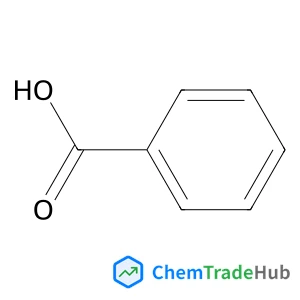

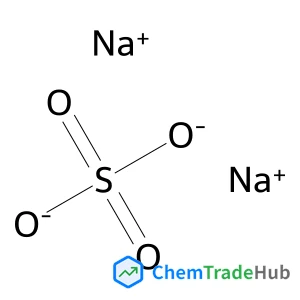
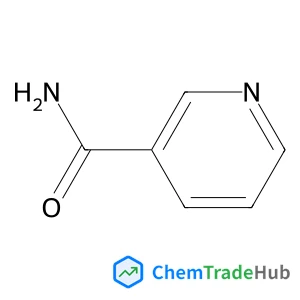
Recommended Suppliers





Disclaimer
This page provides academic journal information for reference and research purposes only. We are not affiliated with any journal publishers and do not handle publication submissions. For publication-related inquiries, please contact the respective journal publishers directly.
If you notice any inaccuracies in the information displayed, please contact us at support@chemtradehub.com. We will promptly review and address your concerns.