













Theoretical studies of the thermal and chemically activated decomposition of CF3CY2O (Y = F, H) radicals
Literature Information
Publication Date
2001-05-29
DOI
10.1039/B009498F
Impact Factor
3.676
Authors
View Original
Abstract
The C–C bond scission of three fluorinated ethoxy radicals CF3CF2O, CF3CFHO and CF3CH2O has been investigated using current theoretical methods. Quantum chemical calculations were performed to derive structures and vibrational frequencies at the B3LYP/cc-pVTZ(+1) level. Higher level ab initio data such as critical energy barriers are provided by application of a modified G3(MP2)-theory. The results have been used as input to statistical kinetic calculations. Complete fall-off curves for the thermal decomposition of all three radicals were calculated in a weak collision treatment by use of RRKM theory and subsequent solution of the master equation. As a part of our calculations rate coefficients of kdec = 1.1 × 10⁴ s−1, 5.3 × 10⁶ s−1 and 7.4 × 10⁻⁵ s−1 for the thermal decomposition of CF3CFHO, CF3CF2O and CF3CH2O radicals by C–C fission, respectively, at atmospheric pressure and a temperature of 300 K were obtained. From a comparison with previous experimental studies on the ratio kdec/kO2 for the CF3CFHO radical we recommend a rate coefficient of kO2 = 4.2 × 10⁻¹⁶ cm3 molecule−1 s−1 for the reaction of CF3CFHO with O2 at 300 K. In addition, a simple approach is developed to calculate the time-dependent decomposition rate coefficient of vibrationally excited CF3CFHO radicals as they might originate through chemical activation from the exothermic reaction of CF3CFHOO with NO. It is concluded, that the inclusion of vibrational chemical excitation of CF3CFHO radicals results in prompt decomposition yields likely to be larger than 35%.
Related Literature
Assessment of density functional methods with correct asymptotic behavior
Chen-Wei Tsai, Yu-Chuan Su, Guan-De Li
2013-03-28
Paper
DOI: 10.1039/C3CP50441G
Mapping spatially inhomogeneous electrochemical reactions in battery electrodes using high energy X-rays
Olaf J. Borkiewicz, Karena W. Chapman, Peter J. Chupas
2013-04-16
Communication
DOI: 10.1039/C3CP50590A
Model of the photoexcitation processes of a two-level molecule coherently coupled to an optical antenna
Masatoshi Nakatani, Atsushi Nobuhiro, Nobuhiko Yokoshi, Hajime Ishihara
2013-03-18
Paper
DOI: 10.1039/C3CP43834A
Speciation of adsorbed CO2 on metal oxides by a new 2-dimensional approach: 2D infrared inversion spectroscopy (2D IRIS)
Sergey Sirotin, Philippe Bazin, Françoise Maugé, Arnaud Travert
2013-04-17
Paper
DOI: 10.1039/C3CP51146D
Many-body effects in silicene, silicane, germanene and germanane
Ying Dai, Baibiao Huang, Timo Jacob
2013-04-11
Paper
DOI: 10.1039/C3CP51078F
Physical and chemical transformations of highly compressed carbon dioxide at bond energies
Choong-Shik Yoo
2013-03-21
Perspective
DOI: 10.1039/C3CP50761K
An all-cotton-derived, arbitrarily foldable, high-rate, electrochemical supercapacitor
Jiangli Xue, Yang Zhao, Huhu Cheng, Chuangang Hu, Yue Hu, Yuning Meng, Huibo Shao, Zhipan Zhang, Liangti Qu
2013-04-15
Communication
DOI: 10.1039/C3CP51571K
Accurate determination of the ultrafast proton transfer rate in porphycene using nuclear spin relaxation
Piotr Bernatowicz
2013-04-09
Paper
DOI: 10.1039/C3CP50963J
Pair distribution function (PDF) analysis of mesoporous α-Fe2O3 and Cr2O3
Adrian H. Hill, Mattia Allieta
2013-04-17
Paper
DOI: 10.1039/C3CP44322A
Atomic pair distribution functions analysis of disordered low-Z materials
V. Petkov, Y. Ren, S. Kabekkodu, D. Murphy
2012-12-13
Paper
DOI: 10.1039/C2CP43378H
You might also like
Compound Q&A
How should waste containing (6-Bromo-2-naphthyl)oxy](dimethyl)(2-methyl-2-propanyl)silane be handled?
Waste containing (6-Bromo-2-naphthyl)oxy](dimethyl)(2-methyl-2-propanyl)silane (...
100751-65-3[(6-Bromo-2-naphthyl...
Compound Q&A
How is 7-Fluoro-4-isoquinolinecarboxylic acid (CAS: 1841081-40-0) typically synthesized?
7-Fluoro-4-isoquinolinecarboxylic acid can be synthesized via a multi-step proce...
1841081-40-07-Fluoro-4-isoquinol...
Compound Q&A
What are the physical and chemical properties of 2,3,5,6-Tetrabromothieno[3,2-b]thiophene (CAS: 124638-53-5)?
2,3,5,6-Tetrabromothieno[3,2-b]thiophene is a crystalline compound with a high m...
124638-53-52,3,5,6-Tetrabromoth...
Compound Q&A
Is 1-[4-(Benzylamino)-7,8-dihydro-5H-pyrano[4,3-d]pyrimidin-2-yl]-2-methyl-1H-indole-4-carboxamide (CAS: 1542705-92-9) safe?
1-[4-(Benzylamino)-7,8-dihydro-5H-pyrano[4,3-d]pyrimidin-2-yl]-2-methyl-1H-indol...
1542705-92-91-[4-(Benzylamino)-7...
Compound Q&A
What is the market or research trend for imidazo[5,1-d]-1,2,3,5-tetrazine-8-carboxylic acid, 3,4-dihydro-3-methyl-4-oxo- (CAS: 113942-30-6)?
The market for imidazo[5,1-d]-1,2,3,5-tetrazine-8-carboxylic acid, 3,4-dihydro-3...
113942-30-6Imidazo[5,1-d]-1,2,3...
Compound Q&A
What is 3-(Triisopropylsilyl)propiolaldehyde (CAS: 163271-80-5)?
3-(Triisopropylsilyl)propiolaldehyde is a synthetic organic compound with the CA...
163271-80-53-(Triisopropylsilyl...
Compound Q&A
What regulatory guidelines apply to 6-Nitro-2H-1,4-benzoxazin-3(4H)-one (CAS: 81721-87-1)?
6-Nitro-2H-1,4-benzoxazin-3(4H)-one (CAS: 81721-87-1) is subject to various regu...
81721-87-16-Nitro-2H-1,4-benzo...
Compound Q&A
How should waste containing (3-Fluorophenyl)(4-{[(2-methyl-2-propanyl)oxy]carbonyl}-1-piperazinyl)acetic acid (CAS: 885272-91-3) be handled?
Waste containing (3-Fluorophenyl)(4-{[(2-methyl-2-propanyl)oxy]carbonyl}-1-piper...
885272-91-3(3-Fluorophenyl)(4-{...
Compound Q&A
What are the physical and chemical properties of N,N'-4,4'-Biphenyldiyldiisonicotinamide (CAS: 55119-40-9)?
N,N'-4,4'-Biphenyldiyldiisonicotinamide is a white crystalline solid with a mole...
55119-40-9N,N'-4,4'-Biphenyldi...
Compound Q&A
What industries use 6-Bromo-8-fluoro-2-quinazolinol (CAS: 1036756-15-6)?
6-Bromo-8-fluoro-2-quinazolinol is primarily used in the pharmaceutical industry...
1036756-15-66-Bromo-8-fluoro-2-q...
Source Journal
Physical Chemistry Chemical Physics

CiteScore:
5.5
Self-citation Rate:
10.3%
Articles per Year:
3036
Physical Chemistry Chemical Physics (PCCP) is an international journal co-owned by 19 physical chemistry and physics societies from around the world. This journal publishes original, cutting-edge research in physical chemistry, chemical physics and biophysical chemistry. To be suitable for publication in PCCP, articles must include significant innovation and/or insight into physical chemistry; this is the most important criterion that reviewers and Editors will judge against when evaluating submissions. The journal has a broad scope and welcomes contributions spanning experiment, theory, computation and data science. Topical coverage includes spectroscopy, dynamics, kinetics, statistical mechanics, thermodynamics, electrochemistry, catalysis, surface science, quantum mechanics, quantum computing and machine learning. Interdisciplinary research areas such as polymers and soft matter, materials, nanoscience, energy, surfaces/interfaces, and biophysical chemistry are welcomed if they demonstrate significant innovation and/or insight into physical chemistry. Joined experimental/theoretical studies are particularly appreciated when complementary and based on up-to-date approaches.
Recommended Compounds
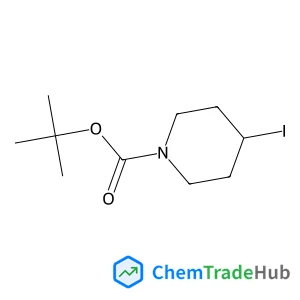
2-Methyl-2-propanyl 4-iodo-1-piperidinecarboxylate
CAS Number:
301673-14-3
Molecular Formula:
C10H18INO2
![10-(1-Azabicyclo[2.2.2]oct-3-ylmethyl)-10H-phenothiazine structure](https://static.chemtradehub.com/structs/292/29216-28-2-1d81.webp "10-(1-Azabicyclo[2.2.2]oct-3-ylmethyl)-10H-phenothiazine structure")
10-(1-Azabicyclo[2.2.2]oct-3-ylmethyl)-10H-phenothiazine
CAS Number:
29216-28-2
Molecular Formula:
C20H22N2S

Recommended Suppliers




Disclaimer
This page provides academic journal information for reference and research purposes only. We are not affiliated with any journal publishers and do not handle publication submissions. For publication-related inquiries, please contact the respective journal publishers directly.
If you notice any inaccuracies in the information displayed, please contact us at support@chemtradehub.com. We will promptly review and address your concerns.