


Experimental suppression of multiple scattering: Effect on dynamic and static scattering data
Literature Information
Publication Date
2000-03-09
DOI
10.1039/A909828C
Impact Factor
3.676
Authors
Jörg-Michael Schröder, Simone Wiegand
View Original
Abstract
Combination of dynamic and static light scattering experiments gives important information on structural and dynamic properties of polymer solutions and colloidal suspensions. However, the analysis of light scattering experiments in turbid media is highly complicated due to the presence of multiple scattering. Recently, a one-beam set-up has been proposed and it could be shown that the cross correlation function leads to the correct hydrodynamic radius. Using standard latex spheres with a diameter of 453 nm we demonstrate that the one-beam scattering method can be successfully used to determine the differential cross section from the amplitude of the cross correlation function even for highly turbid samples.
Recommended Journals

Russian Journal of Organic Chemistry

Russian Journal of General Chemistry

Drug Discovery Today

Current Opinion in Colloid & Interface Science

New Journal of Chemistry

Organic Process Research & Development

Journal of Saudi Chemical Society

Russian Journal of Coordination Chemistry

Chemistry Education Research and Practice

Journal of Natural Medicines
Related Literature
Nanostructured silicon surface modifications for as a selective matrix-free laser desorption/ionization mass spectrometry
C. W. Tsao, C. H. Lin, C. C. Chang, W. Y. Chen
2012-03-27
Paper
DOI: 10.1039/C2AN35189G
Highly selective and sensitive detection of Cu2+ with lysine enhancing bovine serum albumin modified-carbon dots fluorescent probe
Jia-Ming Liu, Li-ping Lin, Xin-Xing Wang, Shao-Qin Lin, Wen-Lian Cai, Li-Hong Zhang, Zhi-Yong Zheng
2012-04-05
Paper
DOI: 10.1039/C2AN35130G
A sensitive lanthanide label array method for rapid fingerprint analysis of plant polyphenols based on time-resolved luminescence
Iqbal Bin Imran
2019-09-03
Paper
DOI: 10.1039/C9AY01067J
A novel calibration procedure for trace analytical measurements: application to the analysis of polybrominated diphenyl ethers by GC–MS
Andrew S. Brown, Richard J. C. Brown, Rod A. Robinson
2007-07-11
Paper
DOI: 10.1039/B707924A
Fluorescence observation supporting capillary chromatography based on tube radial distribution of carrier solvents under laminar flow conditions
Naoya Jinno, Mari Murakami, Kiyoshi Mizohata, Masahiko Hashimoto, Kazuhiko Tsukagoshi
2010-12-02
Paper
DOI: 10.1039/C0AN00820F
NMR-based metabolomics and fluxomics: developments and future prospects
2020-03-02
Critical Review
DOI: 10.1039/D0AN00142B
A quadruple-labeling luminescence strategy for multiplexed immunoassay of 51 drugs in milk with an automated pretreatment system
Yaqing Zhang, Xiaoxi Chang, Xin Wang
2019-09-05
Paper
DOI: 10.1039/C9AY01632E
Cadmium binding in mixtures of phytochelatins and their fragments: A voltammetric study assisted by multivariate curve resolution and mass spectrometry
Rui Gusmão, Cristina Ariño, José Manuel Díaz-Cruz, Miquel Esteban
2009-11-13
Paper
DOI: 10.1039/B918293D
You might also like
Compound Q&A
How is Ethyl 4-chlorothieno[2,3-b]pyridine-5-carboxylate (CAS: 59713-58-5) typically synthesized?
Ethyl 4-chlorothieno[2,3-b]pyridine-5-carboxylate (CAS: 59713-58-5) can be synth...
59713-58-5Ethyl 4-chlorothieno...
Compound Q&A
What regulatory guidelines apply to 5-Methyl-1H-indole-3-carbaldehyde (CAS: 52562-50-2)?
5-Methyl-1H-indole-3-carbaldehyde (CAS: 52562-50-2) is subject to various regula...
52562-50-25-Methyl-1H-indole-3...
Compound Q&A
What are the physical and chemical properties of (1,3-Dimethyl-2,4-dioxo-1,2,3,4-tetrahydro-5-pyrimidinyl)boronic acid (CAS: 223418-73-3)?
(1,3-Dimethyl-2,4-dioxo-1,2,3,4-tetrahydro-5-pyrimidinyl)boronic acid is a white...
223418-73-3(1,3-Dimethyl-2,4-di...
Compound Q&A
How should waste containing Sulfocostunolide A (CAS: 1016983-51-9) be handled?
Waste containing Sulfocostunolide A (CAS: 1016983-51-9) should be handled with c...
1016983-51-9Sulfocostunolide A
Compound Q&A
What precautions should be taken when handling Murraxocin (CAS: 88478-44-8)?
When handling Murraxocin (CAS: 88478-44-8), ensure proper personal protective eq...
88478-44-8Murraxocin
Compound Q&A
What are the physical and chemical properties of Formvar (CAS: 63148-64-1)?
Formvar (CAS: 63148-64-1) is an alkyd resin characterized by a high molecular we...
63148-64-1Formvar(R)
Compound Q&A
Is (S)-4-benzyl-2-((benzyloxy)methyl)morpholine (CAS: 205242-66-6) safe?
(S)-4-benzyl-2-((benzyloxy)methyl)morpholine is generally safe when handled with...
205242-66-6(S)-4-benzyl-2-((ben...
Compound Q&A
What industries use Methyl 1-(5-bromo-2-pyrimidinyl)cyclopropanecarboxylate (CAS: 1447607-69-3)?
Methyl 1-(5-bromo-2-pyrimidinyl)cyclopropanecarboxylate (CAS: 1447607-69-3) is p...
1447607-69-3Methyl 1-(5-bromo-2-...
Compound Q&A
Is 2-Methyl-1-phenyl-1-propanamine hydrochloride (CAS: 24290-47-9) safe?
2-Methyl-1-phenyl-1-propanamine hydrochloride (CAS: 24290-47-9) is generally con...
24290-47-92-Methyl-1-phenyl-1-...
Compound Q&A
How is 3-(4-Bromophenyl)-2-methylpropanoic acid (CAS: 66735-01-1) typically synthesized?
3-(4-Bromophenyl)-2-methylpropanoic acid is synthesized through a multi-step pro...
66735-01-13-(4-Bromophenyl)-2-...
Source Journal
Physical Chemistry Chemical Physics

CiteScore:
5.5
Self-citation Rate:
10.3%
Articles per Year:
3036
Physical Chemistry Chemical Physics (PCCP) is an international journal co-owned by 19 physical chemistry and physics societies from around the world. This journal publishes original, cutting-edge research in physical chemistry, chemical physics and biophysical chemistry. To be suitable for publication in PCCP, articles must include significant innovation and/or insight into physical chemistry; this is the most important criterion that reviewers and Editors will judge against when evaluating submissions. The journal has a broad scope and welcomes contributions spanning experiment, theory, computation and data science. Topical coverage includes spectroscopy, dynamics, kinetics, statistical mechanics, thermodynamics, electrochemistry, catalysis, surface science, quantum mechanics, quantum computing and machine learning. Interdisciplinary research areas such as polymers and soft matter, materials, nanoscience, energy, surfaces/interfaces, and biophysical chemistry are welcomed if they demonstrate significant innovation and/or insight into physical chemistry. Joined experimental/theoretical studies are particularly appreciated when complementary and based on up-to-date approaches.
Recommended Compounds

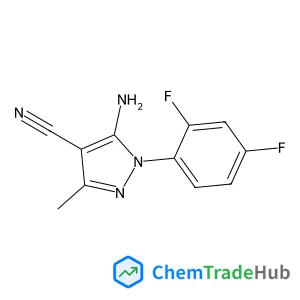
5-Amino-1-(2,4-difluorophenyl)-3-methyl-1H-pyrazole-4-carbonitrile
CAS Number:
1020057-92-4
Molecular Formula:
C11H8F2N4
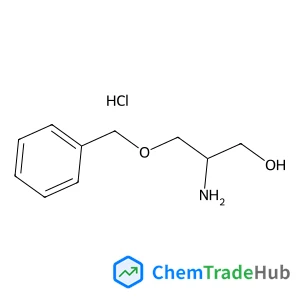
(R)-2-amino-3-(benzyloxy)propan-1-ol hydrochloride
CAS Number:
58577-95-0
Molecular Formula:
C10H16ClNO2
Recommended Suppliers





Disclaimer
This page provides academic journal information for reference and research purposes only. We are not affiliated with any journal publishers and do not handle publication submissions. For publication-related inquiries, please contact the respective journal publishers directly.
If you notice any inaccuracies in the information displayed, please contact us at support@chemtradehub.com. We will promptly review and address your concerns.