












Reactivity of self-assembled monolayers: formation of organized amino functionalities
Literature Information
Publication Date
2000-03-08
DOI
10.1039/A909589F
Impact Factor
3.676
Authors
Oliver Dannenberger, Klaus Weiss, Christof Wöll, Manfred Buck
View Original
Abstract
The reactivity of self-assembled monolayers (SAMs) of mercaptodocosanol (MDO) on gold has been screened by a variety of wet chemical reactions. Changes in thickness and composition were monitored using X-ray photoelectron spectroscopy (XPS). The order and tilt angles were studied using near-edge X-ray absorption fine structure spectroscopy (NEXAFS). Sulfonyl chlorides could not be reacted to form sulfonates, and p-toluenesulfonyl chloride (TosCl) at longer reaction times even resulted in a partial desorption of the alkanethiol film. A coupling reaction of silanes to the hydrophilic surface was very much dependent on the reagent. Whereas chlorodimethylphenylsilane (CPS) at elongated reaction times leads to an almost complete removal of the monolayer, p-aminophenyltrimethoxysilane (APTS) attaches to the OH terminated surface. From the orientation analysis a broad distribution of tilt angles of the aromatic moiety is concluded. Attachment of the APTS moieties induces disorder in the thiol layer. The average tilt angle of the hydrocarbon chains of the MDO layer changes from 30° for the unperturbed, well-ordered layer to 44° for the reacted film and indicates an increasing number of gauche conformations.
Related Literature
Understanding electronic and optical properties of anatase TiO2 photocatalysts co-doped with nitrogen and transition metals
Qingsen Meng, Tuo Wang, Enzuo Liu, Xinbin Ma, Jinlong Gong
2013-04-09
Paper
DOI: 10.1039/C3CP51476E
Enhancement of electroluminescence in zirconium poly carboxylic acid-based light emitting diodes by bathophenanthroline ligand
Hashem Shahroosvand, Fahimeh Nasouti, Ahmad Sousaraei, Ezeddin Mohajerani, Amir Khabbazi
2013-04-16
Paper
DOI: 10.1039/C3CP51141C
Site-selective effects on guest-molecular adsorption and fabrication of four-component architecture by higher order networks
Li Guan, Xue-Mei Zhang, Shuai Wang, Li-Hua Gan, Qing-Dao Zeng, Chen Wang
2013-03-28
Paper
DOI: 10.1039/C3CP50371B
Nanopore-type black silicon anti-reflection layers fabricated by a one-step silver-assisted chemical etching
Yen-Tien Lu
2013-05-08
Paper
DOI: 10.1039/C3CP51835C
Supramolecular H-bonded porous networks at surfaces: exploiting primary and secondary interactions in a bi-component melamine–xanthine system‡
Artur Ciesielski, Sébastien Haar, Gábor Paragi, Zoltán Kupihár, Zoltán Kele, Stefano Masiero, Célia Fonseca Guerra, Gian Piero Spada, Lajos Kovács, Paolo Samorì
2013-03-15
Communication
DOI: 10.1039/C3CP50891A
The effect of dimensionality of nanostructured carbon on the architecture of organic–inorganic hybrid materials
R. D. K. Misra, D. Depan, J. Shah
2013-06-07
Paper
DOI: 10.1039/C3CP51236C
Sorption enhanced CO2 methanation
Andreas Borgschulte, Noris Gallandat, Benjamin Probst, Riccardo Suter, Elsa Callini, Davide Ferri, Yadira Arroyo, Rolf Erni, Hans Geerlings, Andreas Züttel
2013-04-15
Paper
DOI: 10.1039/C3CP51408K
Ab initio calculations of the optical absorption spectra of C60-conjugated polymer hybrids
Peter D. Haynes
2013-06-24
Paper
DOI: 10.1039/C3CP52043A
Green synthesis of TiO2nanocrystals with improved photocatalytic activity by ionic-liquid assisted hydrothermal method
Lingju Guo, Meng He, Tao He
2013-04-08
Paper
DOI: 10.1039/C3CP50862E
In situ surface-enhanced Raman spectroscopic study of formic acid electrooxidation on spontaneously deposited platinum on gold
Ranjani Muralidharan, Michael McIntosh, Xiao Li
2013-04-18
Paper
DOI: 10.1039/C3CP51128F
You might also like
Compound Q&A
How is Ethyl 4-chlorothieno[2,3-b]pyridine-5-carboxylate (CAS: 59713-58-5) typically synthesized?
Ethyl 4-chlorothieno[2,3-b]pyridine-5-carboxylate (CAS: 59713-58-5) can be synth...
59713-58-5Ethyl 4-chlorothieno...
Compound Q&A
What regulatory guidelines apply to 5-Methyl-1H-indole-3-carbaldehyde (CAS: 52562-50-2)?
5-Methyl-1H-indole-3-carbaldehyde (CAS: 52562-50-2) is subject to various regula...
52562-50-25-Methyl-1H-indole-3...
Compound Q&A
What are the physical and chemical properties of (1,3-Dimethyl-2,4-dioxo-1,2,3,4-tetrahydro-5-pyrimidinyl)boronic acid (CAS: 223418-73-3)?
(1,3-Dimethyl-2,4-dioxo-1,2,3,4-tetrahydro-5-pyrimidinyl)boronic acid is a white...
223418-73-3(1,3-Dimethyl-2,4-di...
Compound Q&A
How should waste containing Sulfocostunolide A (CAS: 1016983-51-9) be handled?
Waste containing Sulfocostunolide A (CAS: 1016983-51-9) should be handled with c...
1016983-51-9Sulfocostunolide A
Compound Q&A
What precautions should be taken when handling Murraxocin (CAS: 88478-44-8)?
When handling Murraxocin (CAS: 88478-44-8), ensure proper personal protective eq...
88478-44-8Murraxocin
Compound Q&A
What are the physical and chemical properties of Formvar (CAS: 63148-64-1)?
Formvar (CAS: 63148-64-1) is an alkyd resin characterized by a high molecular we...
63148-64-1Formvar(R)
Compound Q&A
Is (S)-4-benzyl-2-((benzyloxy)methyl)morpholine (CAS: 205242-66-6) safe?
(S)-4-benzyl-2-((benzyloxy)methyl)morpholine is generally safe when handled with...
205242-66-6(S)-4-benzyl-2-((ben...
Compound Q&A
What industries use Methyl 1-(5-bromo-2-pyrimidinyl)cyclopropanecarboxylate (CAS: 1447607-69-3)?
Methyl 1-(5-bromo-2-pyrimidinyl)cyclopropanecarboxylate (CAS: 1447607-69-3) is p...
1447607-69-3Methyl 1-(5-bromo-2-...
Compound Q&A
Is 2-Methyl-1-phenyl-1-propanamine hydrochloride (CAS: 24290-47-9) safe?
2-Methyl-1-phenyl-1-propanamine hydrochloride (CAS: 24290-47-9) is generally con...
24290-47-92-Methyl-1-phenyl-1-...
Compound Q&A
How is 3-(4-Bromophenyl)-2-methylpropanoic acid (CAS: 66735-01-1) typically synthesized?
3-(4-Bromophenyl)-2-methylpropanoic acid is synthesized through a multi-step pro...
66735-01-13-(4-Bromophenyl)-2-...
Source Journal
Physical Chemistry Chemical Physics

CiteScore:
5.5
Self-citation Rate:
10.3%
Articles per Year:
3036
Physical Chemistry Chemical Physics (PCCP) is an international journal co-owned by 19 physical chemistry and physics societies from around the world. This journal publishes original, cutting-edge research in physical chemistry, chemical physics and biophysical chemistry. To be suitable for publication in PCCP, articles must include significant innovation and/or insight into physical chemistry; this is the most important criterion that reviewers and Editors will judge against when evaluating submissions. The journal has a broad scope and welcomes contributions spanning experiment, theory, computation and data science. Topical coverage includes spectroscopy, dynamics, kinetics, statistical mechanics, thermodynamics, electrochemistry, catalysis, surface science, quantum mechanics, quantum computing and machine learning. Interdisciplinary research areas such as polymers and soft matter, materials, nanoscience, energy, surfaces/interfaces, and biophysical chemistry are welcomed if they demonstrate significant innovation and/or insight into physical chemistry. Joined experimental/theoretical studies are particularly appreciated when complementary and based on up-to-date approaches.
Recommended Compounds
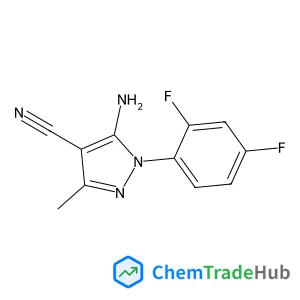
5-Amino-1-(2,4-difluorophenyl)-3-methyl-1H-pyrazole-4-carbonitrile
CAS Number:
1020057-92-4
Molecular Formula:
C11H8F2N4
Recommended Suppliers





Disclaimer
This page provides academic journal information for reference and research purposes only. We are not affiliated with any journal publishers and do not handle publication submissions. For publication-related inquiries, please contact the respective journal publishers directly.
If you notice any inaccuracies in the information displayed, please contact us at support@chemtradehub.com. We will promptly review and address your concerns.