












A physicochemical model of metal–humate interactions
Literature Information
Publication Date
2000-03-01
DOI
10.1039/A908722B
Impact Factor
3.676
Authors
Nicholas D. Bryan, Dominic M. Jones, Martin Appleton, Francis R. Livens, Malcolm N. Jones, Peter Warwick, Samantha King, Anthony Hall
View Original
Abstract
A new physicochemical model of metal complexation by humic substances is described. The model takes into account the effects of double layer relaxation, chemical bond formation, and the increase in entropy associated with metal dehydration. In the case of the double layer thermodynamics, mathematical models, which may be used to calculate the enthalpic, entropic and total free energy contributions to the complexation reaction are formulated. The contribution of chemical bond formation to the enthalpy of reaction is investigated by comparison with simple ligand reaction enthalpies. In the case of the entropic contribution of metal dehydration, partial molar entropies were found to give the best measure. Binding enthalpies and entropies for Eu3+ and UO22+ with Aldrich humic acid have been determined: ΔH(Eu)=+36 kJ mol−1; ΔS(Eu)=+276 J K−1 mol−1; ΔH(UO22+)=+62 kJ mol−1; ΔS(UO22+)=+62 J K−1 mol−1. In addition, the effect of ionic strength on the binding of Cu and Cd has been studied electrochemically. Using these data, combined with data from the literature, the model has been tested, both qualitatively and quantitatively. The suitability of the model for the prediction of unknown humic/metal complexation enthalpies, entropies and total binding strengths is discussed.
Related Literature
STM tip-assisted single molecule chemistry
Aidi Zhao, Shijing Tan, Bin Li, Bing Wang, Jinlong Yang, J. G. Hou
2013-05-20
Perspective
DOI: 10.1039/C3CP51446C
Site-selective effects on guest-molecular adsorption and fabrication of four-component architecture by higher order networks
Li Guan, Xue-Mei Zhang, Shuai Wang, Li-Hua Gan, Qing-Dao Zeng, Chen Wang
2013-03-28
Paper
DOI: 10.1039/C3CP50371B
C72: gaudiene, a hollow and aromatic all-carbon molecule
Dage Sundholm
2013-04-18
Communication
DOI: 10.1039/C3CP51042E
Preparation and characterization of titania-entrapped silica hollow particles: effective dye removal and evidence of selectivity
Kritapas Laohhasurayotin, Duangkamon Viboonratanasri
2013-04-05
Paper
DOI: 10.1039/C3CP50872B
Theoretical spectroscopy using molecular dynamics: theory and application to CH5+ and its isotopologues
Sergei D. Ivanov, Alexander Witt, Dominik Marx
2013-04-03
Perspective
DOI: 10.1039/C3CP44523B
Deuterium isotope effects in the polyatomic reaction of O(1D2) + CH4 → OH + CH3
Yoshihiro Ogi, Hiroshi Kohguchi
2013-07-01
Paper
DOI: 10.1039/C3CP51680F
Stretching single atom contacts at multiple subatomic step-length
Yi-Min Wei, Jing-Hong Liang, Zhao-Bin Chen, Xiao-Shun Zhou, Bing-Wei Mao, Oscar A. Oviedo, Ezequiel P. M. Leiva
2013-03-27
Paper
DOI: 10.1039/C3CP50473E
The effect of secondary structures on the NLO properties of single chain oligopeptides: a comparison between β-strand and α-helix polyglycines
Andrea Alparone
2013-06-07
Paper
DOI: 10.1039/C3CP51496J
Theoretical prediction of p-type transparent conductivity in Zn-doped TiO2
Xiaoping Han
2013-04-15
Paper
DOI: 10.1039/C3CP44031A
You might also like
Compound Q&A
How is Ethyl 4-chlorothieno[2,3-b]pyridine-5-carboxylate (CAS: 59713-58-5) typically synthesized?
Ethyl 4-chlorothieno[2,3-b]pyridine-5-carboxylate (CAS: 59713-58-5) can be synth...
59713-58-5Ethyl 4-chlorothieno...
Compound Q&A
What regulatory guidelines apply to 5-Methyl-1H-indole-3-carbaldehyde (CAS: 52562-50-2)?
5-Methyl-1H-indole-3-carbaldehyde (CAS: 52562-50-2) is subject to various regula...
52562-50-25-Methyl-1H-indole-3...
Compound Q&A
What are the physical and chemical properties of (1,3-Dimethyl-2,4-dioxo-1,2,3,4-tetrahydro-5-pyrimidinyl)boronic acid (CAS: 223418-73-3)?
(1,3-Dimethyl-2,4-dioxo-1,2,3,4-tetrahydro-5-pyrimidinyl)boronic acid is a white...
223418-73-3(1,3-Dimethyl-2,4-di...
Compound Q&A
How should waste containing Sulfocostunolide A (CAS: 1016983-51-9) be handled?
Waste containing Sulfocostunolide A (CAS: 1016983-51-9) should be handled with c...
1016983-51-9Sulfocostunolide A
Compound Q&A
What precautions should be taken when handling Murraxocin (CAS: 88478-44-8)?
When handling Murraxocin (CAS: 88478-44-8), ensure proper personal protective eq...
88478-44-8Murraxocin
Compound Q&A
What are the physical and chemical properties of Formvar (CAS: 63148-64-1)?
Formvar (CAS: 63148-64-1) is an alkyd resin characterized by a high molecular we...
63148-64-1Formvar(R)
Compound Q&A
Is (S)-4-benzyl-2-((benzyloxy)methyl)morpholine (CAS: 205242-66-6) safe?
(S)-4-benzyl-2-((benzyloxy)methyl)morpholine is generally safe when handled with...
205242-66-6(S)-4-benzyl-2-((ben...
Compound Q&A
What industries use Methyl 1-(5-bromo-2-pyrimidinyl)cyclopropanecarboxylate (CAS: 1447607-69-3)?
Methyl 1-(5-bromo-2-pyrimidinyl)cyclopropanecarboxylate (CAS: 1447607-69-3) is p...
1447607-69-3Methyl 1-(5-bromo-2-...
Compound Q&A
Is 2-Methyl-1-phenyl-1-propanamine hydrochloride (CAS: 24290-47-9) safe?
2-Methyl-1-phenyl-1-propanamine hydrochloride (CAS: 24290-47-9) is generally con...
24290-47-92-Methyl-1-phenyl-1-...
Compound Q&A
How is 3-(4-Bromophenyl)-2-methylpropanoic acid (CAS: 66735-01-1) typically synthesized?
3-(4-Bromophenyl)-2-methylpropanoic acid is synthesized through a multi-step pro...
66735-01-13-(4-Bromophenyl)-2-...
Source Journal
Physical Chemistry Chemical Physics

CiteScore:
5.5
Self-citation Rate:
10.3%
Articles per Year:
3036
Physical Chemistry Chemical Physics (PCCP) is an international journal co-owned by 19 physical chemistry and physics societies from around the world. This journal publishes original, cutting-edge research in physical chemistry, chemical physics and biophysical chemistry. To be suitable for publication in PCCP, articles must include significant innovation and/or insight into physical chemistry; this is the most important criterion that reviewers and Editors will judge against when evaluating submissions. The journal has a broad scope and welcomes contributions spanning experiment, theory, computation and data science. Topical coverage includes spectroscopy, dynamics, kinetics, statistical mechanics, thermodynamics, electrochemistry, catalysis, surface science, quantum mechanics, quantum computing and machine learning. Interdisciplinary research areas such as polymers and soft matter, materials, nanoscience, energy, surfaces/interfaces, and biophysical chemistry are welcomed if they demonstrate significant innovation and/or insight into physical chemistry. Joined experimental/theoretical studies are particularly appreciated when complementary and based on up-to-date approaches.
Recommended Compounds
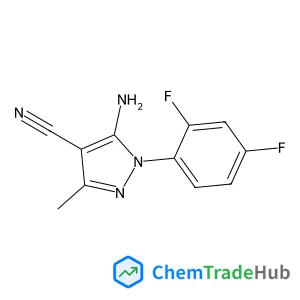
5-Amino-1-(2,4-difluorophenyl)-3-methyl-1H-pyrazole-4-carbonitrile
CAS Number:
1020057-92-4
Molecular Formula:
C11H8F2N4


![2-Methyl-2-propanyl 1,6-diazaspiro[3.4]octane-6-carboxylate structure](https://static.chemtradehub.com/structs/115/1158749-79-1-81ee.webp "2-Methyl-2-propanyl 1,6-diazaspiro[3.4]octane-6-carboxylate structure")
2-Methyl-2-propanyl 1,6-diazaspiro[3.4]octane-6-carboxylate
CAS Number:
1158749-79-1
Molecular Formula:
C11H20N2O2
Recommended Suppliers






Disclaimer
This page provides academic journal information for reference and research purposes only. We are not affiliated with any journal publishers and do not handle publication submissions. For publication-related inquiries, please contact the respective journal publishers directly.
If you notice any inaccuracies in the information displayed, please contact us at support@chemtradehub.com. We will promptly review and address your concerns.