












Ion transport in poly(3,4-ethylenedioxythiophene)–poly(styrene-4-sulfonate) composites
Literature Information
Publication Date
2000-02-24
DOI
10.1039/A908372C
Impact Factor
3.676
Authors
Guangchun Li, Peter G. Pickup
View Original
Abstract
The ion transport properties and electrochemistry of both chemically prepared and electrochemically prepared poly(3,4-ethylenedioxythiophene)–poly(styrene-4-sulfonate) composites have been investigated by cyclic voltammetry and impedance spectroscopy in a variety of electrolyte solutions. The polymers exhibited facile electrochemistry, fast ion transport, and good electrochemical stability. The ionic conductivities of the polymers are strongly dependent on the concentration and conductivity of the electrolyte solution used. At low electrolyte concentrations, the ionic conductivities of these polymers also show some potential dependence. Ion transport in chemically prepared layers was found to be much faster than in electrochemically prepared films. The high ionic conductivities of the polymers are shown to be due to their very porous structure and electrolytes in pores.
Recommended Journals
Related Literature
Complex three-dimensional polymer–metal core–shell structures towards emission control
De-Gong Wang, Li-Gang Niu, Bin-Bin Xu, Jun-Feng Song, Qi-Dai Chen, Hong-Bo Sun
2013-03-22
Paper
DOI: 10.1039/C3CP44051F
Vibrational self-consistent field calculations for spectroscopy of biological molecules: new algorithmic developments and applications
Tapta Kanchan Roy
2013-04-10
Perspective
DOI: 10.1039/C3CP50739D
Structures of hydrogen bond networks formed by a few tens of methanol molecules in the gas phase: size-selective infrared spectroscopy of neutral and protonated methanol clusters
Tomohiro Kobayashi, Ryunosuke Shishido, Kenta Mizuse, Asuka Fujii, Jer-Lai Kuo
2013-04-12
Paper
DOI: 10.1039/C3CP50985K
Charge trapping in TiO2 polymorphs as seen by Electron Paramagnetic Resonance spectroscopy
Mario Chiesa, Maria Cristina Paganini, Stefano Livraghi, Elio Giamello
2013-04-24
Perspective
DOI: 10.1039/C3CP50658D
The effect of secondary structures on the NLO properties of single chain oligopeptides: a comparison between β-strand and α-helix polyglycines
Andrea Alparone
2013-06-07
Paper
DOI: 10.1039/C3CP51496J
The effect of dimensionality of nanostructured carbon on the architecture of organic–inorganic hybrid materials
R. D. K. Misra, D. Depan, J. Shah
2013-06-07
Paper
DOI: 10.1039/C3CP51236C
Pressure dependent photolysis quantum yields for CH3C(O)CH3 at 300 and 308 nm and at 298 and 228 K
V. G. Khamaganov, J. N. Crowley
2013-05-16
Paper
DOI: 10.1039/C3CP50291K
Simple and efficient synthesis of cyclic carbonates using quaternized glycine as a green catalyst
Jose Tharun, George Mathai, Roshith Roshan, Amal Cherian Kathalikkattil, Kim Bomi, Dae-Won Park
2013-04-23
Communication
DOI: 10.1039/C3CP51158H
Study on electrochemiluminescence spectra of ZnO flakes
Lei Wang, Qiaoli Yue, Haibo Li, Shuling Xu, Jifeng Liu
2013-04-26
Communication
DOI: 10.1039/C3CP51240A
Periodic mesoporous organosilicas functionalized with a wide variety of amines for CO2 adsorption
Els De Canck, Isabelle Ascoop, Abdelhamid Sayari, Pascal Van Der Voort
2013-04-22
Paper
DOI: 10.1039/C3CP50393C
You might also like
Compound Q&A
How is Ethyl 4-chlorothieno[2,3-b]pyridine-5-carboxylate (CAS: 59713-58-5) typically synthesized?
Ethyl 4-chlorothieno[2,3-b]pyridine-5-carboxylate (CAS: 59713-58-5) can be synth...
59713-58-5Ethyl 4-chlorothieno...
Compound Q&A
What regulatory guidelines apply to 5-Methyl-1H-indole-3-carbaldehyde (CAS: 52562-50-2)?
5-Methyl-1H-indole-3-carbaldehyde (CAS: 52562-50-2) is subject to various regula...
52562-50-25-Methyl-1H-indole-3...
Compound Q&A
What are the physical and chemical properties of (1,3-Dimethyl-2,4-dioxo-1,2,3,4-tetrahydro-5-pyrimidinyl)boronic acid (CAS: 223418-73-3)?
(1,3-Dimethyl-2,4-dioxo-1,2,3,4-tetrahydro-5-pyrimidinyl)boronic acid is a white...
223418-73-3(1,3-Dimethyl-2,4-di...
Compound Q&A
How should waste containing Sulfocostunolide A (CAS: 1016983-51-9) be handled?
Waste containing Sulfocostunolide A (CAS: 1016983-51-9) should be handled with c...
1016983-51-9Sulfocostunolide A
Compound Q&A
What precautions should be taken when handling Murraxocin (CAS: 88478-44-8)?
When handling Murraxocin (CAS: 88478-44-8), ensure proper personal protective eq...
88478-44-8Murraxocin
Compound Q&A
What are the physical and chemical properties of Formvar (CAS: 63148-64-1)?
Formvar (CAS: 63148-64-1) is an alkyd resin characterized by a high molecular we...
63148-64-1Formvar(R)
Compound Q&A
Is (S)-4-benzyl-2-((benzyloxy)methyl)morpholine (CAS: 205242-66-6) safe?
(S)-4-benzyl-2-((benzyloxy)methyl)morpholine is generally safe when handled with...
205242-66-6(S)-4-benzyl-2-((ben...
Compound Q&A
What industries use Methyl 1-(5-bromo-2-pyrimidinyl)cyclopropanecarboxylate (CAS: 1447607-69-3)?
Methyl 1-(5-bromo-2-pyrimidinyl)cyclopropanecarboxylate (CAS: 1447607-69-3) is p...
1447607-69-3Methyl 1-(5-bromo-2-...
Compound Q&A
Is 2-Methyl-1-phenyl-1-propanamine hydrochloride (CAS: 24290-47-9) safe?
2-Methyl-1-phenyl-1-propanamine hydrochloride (CAS: 24290-47-9) is generally con...
24290-47-92-Methyl-1-phenyl-1-...
Compound Q&A
How is 3-(4-Bromophenyl)-2-methylpropanoic acid (CAS: 66735-01-1) typically synthesized?
3-(4-Bromophenyl)-2-methylpropanoic acid is synthesized through a multi-step pro...
66735-01-13-(4-Bromophenyl)-2-...
Source Journal
Physical Chemistry Chemical Physics

CiteScore:
5.5
Self-citation Rate:
10.3%
Articles per Year:
3036
Physical Chemistry Chemical Physics (PCCP) is an international journal co-owned by 19 physical chemistry and physics societies from around the world. This journal publishes original, cutting-edge research in physical chemistry, chemical physics and biophysical chemistry. To be suitable for publication in PCCP, articles must include significant innovation and/or insight into physical chemistry; this is the most important criterion that reviewers and Editors will judge against when evaluating submissions. The journal has a broad scope and welcomes contributions spanning experiment, theory, computation and data science. Topical coverage includes spectroscopy, dynamics, kinetics, statistical mechanics, thermodynamics, electrochemistry, catalysis, surface science, quantum mechanics, quantum computing and machine learning. Interdisciplinary research areas such as polymers and soft matter, materials, nanoscience, energy, surfaces/interfaces, and biophysical chemistry are welcomed if they demonstrate significant innovation and/or insight into physical chemistry. Joined experimental/theoretical studies are particularly appreciated when complementary and based on up-to-date approaches.
Recommended Compounds
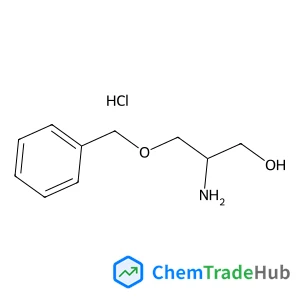
(R)-2-amino-3-(benzyloxy)propan-1-ol hydrochloride
CAS Number:
58577-95-0
Molecular Formula:
C10H16ClNO2

5-Amino-1-(2,4-difluorophenyl)-3-methyl-1H-pyrazole-4-carbonitrile
CAS Number:
1020057-92-4
Molecular Formula:
C11H8F2N4
![Sodium 6-amino-3-[(E)-{4-[(E)-(4-aminophenyl)diazenyl]-2-methoxy-5-methylphenyl}diazenyl]-4-hydroxy-2-naphthalenesulfonate structure](https://static.chemtradehub.com/structs/294/2945-96-2-092f.webp "Sodium 6-amino-3-[(E)-{4-[(E)-(4-aminophenyl)diazenyl]-2-methoxy-5-methylphenyl}diazenyl]-4-hydroxy-2-naphthalenesulfonate structure")
Sodium 6-amino-3-[(E)-{4-[(E)-(4-aminophenyl)diazenyl]-2-methoxy-5-methylphenyl}diazenyl]-4-hydroxy-2-naphthalenesulfonate
CAS Number:
2945-96-2
Molecular Formula:
C24H21N6NaO5S
Recommended Suppliers






Disclaimer
This page provides academic journal information for reference and research purposes only. We are not affiliated with any journal publishers and do not handle publication submissions. For publication-related inquiries, please contact the respective journal publishers directly.
If you notice any inaccuracies in the information displayed, please contact us at support@chemtradehub.com. We will promptly review and address your concerns.