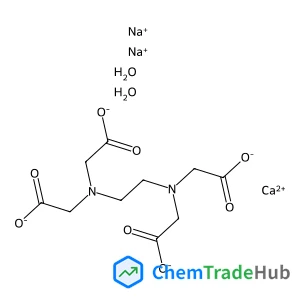
EthylenediaminetetraaceticacidcalciumDisodiumsalthydrate
CAS Number:
23411-34-9
Molecular Formula:
C10H16CaN2Na2O10
Density functional calculations (B3LYP hybrid functional) are used to study the electronic structure of sodium doped sodium sodalite. Two types of finite models of the aluminosilicate framework are designed. Ring-type models are employed to examine the magnetic coupling between nearest neighbour (nn) and next nearest neighbour (nnn) pairs of F centers. An antiferromagnetic coupling is predicted with coupling constants for nn and nnn pair interactions of about 12 and 3 meV, respectively. Models consisting of two four-membered aluminosilicate rings having a central T site in common are used to calculate the spin density at the Si and Al framework atoms surrounded by an increasing number of F centers. Our results support the paramagnetic shift model introduced by Engelhardt etal. (J. Chem. Soc., Chem. Commun., 1996, 6, 729) to explain the multiple lines of the 29Si and 27 Al MAS NMR spectra. The calculations also support the experimentally observed spin density at the nuclei of the (Na+)3 centers which are neighboured to paramagnetic Na 43+ centers.
Mercedes Boronat, Cristina Martínez, Avelino Corma
DOI: 10.1039/C0CP01996H
Yuchun Han, Yilin Wang
DOI: 10.1039/C0CP01196G
Uwe Hahn, Francesca Setaro, Xavier Ragàs, Angus Gray-Weale, Santi Nonell, Tomas Torres
DOI: 10.1039/C0CP01015D
Günter Grampp
DOI: 10.1039/C0CP01517B
Ilia Valov, Bjoern Luerssen, Eva Mutoro, Luca Gregoratti, Roger A. De Souza, Thomas Bredow, Sebastian Günther, Alexei Barinov, Pavel Dudin, Manfred Martin, Jürgen Janek
DOI: 10.1039/C0CP01024C
Guoquan Zhang, Fenglin Yang
DOI: 10.1039/C0CP00608D
Igor Leontyev, Alexei Stuchebrukhov
DOI: 10.1039/C0CP01971B
J. Chris Bauer, David Mullins, Meijun Li, E. Andrew Payzant
DOI: 10.1039/C0CP01859G
DOI: 10.1039/C0CP00990C
Emilio Palomares, Amparo Forneli
DOI: 10.1039/C0CP01855D
1H-Indazole-6-carbonitrile finds applications in pharmaceuticals, where it serve...
Waste containing Dioctyl (2E)-2-butenedioate (CAS: 2997-85-5) should be collecte...
Sodium [(1,2-benzoxazol-3-ylmethyl)sulfonyl]azanide is primarily used in pharmac...
Dimethyl 4-(4,4,5,5-tetramethyl-1,3,2-dioxaborolan-2-yl)-2,6-pyridinedicarboxyla...
Waste containing 2-Fluoro-6-hydrazinopyridine (CAS: 80714-39-2) should be manage...
6-Formyl-2-pyridinecarboxylic acid is an organic compound with the molecular for...
Research trends for this compound indicate a focus on its potential applications...
9H-Tribenzo[b,d,f]azepine is typically synthesized via a multi-step process invo...
1-Cyclopropyl-7-ethoxy-6-fluoro-8-methoxy-4-oxo-1,4-dihydro-3-quinolinecarboxyli...
Waste containing Methyl 3-oxo-1,2,3,4-tetrahydro-6-quinoxalinecarboxylate (CAS: ...

Physical Chemistry Chemical Physics (PCCP) is an international journal co-owned by 19 physical chemistry and physics societies from around the world. This journal publishes original, cutting-edge research in physical chemistry, chemical physics and biophysical chemistry. To be suitable for publication in PCCP, articles must include significant innovation and/or insight into physical chemistry; this is the most important criterion that reviewers and Editors will judge against when evaluating submissions. The journal has a broad scope and welcomes contributions spanning experiment, theory, computation and data science. Topical coverage includes spectroscopy, dynamics, kinetics, statistical mechanics, thermodynamics, electrochemistry, catalysis, surface science, quantum mechanics, quantum computing and machine learning. Interdisciplinary research areas such as polymers and soft matter, materials, nanoscience, energy, surfaces/interfaces, and biophysical chemistry are welcomed if they demonstrate significant innovation and/or insight into physical chemistry. Joined experimental/theoretical studies are particularly appreciated when complementary and based on up-to-date approaches.