













Nature Chemical Biology
Basic Information
Brief Name:
NAT CHEM BIOL
Impact Factor:
12.9
ISSN:
1552-4450
Research Field:
BIOLOGICAL
h-index:
182
Self-citation Rate:
1.6%
Articles per Year:
146
SCI Index Status:
Science Citation Index Expanded
Journal Website:
https://www.nature.com/nchembio
Journal Introduction:
Nature Chemical Biology is an international monthly journal that provides a high-visibility forum for the publication of top-tier original research and commentary for the chemical biology community. Chemical biology combines the scientific ideas and approaches of chemistry, biology and allied disciplines to understand and manipulate biological systems with molecular precision. The journal publishes papers from the expanding community of chemical biologists, including contributions from chemists who are applying the principles and tools of chemistry to biological questions and from biologists who are interested in understanding and controlling biological processes at the molecular level. We give priority to studies that report significant conceptual or practical advances in any area where chemistry and biology intersect. The journal is primarily interested in basic research, especially those studies that report new chemical or biological tools or present significant new molecular-level insights into the mechanisms underpinning biological processes. Additionally, because chemical biology approaches have broad utility for manipulating or engineering biological systems, the journal also considers manuscripts describing applied molecular studies at the chemistry-biology interface. Independent of the scientific area, we seek manuscripts that blend chemistry and biology in new ways, particularly those that provide major conceptual or methodological advances that are likely to open up innovative avenues of research in the field. The journal strives for a fair but comprehensive review process that emphasizes rigorous chemical and biological characterization. In addition to publishing original research, Nature Chemical Biology is a forum for the exchange of ideas between scientists in the chemical and life sciences and a community resource for this emerging field. To this end, we publish content including scholarly reviews and perspectives, highlights of research published in our pages and in other journals, correspondence and commentaries that present topics of scientific and community interest.
CiteScore
CiteScore
23.9
SJR
5.558
SNIP
2.43
| Subject | Rank | Percentile |
|---|---|---|
Biochemistry, Genetics and Molecular BiologyMolecular Biology |
14 / 410 | 96% |
Journal Statistics
Monthly
Issues/Year
Submission to first editorial decision (median days): 8
Submission to acceptance (median days): 219
Review Cycle
€10290 EUR/$12290 USD/£8890 GBP
Article Processing Fee
Submission Information
Submission Website:
https://mts-nchemb.nature.com/Accepted Types:
Brief Communication
Article
Correspondence
Matters Arising
Comment
Books & Arts
News and Views
Review Article
Perspective
Article
Correspondence
Matters Arising
Comment
Books & Arts
News and Views
Review Article
Perspective
Recommended Journals
Related Articles
Development of new auxiliary basis functions of the Karlsruhe segmented contracted basis sets including diffuse basis functions (def2-SVPD, def2-TZVPPD, and def2-QVPPD) for RI-MP2 and RI-CC calculations
Arnim Hellweg, Dmitrij Rappoport
2014-11-14
Paper
DOI: 10.1039/C4CP04286G
Mechanical properties and stabilities of α-boron monolayers
Qing Peng, Liang Han, Sheng Liu, Zhongfang Chen, Jie Lian, Suvranu De
2014-11-25
Paper
DOI: 10.1039/C4CP04050C
Electronic properties of PbX3CH3NH3 (X = Cl, Br, I) compounds for photovoltaic and photocatalytic applications
Sigismund Teunis Alexander George Melissen, Frédéric Labat, Philippe Sautet, Tangui Le Bahers
2014-11-26
Paper
DOI: 10.1039/C4CP04666H
Formation of 2- and 1-methyl-1,4-dihydronaphthalene isomers via the crossed beam reactions of phenyl radicals (C6H5) with isoprene (CH2C(CH3)CHCH2) and 1,3-pentadiene (CH2CHCHCHCH3)
Tao Yang, Lloyd Muzangwa, Dorian S. N. Parker, Ralf I. Kaiser, Alexander M. Mebel
2014-11-07
Paper
DOI: 10.1039/C4CP04612A
Assessment of density-functionals for describing the X− + CH3ONO2 gas-phase reactions with X = F, OH, CH2CN
Yaicel G. Proenza, Elizete Ventura, Silmar A. do Monte, Ricardo L. Longo
2014-10-22
Paper
DOI: 10.1039/C4CP03674C
Can metal-free silicon-doped hexagonal boron nitride nanosheets and nanotubes exhibit activity toward CO oxidation?
Sen Lin, Xinxin Ye, Jing Huang
2014-11-03
Paper
DOI: 10.1039/C4CP05007J
Kinetics of copper nanoparticle precipitation in phosphate glass: an isothermal plasmonic approach
Mariana Sendova, José A. Jiménez, Robert Smith, Nicholas Rudawski
2014-11-24
Paper
DOI: 10.1039/C4CP04662E
Metastable behavior of noble gas inserted tin and lead fluorides
Sudip Pan, Ashutosh Gupta, Subhajit Mandal, Diego Moreno, Gabriel Merino, Pratim K. Chattaraj
2014-11-11
Paper
DOI: 10.1039/C4CP03856H
Dirac fermions in silicene on Pb(111) surface
Agata Podsiadły-Paszkowska, Mariusz Krawiec
2014-12-01
Paper
DOI: 10.1039/C4CP05104A
You might also like
Compound Q&A
What is Ethyl 3-cyclohexylpropanoate (CAS: 10094-36-7)?
Ethyl 3-cyclohexylpropanoate is a clear, colorless to light yellow liquid with a...
10094-36-7Ethyl 3-cyclohexylpr...
Compound Q&A
How should waste containing 2-(Hydroxymethyl)-5-(methoxycarbonyl)-6-methyl-4-(2-nitrophenyl)nicotinic acid (CAS: 34783-31-8) be handled?
Waste containing 2-(Hydroxymethyl)-5-(methoxycarbonyl)-6-methyl-4-(2-nitrophenyl...
34783-31-82-(Hydroxymethyl)-5-...
Compound Q&A
How should waste containing 2,4,6-Tris(pentafluoroethyl)-1,3,5-triazine (CAS: 858-46-8) be handled?
Waste containing 2,4,6-Tris(pentafluoroethyl)-1,3,5-triazine (CAS: 858-46-8) sho...
858-46-82,4,6-Tris(pentafluo...
Compound Q&A
What precautions should be taken when handling Chloroac-nle-oh (CAS: 56787-36-1)?
When handling Chloroac-nle-oh (CAS: 56787-36-1), it is essential to wear appropr...
56787-36-1Chloroac-nle-oh
Compound Q&A
What industries use Ethyl 6-phenylimidazo[2,1-b][1,3]thiazole-3-carboxylate (CAS: 752244-05-6)?
Ethyl 6-phenylimidazo[2,1-b][1,3]thiazole-3-carboxylate is primarily used in the...
752244-05-6Ethyl 6-phenylimidaz...
Compound Q&A
Are there alternatives to alpha-(2-Bromophenyl)benzylamine (CAS: 55095-15-3) in synthesis?
Alternatives to alpha-(2-Bromophenyl)benzylamine (CAS: 55095-15-3) in synthesis ...
55095-15-3alpha-(2-Bromophenyl...
Compound Q&A
How should waste containing 2-Chloro-5-methoxypyridine (CAS: 139585-48-1) be handled?
Waste containing 2-Chloro-5-methoxypyridine (CAS: 139585-48-1) should be managed...
139585-48-12-Chloro-5-methoxypy...
Compound Q&A
What industries use 1-(4-Methoxyphenyl)-2,5-dimethyl-1H-pyrrole (CAS: 5044-27-9)?
1-(4-Methoxyphenyl)-2,5-dimethyl-1H-pyrrole (CAS: 5044-27-9) is used in various ...
5044-27-91-(4-Methoxyphenyl)-...
Compound Q&A
Are there alternatives to 3-Bromo-5-(N-Boc)aminomethylisoxazole (CAS: 903131-45-3) in synthesis?
There are alternative reagents and compounds that can be used in the synthesis o...
903131-45-33-Bromo-5-(N-Boc)ami...
Compound Q&A
What is Tungsten(IV) oxide (CAS: 12036-22-5)?
Tungsten(IV) oxide, also known as tungsten dioxide, is a chemical compound with ...
12036-22-5Tungsten(IV) oxide
Recommended Compounds

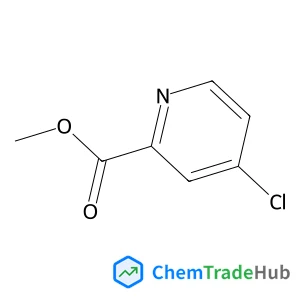

Tris(2-ethylhexyl) 4,4',4''-(1,3,5-triazine-2,4,6-triyltriimino)tribenzoate
CAS Number:
88122-99-0
Molecular Formula:
C48H66N6O6


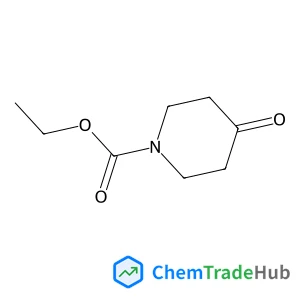
![3-[(4-Nitrobenzyl)oxy]-3-oxopropanoic Acid structure](https://static.chemtradehub.com/structs/773/77359-11-6-0d04.webp "3-[(4-Nitrobenzyl)oxy]-3-oxopropanoic Acid structure")
Recommended Suppliers






Disclaimer
This page provides academic journal information for reference and research purposes only. We are not affiliated with any journal publishers and do not handle publication submissions. For publication-related inquiries, please contact the respective journal publishers directly.
If you notice any inaccuracies in the information displayed, please contact us at support@chemtradehub.com. We will promptly review and address your concerns.