![Bis[(1,2,3,4,5-eta)-1-(diphenylphosphino)cyclopentadienyl]iron structure](https://static.chemtradehub.com/structs/121/12150-46-8-ecd2.webp "Bis[(1,2,3,4,5-eta)-1-(diphenylphosphino)cyclopentadienyl]iron structure")
Bis[(1,2,3,4,5-eta)-1-(diphenylphosphino)cyclopentadienyl]iron
CAS Number:
12150-46-8
Molecular Formula:
C34H28FeP2
Official journal of the American Dairy Science Association® The Journal of Dairy Science (JDS) is an open access journal. Authors who publish in JDS make their work immediately, permanently, and freely accessible worldwide. JDS authors pay an article publishing charge (APC), have a choice of license options, and retain copyright to their published work. The APC for JDS is USD 3,500. Members of the American Dairy Science Association receive a discounted price of USD 1,600. Learn more about becoming an ADSA member and receiving a discounted APC. Still have questions? Read the FAQ page for further information. An official journal of the American Dairy Science Association®, Journal of Dairy Science® (JDS) is the leading peer-reviewed general dairy research journal in the world. JDS publishes original research, invited review articles, and other scholarly work that relates to the production and processing of milk or milk products intended for human consumption. The journal is broadly divided into dairy foods and dairy production sections. JDS readers represent education, industry, and government agencies in more than 70 countries with interests in biochemistry, breeding, economics, engineering, environment, food science, genetics, microbiology, nutrition, pathology, physiology, processing, public health, quality assurance, and sanitation. A Journal Impact Factor of 3.5 places JDS 9th out of 62 journals in the Agriculture, Dairy, and Animal Science category, which ranks JDS in the first quartile. The journal also has a five-year Impact Factor of 4.2, indicating that articles in JDS continue to be cited well beyond the immediate two-year period following publication. In the Food Science and Technology category, JDS is ranked 56th out of 142 journals, which is in the second quartile. On January 1, 2024, the American Dairy Science Association launched the ADSA Loyalty Program, a program designed to reward member contributors to ADSA's ecosystem of journals, JDS and JDSC with the opportunity to publish original articles at no charge or at a reduced charge. Points are earned by either contributing papers as a corresponding author or reviewing articles for JDS or JDSC. Corresponding authors and reviewers with a current ADSA membership and a valid ORCID are eligible. For more information on the ADSA Loyalty Program, see adsa.org/Publications/Journal-Rewards or contact loyalty@adsa.org with any questions about the program.
| Subject | Rank | Percentile |
|---|---|---|
Agricultural and Biological SciencesAnimal Science and Zoology |
15 / 490 | 97% |
DOI: 10.1039/AN942670229A
DOI: 10.1039/AN942670227A
Ethyl 3-cyclohexylpropanoate is a clear, colorless to light yellow liquid with a...
Waste containing 2-(Hydroxymethyl)-5-(methoxycarbonyl)-6-methyl-4-(2-nitrophenyl...
Waste containing 2,4,6-Tris(pentafluoroethyl)-1,3,5-triazine (CAS: 858-46-8) sho...
When handling Chloroac-nle-oh (CAS: 56787-36-1), it is essential to wear appropr...
Ethyl 6-phenylimidazo[2,1-b][1,3]thiazole-3-carboxylate is primarily used in the...
Alternatives to alpha-(2-Bromophenyl)benzylamine (CAS: 55095-15-3) in synthesis ...
Waste containing 2-Chloro-5-methoxypyridine (CAS: 139585-48-1) should be managed...
1-(4-Methoxyphenyl)-2,5-dimethyl-1H-pyrrole (CAS: 5044-27-9) is used in various ...
There are alternative reagents and compounds that can be used in the synthesis o...
Tungsten(IV) oxide, also known as tungsten dioxide, is a chemical compound with ...
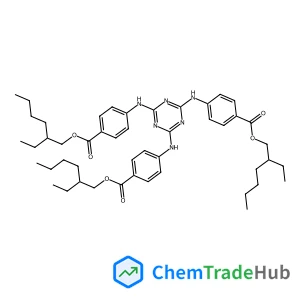

![2-{3-[4-(3-Chlorophenyl)-1-piperazinyl]propyl}[1,2,4]triazolo[4,3-a]pyridin-3(2H)-one hydrochloride (1:1) structure](https://static.chemtradehub.com/structs/253/25332-39-2-496e.webp "2-{3-[4-(3-Chlorophenyl)-1-piperazinyl]propyl}[1,2,4]triazolo[4,3-a]pyridin-3(2H)-one hydrochloride (1:1) structure")

![3-[(4-Nitrobenzyl)oxy]-3-oxopropanoic Acid structure](https://static.chemtradehub.com/structs/773/77359-11-6-0d04.webp "3-[(4-Nitrobenzyl)oxy]-3-oxopropanoic Acid structure")