













Comments on Inorganic Chemistry
Basic Information
Brief Name:
COMMENT INORG CHEM
Impact Factor:
3.8
ISSN:
0260-3594
Research Field:
CHEMICAL
h-index:
40
Self-citation Rate:
1.4%
Articles per Year:
8
SCI Index Status:
Science Citation Index Expanded
Journal Website:
https://www.tandfonline.com/journals/gcic20
Journal Introduction:
Comments on Inorganic Chemistry is intended as a vehicle for authoritatively written critical discussions of inorganic chemistry research. We publish focused articles of any length that critique or comment upon new concepts, or which introduce new interpretations or developments of long-standing concepts. “Comments” may contain critical discussions of previously published work, or original research that critiques existing concepts or introduces novel concepts. Through the medium of comments, the Editors encourage authors in any area of inorganic chemistry - synthesis, structure, spectroscopy, kinetics and mechanisms, theory - to write about their interests in a manner that is both personal and pedagogical. Our journal is an excellent platform for younger inorganic chemists whose research is not yet widely known. Publishing with us allows you to describe your work and add your name and contribution to our impressive archive of publications from many well-established and up-and-coming inorganic chemists. Reviews of topics important to the advancement of inorganic chemistry are especially solicited - with the distinction from other review journals being that wepublish more focused reviews, opposed to more comprehensive reviews. Reviews may reflect upon an author’s recent work as an overview of their contributions in a given area, or upon a new research direction they intend to navigate in the next stage of their career. From time to time, special issues may be dedicated to a topical conference/symposium, or a particular contemporary research topic or class of materials that has attracted recent attention by inorganic chemists. While most contributions are solicited by the editors, potential authors are encouraged to write the Editors, or a Member of the Editorial Advisory Board, with their interest in contributing an article. We encourage authors to deposit their manuscripts as a pre-print to speed up the dissemination of research, which allows for feedback before formal peer review. Deposition of your manuscript in a pre-print server will have no bearing on the peer review process and final decision made on your manuscript. Authors who believe their manuscript would benefit from English editing prior to submission should seek a professional editing service or native English speaker. Details of editing services available from Taylor & Francis are available here. Peer Review Statement Comments on Inorganic Chemistry is an international, peer-reviewed journal publishing high quality, original research contributions in the pursuit of scientific knowledge. All manuscript submissions are subject to initial appraisal by the Section Editor, and, if found suitable for further consideration, to single anonymized peer review by independent, anonymous expert referees. Publishing Ethics Statement Comments on Inorganic Chemistry adheres to the highest standards of publishing ethics, with rigorous processes in place to ensure this is achieved. Taylor & Francis is a member of Committee of Publication Ethics (COPE) and utilizes Similarity Check via CrossRef for all journals. More information on our ethical standards and policies can be found here The Journal has an appeals and complaints policy which can be viewed here
CiteScore
CiteScore
9
SJR
0.836
SNIP
0.653
| Subject | Rank | Percentile |
|---|---|---|
ChemistryInorganic Chemistry |
6 / 79 | 93% |
Journal Statistics
Tri-annual
Issues/Year
9 days avg. from submission to first decision
Review Cycle
Article Processing Fee
Submission Information
Submission Website:
https://rp.tandfonline.com/submission/create?journalCode=GCICRelated Articles
Magnetic and geometric anisotropy in particle-crosslinked ferrohydrogels
Lisa Roeder, Philipp Bender, Matthias Kundt, Andreas Tschöpe, Annette M. Schmidt
2014-11-17
Paper
DOI: 10.1039/C4CP04493B
Non-universal tracer diffusion in crowded media of non-inert obstacles
Surya K. Ghosh, Andrey G. Cherstvy
2014-11-26
Paper
DOI: 10.1039/C4CP03599B
Elucidating the effect of copper as a redox additive and dopant on the performance of a PANI based supercapacitor
Kavita Pandey, Pankaj Yadav, Indrajit Mukhopadhyay
2014-11-07
Paper
DOI: 10.1039/C4CP04321A
Assessment of density-functionals for describing the X− + CH3ONO2 gas-phase reactions with X = F, OH, CH2CN
Yaicel G. Proenza, Elizete Ventura, Silmar A. do Monte, Ricardo L. Longo
2014-10-22
Paper
DOI: 10.1039/C4CP03674C
Nano-design of quantum dot-based photocatalysts for hydrogen generation using advanced surface molecular chemistry
Dalal Noureldine, Tayirjan Isimjan, Bin Lin, Silvano Del Gobbo, Mutalifu Abulikemu, Mohamed Nejib Hedhili, Dalaver H. Anjum, Kazuhiro Takanabe
2014-11-12
Paper
DOI: 10.1039/C4CP04365K
The role of Schottky barrier in the resistive switching of SrTiO3: direct experimental evidence
Xue-Bing Yin, Zheng-Hua Tan, Xin Guo
2014-11-07
Communication
DOI: 10.1039/C4CP04151H
Using beryllium bonds to change halogen bonds from traditional to chlorine-shared to ion-pair bonds
Ibon Alkorta, José Elguero, Otilia Mó, Manuel Yáñez, Janet E. Del Bene
2014-11-28
Paper
DOI: 10.1039/C4CP04574B
Complex behaviour of vacancy point-defects in SrRuO3 thin films
Henning Schraknepper, Christoph Bäumer, Regina Dittmann, Roger A. De Souza
2014-11-12
Paper
DOI: 10.1039/C4CP03632H
Selective hydrogenation of butadiene over TiO2 supported copper, gold and gold–copper catalysts prepared by deposition–precipitation
Padigapati S. Reddy, Jaysen Nelayah, Benjaram M. Reddy, Christian Ricolleau
2014-07-22
Paper
DOI: 10.1039/C4CP02141J
The isotope method for the determination of stoichiometry between compounds forming the polypyrrole and glucose oxidase composite
A. Popov, A. Ramanaviciene, V. Remeikis
2014-11-25
Paper
DOI: 10.1039/C4CP04885G
You might also like
Compound Q&A
What is Ethyl 3-cyclohexylpropanoate (CAS: 10094-36-7)?
Ethyl 3-cyclohexylpropanoate is a clear, colorless to light yellow liquid with a...
10094-36-7Ethyl 3-cyclohexylpr...
Compound Q&A
How should waste containing 2-(Hydroxymethyl)-5-(methoxycarbonyl)-6-methyl-4-(2-nitrophenyl)nicotinic acid (CAS: 34783-31-8) be handled?
Waste containing 2-(Hydroxymethyl)-5-(methoxycarbonyl)-6-methyl-4-(2-nitrophenyl...
34783-31-82-(Hydroxymethyl)-5-...
Compound Q&A
How should waste containing 2,4,6-Tris(pentafluoroethyl)-1,3,5-triazine (CAS: 858-46-8) be handled?
Waste containing 2,4,6-Tris(pentafluoroethyl)-1,3,5-triazine (CAS: 858-46-8) sho...
858-46-82,4,6-Tris(pentafluo...
Compound Q&A
What precautions should be taken when handling Chloroac-nle-oh (CAS: 56787-36-1)?
When handling Chloroac-nle-oh (CAS: 56787-36-1), it is essential to wear appropr...
56787-36-1Chloroac-nle-oh
Compound Q&A
What industries use Ethyl 6-phenylimidazo[2,1-b][1,3]thiazole-3-carboxylate (CAS: 752244-05-6)?
Ethyl 6-phenylimidazo[2,1-b][1,3]thiazole-3-carboxylate is primarily used in the...
752244-05-6Ethyl 6-phenylimidaz...
Compound Q&A
Are there alternatives to alpha-(2-Bromophenyl)benzylamine (CAS: 55095-15-3) in synthesis?
Alternatives to alpha-(2-Bromophenyl)benzylamine (CAS: 55095-15-3) in synthesis ...
55095-15-3alpha-(2-Bromophenyl...
Compound Q&A
How should waste containing 2-Chloro-5-methoxypyridine (CAS: 139585-48-1) be handled?
Waste containing 2-Chloro-5-methoxypyridine (CAS: 139585-48-1) should be managed...
139585-48-12-Chloro-5-methoxypy...
Compound Q&A
What industries use 1-(4-Methoxyphenyl)-2,5-dimethyl-1H-pyrrole (CAS: 5044-27-9)?
1-(4-Methoxyphenyl)-2,5-dimethyl-1H-pyrrole (CAS: 5044-27-9) is used in various ...
5044-27-91-(4-Methoxyphenyl)-...
Compound Q&A
Are there alternatives to 3-Bromo-5-(N-Boc)aminomethylisoxazole (CAS: 903131-45-3) in synthesis?
There are alternative reagents and compounds that can be used in the synthesis o...
903131-45-33-Bromo-5-(N-Boc)ami...
Compound Q&A
What is Tungsten(IV) oxide (CAS: 12036-22-5)?
Tungsten(IV) oxide, also known as tungsten dioxide, is a chemical compound with ...
12036-22-5Tungsten(IV) oxide
Recommended Compounds

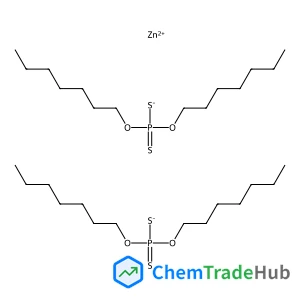

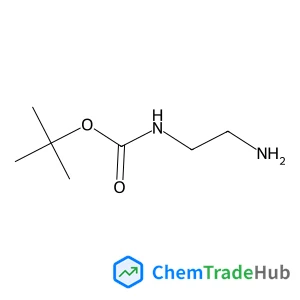


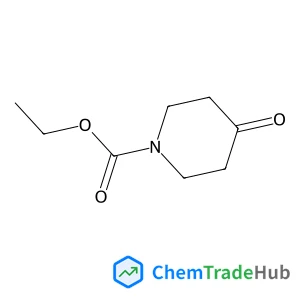
Recommended Suppliers



Disclaimer
This page provides academic journal information for reference and research purposes only. We are not affiliated with any journal publishers and do not handle publication submissions. For publication-related inquiries, please contact the respective journal publishers directly.
If you notice any inaccuracies in the information displayed, please contact us at support@chemtradehub.com. We will promptly review and address your concerns.