Compound Q&A
Are there alternatives to 3-Amino-N-phenylbenzamide (CAS: 14315-16-3) in synthesis?
Answer
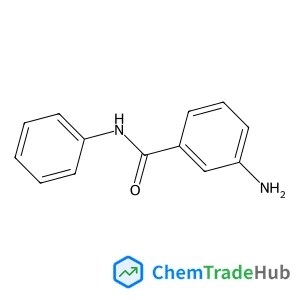
Alternatives to 3-Amino-N-phenylbenzamide (CAS: 14315-16-3) in synthesis include similar compounds such as 3-amino-benzamide and its derivatives. Common alternative reagents and methods include using other aromatic amines, amides, or employing different coupling reactions to achieve similar functionalities.
About
CAS No
14315-16-3
English Name
3-Amino-N-phenylbenzamide
Molecular Formula
C13H12N2O
Molecular Weight
212.252 g/mol
SMILES
C1=CC=C(C=C1)NC(=O)C2=CC(=CC=C2)N
InChIKey
KPSPULPPMWHXGE-UHFFFAOYSA-N
Last Updated: 2026-03-17 15:30