


Compound Q&A
How should waste containing 1-(6-bromo-3,4-dihydroisoquinolin-2(1H)-yl)-2,2,2-trifluoroethanone (CAS: 252331-63-8) be handled?
Answer
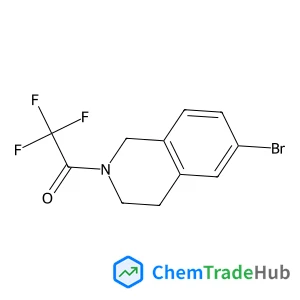
Waste containing 1-(6-bromo-3,4-dihydroisoquinolin-2(1H)-yl)-2,2,2-trifluoroethanone (CAS: 252331-63-8) should be collected in appropriate containers and stored in a closed, chemical-resistant manner. For disposal, it should be incinerated or processed through a professional hazardous waste disposal service. Environmental protection measures include ensuring no accidental release during handling and proper documentation of waste management procedures.
About
CAS No
252331-63-8
English Name
1-(6-bromo-3,4-dihydroisoquinolin-2(1H)-yl)-2,2,2-trifluoroethanone
Molecular Formula
C11H9BrF3NO
Molecular Weight
308.0969999999999 g/mol
SMILES
C1CN(CC2=C1C=C(C=C2)Br)C(=O)C(F)(F)F
InChIKey
VIYFAVQKQRGTCI-UHFFFAOYSA-N
Last Updated: 2026-03-12 09:42


