Compound Q&A
Are there alternatives to 6-(4-Chlorophenoxy)-3-pyridinamine (CAS: 75926-64-6) in synthesis?
Answer
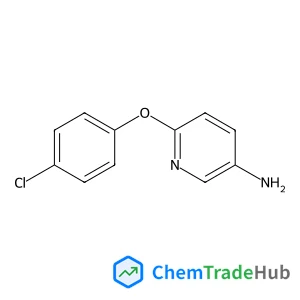
Alternatives to 6-(4-Chlorophenoxy)-3-pyridinamine (CAS: 75926-64-6) include similar compounds such as 4-chlorophenoxy)-3-pyridinamides or other analogs. Common alternatives in synthesis include using isomers or substituting with related reagents like 4-chlorophenol or other chlorinated phenols to achieve similar functional groups.
About
CAS No
75926-64-6
English Name
6-(4-Chlorophenoxy)-3-pyridinamine
Molecular Formula
C11H9ClN2O
Molecular Weight
220.65900000000002 g/mol
SMILES
C1=CC(=CC=C1OC2=NC=C(C=C2)N)Cl
InChIKey
POEUJOWYZVKVMS-UHFFFAOYSA-N
Last Updated: 2026-03-06 02:49