Compound Q&A
Are there alternatives to 3-Bromo-4-chlorobenzaldehyde (CAS: 86265-88-5) in synthesis?
Answer
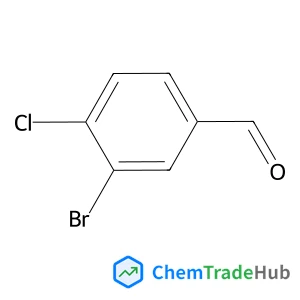
Alternatives to 3-Bromo-4-chlorobenzaldehyde include 4-chloro-3-bromobenzaldehyde and similar bromo-chlorobenzenes. These can be used as substitutes depending on the specific reaction conditions. Researchers often explore isomers and related compounds to achieve similar chemical functionalities.
About
CAS No
86265-88-5
English Name
3-Bromo-4-chlorobenzaldehyde
Molecular Formula
C7H4BrClO
Molecular Weight
219.46 g/mol
SMILES
Clc1ccc(C=O)cc1Br
InChIKey
AKDABJGHOOCVKX-UHFFFAOYSA-N
Last Updated: 2025-10-08 07:30