

Compound Q&A

Is [compound name] (CAS: 9003-01-4) safe?

Answer
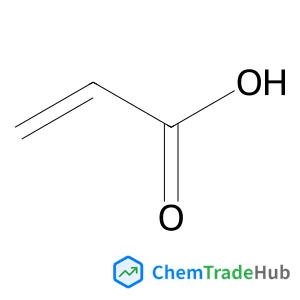
Acrylic acid
Acrylic acid is considered hazardous and can cause skin and eye irritation, respiratory issues, and is corrosive. It should be handled with care, using appropriate personal protective equipment. Safety standards require compliance with OSHA and EPA regulations to ensure safe use and disposal.

About

CAS No 9003-01-4
English Name Acrylic acid
Molecular Formula C3H4O2
Molecular Weight 72.0627 g/mol
SMILES C=CC(=O)O
InChIKey NIXOWILDQLNWCW-UHFFFAOYSA-N
Last Updated: 2025-08-25 01:07

Related Q&A

Compound Q&A

What is [compound name] (CAS: 9003-01-4)?

Acrylic acid (CAS: 9003-01-4) is a colorless, unsaturated carboxylic acid with the chemical formula ...

Compound Q&A

What are the main uses of [compound name] (CAS: 9003-01-4)?

Acrylic acid is widely used in the production of polymers like polyacrylic acid, which are found in ...

Compound Q&A

How should [compound name] (CAS: 9003-01-4) be stored?

Acrylic acid should be stored in a cool, well-ventilated area away from incompatible materials such ...

Compound Q&A

Are there alternatives to 1-(4-Chlorophenyl)-N-hydroxymethanimine (CAS: 3848-36-0) in synthesis?

When considering alternatives to 1-(4-Chlorophenyl)-N-hydroxymethanimine (CAS: 3...

3848-36-01-(4-Chlorophenyl)-N...
Compound Q&A

How is 3-(4-Bromophenyl)-5-(2-fluorophenyl)-1,2,4-oxadiazole (CAS: 419553-16-5) typically synthesized?

3-(4-Bromophenyl)-5-(2-fluorophenyl)-1,2,4-oxadiazole is synthesized through a m...

419553-16-53-(4-Bromophenyl)-5-...
Compound Q&A

How is 5-Chloro-2-(4-chlorophenyl)-4-methyl-6-[3-(1-piperidinyl)propoxy]pyrimidine (CAS: 1639220-19-1) typically synthesized?

5-Chloro-2-(4-chlorophenyl)-4-methyl-6-[3-(1-piperidinyl)propoxy]pyrimidine (CAS...

1639220-19-15-Chloro-2-(4-chloro...