

Compound Q&A

How should L-Ascorbic Acid (CAS: 50-81-7) be stored?

Answer
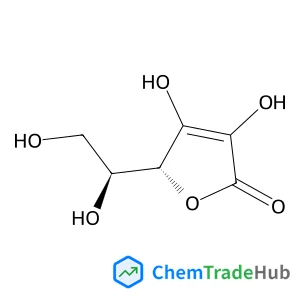
L-Ascorbic Acid
L-Ascorbic Acid (CAS 50-81-7) should be stored in a cool, dry place away from light to maintain stability. It is hygroscopic, so humidity control is crucial to prevent clumping. Storage in airtight containers minimizes degradation. Avoid exposure to heat and air to preserve potency. Proper storage ensures its effectiveness in pharmaceutical, food, and industrial applications.

About

CAS No 50-81-7
English Name L-Ascorbic Acid
Molecular Formula C6H8O6
Molecular Weight 176.1241 g/mol
SMILES OC[C@@H]([C@H]1OC(=O)C(=C1O)O)O
InChIKey CIWBSHSKHKDKBQ-JLAZNSOCSA-N
Last Updated: 2025-08-25 01:07

Related Q&A

Compound Q&A

What is L-Ascorbic Acid (CAS: 50-81-7)?

L-Ascorbic Acid, also known as vitamin C, is a water-soluble organic compound with the chemical form...

Compound Q&A

What are the main uses of L-Ascorbic Acid (CAS: 50-81-7)?

L-Ascorbic Acid (CAS 50-81-7) is widely used in pharmaceuticals as a supplement for vitamin C defici...

Compound Q&A

Is L-Ascorbic Acid (CAS: 50-81-7) safe?

L-Ascorbic Acid (CAS 50-81-7) is generally safe when used in recommended doses. It is non-toxic and ...

Compound Q&A

Are there alternatives to 1-(4-Chlorophenyl)-N-hydroxymethanimine (CAS: 3848-36-0) in synthesis?

When considering alternatives to 1-(4-Chlorophenyl)-N-hydroxymethanimine (CAS: 3...

3848-36-01-(4-Chlorophenyl)-N...
Compound Q&A

How is 3-(4-Bromophenyl)-5-(2-fluorophenyl)-1,2,4-oxadiazole (CAS: 419553-16-5) typically synthesized?

3-(4-Bromophenyl)-5-(2-fluorophenyl)-1,2,4-oxadiazole is synthesized through a m...

419553-16-53-(4-Bromophenyl)-5-...
Compound Q&A

How is 5-Chloro-2-(4-chlorophenyl)-4-methyl-6-[3-(1-piperidinyl)propoxy]pyrimidine (CAS: 1639220-19-1) typically synthesized?

5-Chloro-2-(4-chlorophenyl)-4-methyl-6-[3-(1-piperidinyl)propoxy]pyrimidine (CAS...

1639220-19-15-Chloro-2-(4-chloro...