



AD
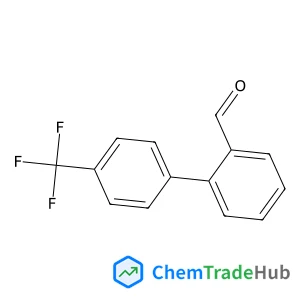
4'-(Trifluoromethyl)-2-biphenylcarbaldehyde(CAS: 84392-23-4)
CAS Number
Related Products
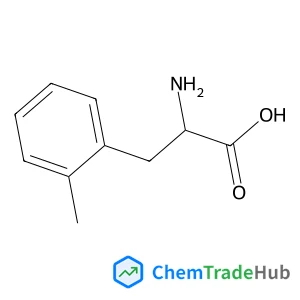
2-Methylphenylalanine
CAS Number: 80126-53-0
![4-[Benzyl(ethyl)amino]-2-methylbenzaldehyde](https://static.chemtradehub.com/structs/771/77147-13-8-2b4e.webp)
malonate](https://static.chemtradehub.com/structs/705/705259-97-8-455b.webp)
![2-{3-[(7-{3-[Ethyl(2-hydroxyethyl)amino]propoxy}-4-quinazolinyl)amino]-1H-pyrazol-5-yl}-N-(3-fluorophenyl)acetamide](https://static.chemtradehub.com/structs/722/722544-51-6-413d.webp)
![(2S)-4-(Benzyloxy)-2-{[(9H-fluoren-9-ylmethoxy)carbonyl]amino}-4-oxobutanoic acid](https://static.chemtradehub.com/structs/860/86060-84-6-2f29.webp)
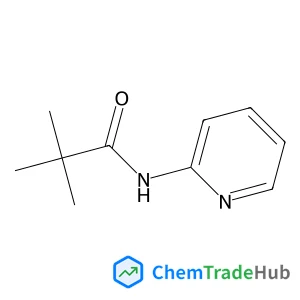
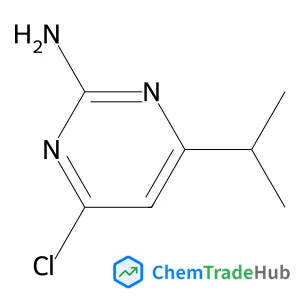
4-Chloro-6-isopropyl-2-pyrimidinamine
CAS Number: 73576-33-7
Other Suppliers for 4'-(Trifluoromethyl)-2-biphenylcarbaldehyde





Basic Information
Molecular Formula
C14H9F3O
Molecular Weight
250.22 g/mol
Physical State
Liquid
Physical Properties
Boiling Point
324.6°C at 760 mmHg
Density
1.273 g/mL at 25 °C
Chemical Identifiers
SMILES
C1=CC=C(C(=C1)C=O)C2=CC=C(C=C2)C(F)(F)F
InChIKey
UUSBTGUDEHRZTF-UHFFFAOYSA-N
Database References
MDL Number
MFCD01631855
FAQ
Regulatory guidelines for 4'-(Trifluoromethyl)-2-biphenylcarbaldehyde (CAS: 84392-23-4) include the Globally Harmonized System of Classification and Labelling of Chemicals (GHS), REACH regulations, and FDA/EPA requirements. GHS classifies this compound as a hazardous substance due to its flammability and potential toxicity. REACH regulations require detailed safety data sheets (SDS) and registration for producers and importers. FDA and EPA may have specific labeling and environmental discharge regulations.
Alternative reagents for synthesizing similar structures include 4-(Trifluoromethyl)-biphenyl aldehydes with different substituents. Common alternatives include 4-(Trifluoromethyl)-2-biphenylmethanol, which can be oxidized to produce a similar structure. Other synthetic approaches involve using isomers or analogs like 3,5-dinitrobenzaldehyde or 4-nitro-1-biphenylcarbaldehyde as starting materials.
The research trend for 4'-(Trifluoromethyl)-2-biphenylcarbaldehyde (CAS: 84392-23-4) focuses on its application in organic synthesis, particularly in the development of fluorinated compounds with enhanced physicochemical properties. Market trends indicate growing interest in its use for drug discovery and materials science. Recent studies explore its potential in catalysis and as a building block for complex molecular structures.
Waste containing 4'-(Trifluoromethyl)-2-biphenylcarbaldehyde (CAS: 84392-23-4) should be collected in appropriate containers and stored for hazardous waste disposal. Incineration is a common method for waste disposal, but it must be done under controlled conditions to prevent environmental pollution. Professional waste disposal services are recommended to ensure compliance with environmental regulations and safe handling. Proper environmental protection measures, such as monitoring air and water quality, should be implemented.
Safety Notice
Please verify product specifications and safety data before use. Contact the supplier for detailed safety information.
Always follow proper handling procedures
Contact Information
sales@rovathin.com