



AD
4-Bromo-2,6-difluorobenzonitrile(CAS: 123843-67-4)

CAS Number
Related Products
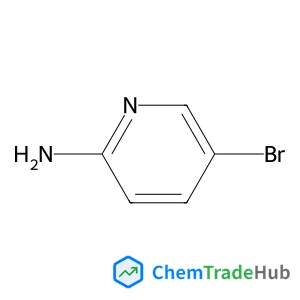
5-Bromo-2-pyridinamine
CAS Number: 1072-97-5

2-Hexyl-1-decanol
CAS Number: 2425-77-6
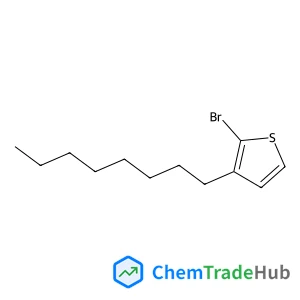
2-Bromo-3-octylthiophene
CAS Number: 145543-83-5
![2-Methyl-2-propanyl [(1R,2R)-2-amino-3,3-difluorocyclohexyl]carbamate](https://static.chemtradehub.com/structs/110/1109284-37-8-41b7.webp)

2-Bromobenzaldehyde
CAS Number: 6630-33-7

4-Nitrobenzaldehyde
CAS Number: 555-16-8

2,5-Thienediylbis(trimethylstannane)
CAS Number: 86134-26-1
![(3E)-6-Bromo-3-[6-bromo-1-(2-ethylhexyl)-2-oxo-1,2-dihydro-3H-indol-3-ylidene]-1-(2-ethylhexyl)-1,3-dihydro-2H-indol-2-one](https://static.chemtradehub.com/structs/114/1147124-23-9-d4f0.webp)
![3-(5-Bromothiophen-2-yl)-2,5-bis(2-ethylhexyl)-6-(thiophen-2-yl)pyrrolo[3,4-c]pyrrole-1,4(2H,5H)-dione](https://static.chemtradehub.com/structs/130/1308671-90-0-a205.webp)
Other Suppliers for 4-Bromo-2,6-difluorobenzonitrile






Basic Information
Molecular Formula
C7H2BrF2N
Molecular Weight
207.02 g/mol
Physical Properties
Melting Point
79.0 to 83.0 deg-C
Chemical Identifiers
SMILES
C1=C(C=C(C(=C1F)C#N)F)Br
InChIKey
TZHQWUAOIWRFSW-UHFFFAOYSA-N
Database References
MDL Number
MFCD01310981
FAQ
4-Bromo-2,6-difluorobenzonitrile (CAS: 123843-67-4) is regulated under the Globally Harmonized System of Classification and Labelling of Chemicals (GHS), covering health, environmental, and physical hazards. It is also subject to REACH regulations in the European Union, which require registration, evaluation, authorization, and restriction of chemicals. The FDA and EPA may have specific requirements for the handling and disposal of this compound, particularly in the context of pharmaceutical or industrial applications.
Yes, there are alternatives to 4-Bromo-2,6-difluorobenzonitrile (CAS: 123843-67-4) in synthesis. For example, 2,6-difluorobenzonitrile can be brominated using other halogenation agents. Common alternatives include using bromine in the presence of a Lewis acid catalyst or employing brominating reagents like N-bromosuccinimide (NBS) with radical initiators. These alternatives can provide similar functional groups but with varying reaction conditions and selectivities.
The market for 4-Bromo-2,6-difluorobenzonitrile (CAS: 123843-67-4) is driven by its use in pharmaceuticals, organic synthesis, and functional materials. Research trends focus on its application in the development of new drugs and materials. There is an increasing interest in its use as a building block for synthesizing complex molecules and in the field of medicinal chemistry. Market trends suggest a steady demand, with potential for growth in emerging markets and industries.
Waste containing 4-Bromo-2,6-difluorobenzonitrile (CAS: 123843-67-4) should be collected in appropriate containers and stored separately to prevent contamination. It should be neutralized or treated to reduce its hazardous properties before disposal. Incineration is a common method for disposal, especially in industrial settings, where the waste is treated in a regulated incinerator. For safer disposal, professional hazardous waste management services should be utilized to ensure compliance with local, national, and international regulations regarding hazardous waste management and disposal.
Safety Notice
Please verify product specifications and safety data before use. Contact the supplier for detailed safety information.
Always follow proper handling procedures
Contact Information
sales8@alfachem.cn