



AD
(1E)-1-Chloro-3,3,3-trifluoro-1-propene(CAS: 102687-65-0)
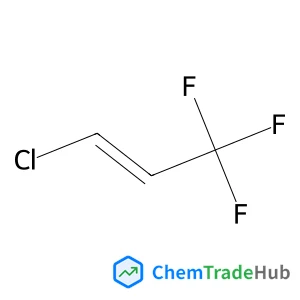
CAS Number
Related Products

methanol; trifluoro-methoxy-boron
CAS Number: 2802-68-8

Carbonic acid - 1-phenylguanidine (1:1)
CAS Number: 6685-76-3
![1,7,7-Trimethylbicyclo[2.2.1]heptane-2,3-dione](https://static.chemtradehub.com/structs/103/10373-78-1-714c.webp)

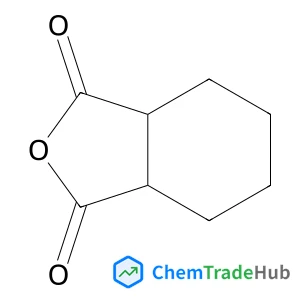
octahydro-2-benzofuran-1,3-dione
CAS Number: 85-42-7
![1-[(4xi)-beta-D-(~13~C_5_)-erythro-Pentofuranosyl]-1H-1,2,4-triazole-3-carboxamide](https://static.chemtradehub.com/structs/164/1646818-35-0-ea01.webp)

1-Propanamine hydrochloride (1:1)
CAS Number: 556-53-6
![1,1,2,2-Tetrafluoro-1-[2-(1,1,2,2-tetrafluoroethoxy)ethoxy]ethane](https://static.chemtradehub.com/structs/358/358-39-4-0089.webp)

Other Suppliers for (1E)-1-Chloro-3,3,3-trifluoro-1-propene


Basic Information
Molecular Formula
C3H2ClF3
Molecular Weight
130.5 g/mol
Chemical Identifiers
SMILES
Cl/C=C/C(F)(F)F
InChIKey
LDTMPQQAWUMPKS-OWOJBTEDSA-N
Database References
MDL Number
MFCD03092985
FAQ
(1E)-1-Chloro-3,3,3-trifluoro-1-propene (CAS: 102687-65-0) falls under various regulatory guidelines depending on the jurisdiction. Globally, it is classified under the Globally Harmonized System of Classification and Labelling of Chemicals (GHS) as a toxic and flammable substance. In the European Union, it is regulated under the Registration, Evaluation, Authorization and Restriction of Chemicals (REACH) directive. Additionally, the Environmental Protection Agency (EPA) in the United States and the Food and Drug Administration (FDA) may have specific requirements for its handling and use.
Alternatives to (1E)-1-Chloro-3,3,3-trifluoro-1-propene in synthesis include other halogenated alkenes such as 1,1,1-trifluoro-2-chloroethene and 1,1,1-trifluoro-2-bromoethene. Additionally, using alternative reagents like phosphine or amine complexes can help mitigate the use of chlorine in the synthesis process. These alternatives can offer similar reactivity profiles with varying degrees of toxicity and environmental impact.
The market for (1E)-1-Chloro-3,3,3-trifluoro-1-propene is driven by its application in the production of fluoropolymers and as a precursor in organic synthesis. Research trends are focusing on developing more sustainable and less toxic alternatives. The trend also includes investigating its use in novel materials and pharmaceuticals. Emerging studies are exploring its role in functional materials and as a green chemical in industry.
Waste containing (1E)-1-Chloro-3,3,3-trifluoro-1-propene should be collected in a closed, labeled container and disposed of according to local regulations. Incineration is a common method, but only at facilities equipped with appropriate pollution control systems. For hazardous waste, professional waste disposal services should be used. Environmental protection measures include ensuring no spillage and proper containment to prevent exposure and environmental contamination.
Safety Notice
Please verify product specifications and safety data before use. Contact the supplier for detailed safety information.
Always follow proper handling procedures