



AD
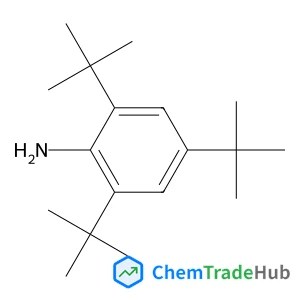
2,4,6-Tri-tert-butylaniline(CAS: 961-38-6)
CAS Number
Related Products
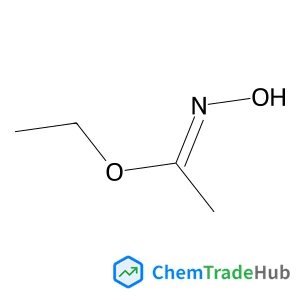
Ethyl (1E)-N-hydroxyethanimidate
CAS Number: 10576-12-2
![N-[1,3-Dihydroxy-2-(hydroxymethyl)-2-propanyl]acrylamide](https://static.chemtradehub.com/structs/138/13880-05-2-603d.webp)
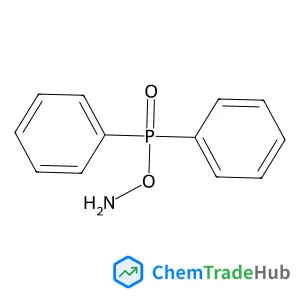
(Aminooxy)(diphenyl)phosphine oxide
CAS Number: 72804-96-7
![(Dimethylamino)-N,N-dimethyl(3H-[1,2,3]triazolo[4,5-b]pyridin-3-yloxy)methaniminium hexafluorophosphate](https://static.chemtradehub.com/structs/148/148893-10-1-c2ec.webp)
Other Suppliers for 2,4,6-Tri-tert-butylaniline





Basic Information
Molecular Formula
C18H31N
Molecular Weight
261.45 g/mol
Physical Properties
Melting Point
145.0 to 149.0 deg-C
Boiling Point
302℃ at 760 mmHg
Density
0.896
Flash Point
123.7°C
Water Solubility
Insoluble in water.
Chemical Identifiers
SMILES
CC(C)(C)C1=CC(=C(C(=C1)C(C)(C)C)N)C(C)(C)C
InChIKey
REJGDSCBQPJPQT-UHFFFAOYSA-N
Database References
MDL Number
MFCD00007767
Beilstein Registry Number
2272612
FAQ
2,4,6-Tri-tert-butylaniline (CAS: 961-38-6) falls under various regulatory guidelines. Under the Globally Harmonized System of Classification and Labeling of Chemicals (GHS), it is classified as a flammable liquid. In Europe, it is regulated under REACH (Registration, Evaluation, Authorization and Restriction of Chemicals) for its potential environmental and health impacts. The Food and Drug Administration (FDA) and Environmental Protection Agency (EPA) in the USA may have specific regulations regarding its handling, storage, and disposal due to its flammability and potential toxicity.
Alternatives to 2,4,6-Tri-tert-butylaniline (CAS: 961-38-6) in synthesis include other anilines, such as 2,4-dimethylaniline or 2,6-dimethylaniline, and related tert-butyl-containing compounds. These compounds offer similar functionalities but may have different reactivity and solubility properties. For specific applications, it is advisable to evaluate the reactivity profiles of these alternatives to find the most suitable one.
The market for 2,4,6-Tri-tert-butylaniline (CAS: 961-38-6) has shown steady growth due to its use in pharmaceuticals, dyes, and rubber chemicals. Recent research trends focus on its application in drug development, particularly in the synthesis of novel drugs. Additionally, there is increasing interest in its potential use as a flame retardant and in the formulation of environmentally friendly products. Market analysts predict continued demand, driven by the pharmaceutical and chemical industries.
Waste containing 2,4,6-Tri-tert-butylaniline (CAS: 961-38-6) should be collected in appropriate, leak-proof containers and stored in a well-ventilated area away from heat sources and ignition. It can be safely incinerated or disposed of through professional waste disposal services that comply with local regulations. Prior to disposal, ensure that the waste does not pose a risk to human health or the environment. Implement necessary safety precautions, such as the use of personal protective equipment (PPE), to prevent exposure. Always consult the latest safety data sheet (SDS) for specific handling instructions.
Safety Notice
Please verify product specifications and safety data before use. Contact the supplier for detailed safety information.
Always follow proper handling procedures
Contact Information
Contact Person
Miss Qi
qirl@highfine.com