



AD
2-(1H-Imidazol-2-yl)pyridine(CAS: 18653-75-3)
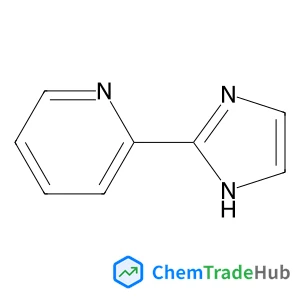
CAS Number
Related Products
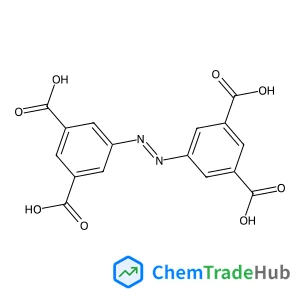
TAZBH4
CAS Number: 365549-33-3
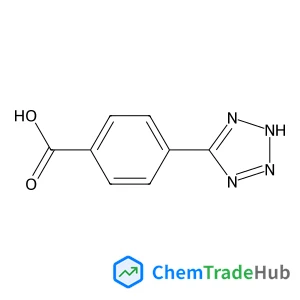
4-(1H-Tetrazol-5-yl)benzoic acid
CAS Number: 34114-12-0
![2,7-Di(4-pyridinyl)benzo[lmn][3,8]phenanthroline-1,3,6,8(2H,7H)-tetrone](https://static.chemtradehub.com/structs/341/34151-49-0-4701.webp)
![N'-[(E)-4-Pyridinylmethylene]isonicotinohydrazide](https://static.chemtradehub.com/structs/130/13025-99-5-405a.webp)
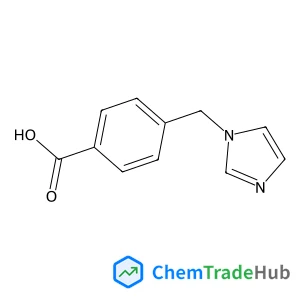
4-(1H-imidazol-1-ylmethyl)benzoic acid
CAS Number: 94084-75-0
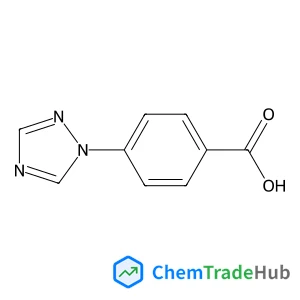
4-(1H-1,2,4-Triazol-1-yl)benzoic acid
CAS Number: 162848-16-0
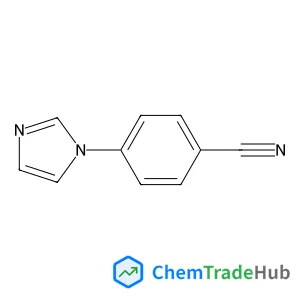
4-(1H-Imidazol-1-yl)benzonitrile
CAS Number: 25372-03-6
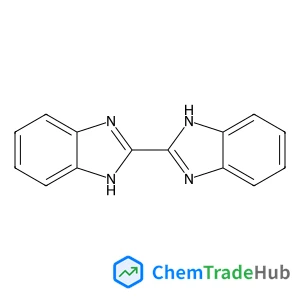
2,2'-Bi-1H-benzimidazole
CAS Number: 6965-02-2
Other Suppliers for 2-(1H-Imidazol-2-yl)pyridine




Basic Information
Molecular Formula
C8H7N3
Molecular Weight
145.17 g/mol
Physical State
Brown to Dark-brown Solid
Physical Properties
Melting Point
135-140 °C
Boiling Point
382.8°C at 760 mmHg
Density
1.214
Flash Point
191.5±13.3 °C
Chemical Identifiers
SMILES
C1=CC=NC(=C1)C2=NC=CN2
InChIKey
SZXUTTGMFUSMCE-UHFFFAOYSA-N
Database References
MDL Number
MFCD05863221
FAQ
2-(1H-Imidazol-2-yl)pyridine is a crystalline solid with a molecular weight of approximately 171.15 g/mol. It is slightly soluble in water but highly soluble in organic solvents like ethanol and acetone. Chemically, it is known for its reactivity towards nucleophilic substitution reactions and coordination chemistry. It has application in various industries due to its unique structural features and functional groups.
2-(1H-Imidazol-2-yl)pyridine is synthesized through the condensation reaction between 2-methylimidazole and pyridine. Commonly, this involves a simple multi-step process, where 2-methylimidazole reacts with pyridine under basic conditions to form the desired product. The yield and selectivity of the reaction can be optimized with suitable catalysts and solvents.
2-(1H-Imidazol-2-yl)pyridine is used in the pharmaceutical industry for the synthesis of certain drugs, in polymer applications for its catalytic properties, in sensor technology for detecting specific analytes, and in the semiconductor industry due to its electronic properties. Its versatility makes it a valuable compound in these and other specialized fields.
When handling 2-(1H-Imidazol-2-yl)pyridine, it is essential to wear appropriate personal protective equipment (PPE) including gloves, goggles, and a lab coat. Work should be conducted in a well-ventilated area or a fume hood. Spills should be cleaned up using appropriate absorbent materials and disposed of according to laboratory safety protocols. Always consult the Safety Data Sheet (SDS) for detailed handling instructions.
Safety Notice
Please verify product specifications and safety data before use. Contact the supplier for detailed safety information.
Always follow proper handling procedures
Contact Information
sdsuozhili@163.com