



AD
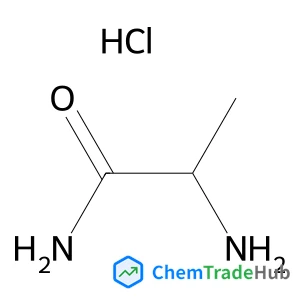
D-Alanine Amide HCl(CAS: 71810-97-4)
CAS Number
Related Products
![N-[(Benzyloxy)carbonyl]-D-aspartic acid](https://static.chemtradehub.com/structs/786/78663-07-7-62bf.webp)
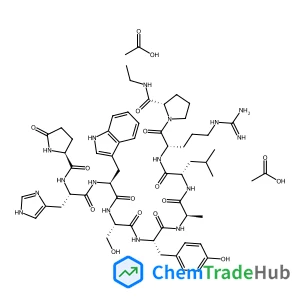
Alarelin Acetate
CAS Number: 79561-22-1
![3-Chloro-N-{[(2-methyl-2-propanyl)oxy]carbonyl}-D-phenylalanine](https://static.chemtradehub.com/structs/801/80102-25-6-f6b2.webp)
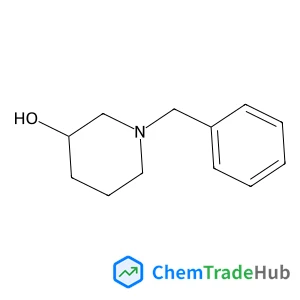
(3S)-1-Benzyl-3-piperidinol
CAS Number: 91599-79-0
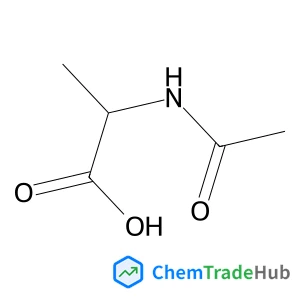
N-Acetyl-L-alanine
CAS Number: 97-69-8
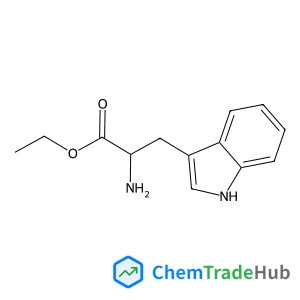
Ethyl L-tryptophanate
CAS Number: 7479-05-2
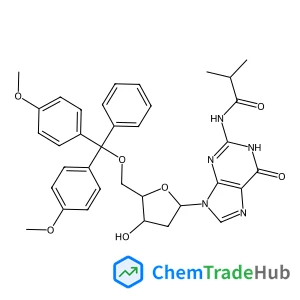
5'-O-DMT-N2-ibu-dG
CAS Number: 68892-41-1
Other Suppliers for D-Alanine Amide HCl





Basic Information
Molecular Formula
C3H9ClN2O
Molecular Weight
124.57 g/mol
Physical State
。
Physical Properties
Melting Point
169-172 ºC
Boiling Point
247.4°C at 760 mmHg
Flash Point
103.4°C
Water Solubility
Soluble in 1% acetic acid and water.
Chemical Identifiers
SMILES
CC(C(=O)N)N.Cl
InChIKey
FIAINKIUSZGVGX-HSHFZTNMSA-N
Database References
MDL Number
MFCD00039093
FAQ
D-Alanine Amide HCl is a crystalline compound with a molecular weight of approximately 217.67 g/mol. It has a high solubility in water and a low solubility in organic solvents. Chemically, it is stable under normal conditions but can react with strong bases. Its pKa value is around 2.2. It is used in various applications due to its unique physicochemical properties.
D-Alanine Amide HCl is typically synthesized by reacting D-alanine with hydrochloric acid. The reaction involves the formation of a salt between the carboxyl group of D-alanine and the hydrochloride ion, resulting in a yield of approximately 90%. The synthesis is usually carried out in aqueous solution using a stoichiometric ratio of D-alanine to HCl.
D-Alanine Amide HCl is used in the pharmaceutical industry for its potential as a chiral selector in HPLC and in the synthesis of chiral compounds. It is also used in the polymer industry for its amide properties, and in the sensor industry for its reactivity and stability. In the semiconductor industry, it is employed as a precursor in the fabrication of certain materials.
When handling D-Alanine Amide HCl (CAS: 71810-97-4), it is important to wear appropriate personal protective equipment (PPE) such as gloves, safety goggles, and a lab coat. The compound should be used in a well-ventilated area or a fume hood to minimize inhalation risks. Spills should be cleaned up using appropriate absorbents, and the area should be flushed with water. Refer to the Safety Data Sheet (SDS) for detailed information on handling and emergency procedures.
Safety Notice
Please verify product specifications and safety data before use. Contact the supplier for detailed safety information.
Always follow proper handling procedures
Contact Information
info@unibiochem.com