



AD
4-Biphenylyl(bromo)zinc(CAS: 312693-44-0)
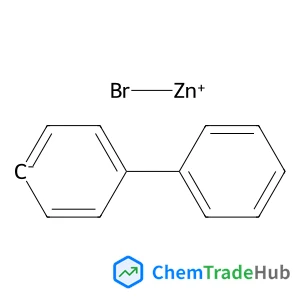
CAS Number
Related Products
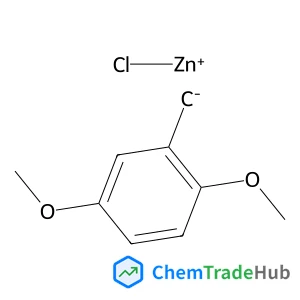
CID 11334226
CAS Number: 352530-32-6
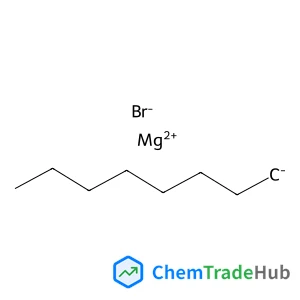
Bromo(octyl)magnesium
CAS Number: 17049-49-9
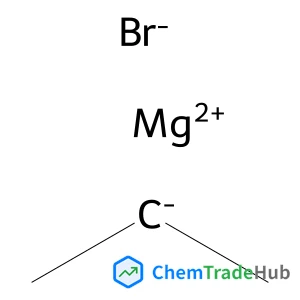
Magnesium, bromo(1-methylethyl)-
CAS Number: 920-39-8
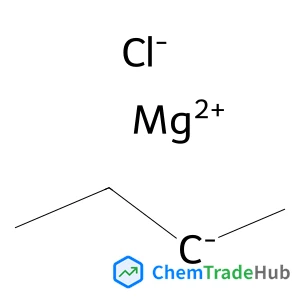
sec-Butyl(chloro)magnesium
CAS Number: 15366-08-2
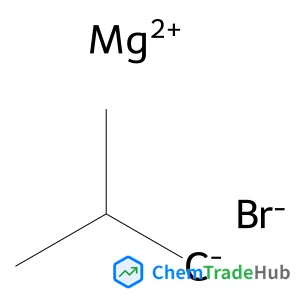
Isobutylmagnesium Bromide
CAS Number: 926-62-5
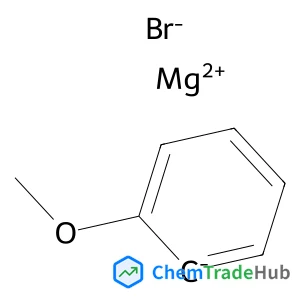
Bromo(2-methoxyphenyl)magnesium
CAS Number: 16750-63-3
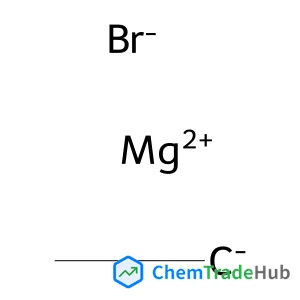
Ethylmagnesium Bromide
CAS Number: 925-90-6
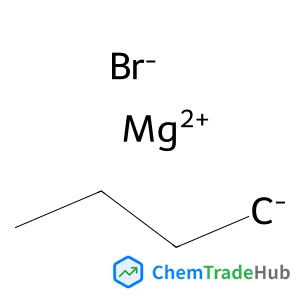
Bromo(butyl)magnesium
CAS Number: 693-03-8
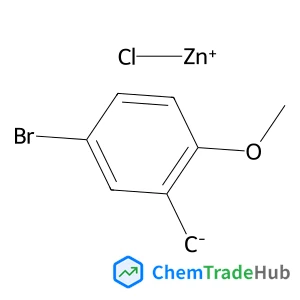
5-Bromo-2-methoxybenzylzinc chloride
CAS Number: 352530-35-9
Other Suppliers for 4-Biphenylyl(bromo)zinc



Basic Information
Molecular Formula
C12H9BrZn
Molecular Weight
297.49 g/mol
Physical Properties
Boiling Point
65 °C
Chemical Identifiers
SMILES
C1=CC=C(C=C1)C2=CC=[C-]C=C2.[Zn+]Br
InChIKey
JCLWMQNHWLMWKC-UHFFFAOYSA-M
Database References
MDL Number
MFCD02093780
FAQ
4-Biphenylyl(bromo)zinc (CAS: 312693-44-0) is regulated under the Globally Harmonized System (GHS) for classification as a hazardous chemical. It falls under the European Union's REACH regulations, which require registration for substances above 1 tonne per manufacturer or importer annually. In the United States, FDA and EPA may have specific guidelines for its use and disposal in pharmaceuticals and industrial applications.
For synthesis, alternatives to 4-Biphenylyl(bromo)zinc (CAS: 312693-44-0) include 4-Biphenylylchloride and 4-Biphenylylfluoride. These compounds offer similar reactivity in certain organic reactions, but users should consider the specific requirements of their synthesis to choose the most suitable alternative.
The market for 4-Biphenylyl(bromo)zinc (CAS: 312693-44-0) is driven by its use in pharmaceuticals, particularly as a precursor in the synthesis of certain drugs. Research trends show an increasing focus on its applications in organic synthesis, where its bromine functionality is utilized for building complex molecules. Price trends indicate stability, with demand remaining steady as it is a key reagent in several industrial processes.
Waste containing 4-Biphenylyl(bromo)zinc (CAS: 312693-44-0) should be collected in designated containers and disposed of through professional waste disposal services. Incineration is a common method, but it should be conducted in compliance with local environmental regulations. Proper handling involves ensuring the waste is appropriately labeled, segregated, and transported to a licensed facility to prevent environmental contamination and ensure safety.
Safety Notice
Please verify product specifications and safety data before use. Contact the supplier for detailed safety information.
Always follow proper handling procedures