



AD
2,4,5,6-Tetrafluoroisophthalonitrile(CAS: 2377-81-3)
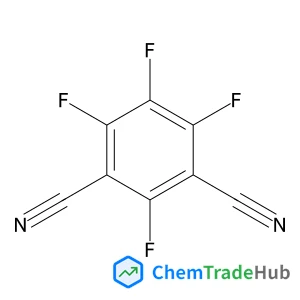
CAS Number
Related Products

L-Cysteine
CAS Number: 52-90-4

2-Aminoethanesulfonic acid
CAS Number: 107-35-7

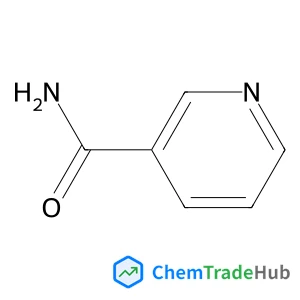
Niacinamide
CAS Number: 98-92-0
![Calcium bis(3-{[(2R)-2,4-dihydroxy-3,3-dimethylbutanoyl]amino}propanoate)](https://static.chemtradehub.com/structs/137/137-08-6-2f0d.webp)
![Sodium acetyl[(4-aminophenyl)sulfonyl]azanide hydrate (1:1:1)](https://static.chemtradehub.com/structs/620/6209-17-2-8e0a.webp)

Pentafluorobenzenethiol
CAS Number: 771-62-0
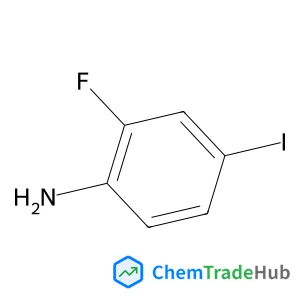
2-Fluoro-4-iodoaniline
CAS Number: 29632-74-4
![[4-(Trifluoromethyl)phenyl]boronic acid](https://static.chemtradehub.com/structs/128/128796-39-4-26e4.webp)
Other Suppliers for 2,4,5,6-Tetrafluoroisophthalonitrile





Basic Information
Molecular Formula
C8F4N2
Molecular Weight
200.09 g/mol
Physical Properties
Melting Point
75.0 to 79.0 deg-C
Boiling Point
212.5°Cat760mmHg
Flash Point
79 °C
Chemical Identifiers
SMILES
C(#N)C1=C(C(=C(C(=C1F)F)F)C#N)F
InChIKey
WVHMPQKZPHOCRD-UHFFFAOYSA-N
Database References
MDL Number
MFCD00013290
Beilstein Registry Number
6925899
FAQ
2,4,5,6-Tetrafluoroisophthalonitrile (CAS: 2377-81-3) is regulated under the Globally Harmonized System of Classification and Labelling of Chemicals (GHS) and is classified as a flammable liquid. It is also subject to the Registration, Evaluation, Authorisation and Restriction of Chemicals (REACH) regulation in the European Union. Additionally, the U.S. FDA and EPA have specific guidelines for the handling and disposal of this compound.
In synthesis, alternatives to 2,4,5,6-Tetrafluoroisophthalonitrile (CAS: 2377-81-3) include other nitriles with similar functional groups, such as fluoroisophthalonitrile. Other substitutes might include fluorinated derivatives of other aromatic compounds or non-fluorinated isophthalonitrile derivatives, depending on the specific application.
The market for 2,4,5,6-Tetrafluoroisophthalonitrile (CAS: 2377-81-3) is growing due to its use in the production of high-performance polymers and flame-retardant materials. Research trends focus on developing new applications and expanding its use in the electronics and aerospace industries. The compound is also being explored for its potential in developing advanced materials with unique thermal and mechanical properties.
Waste containing 2,4,5,6-Tetrafluoroisophthalonitrile (CAS: 2377-81-3) should be collected in a sealed, leak-proof container and disposed of through a licensed hazardous waste management facility. Incineration is a common method, but appropriate environmental precautions must be taken to prevent the release of harmful gases. Stabilization and treatment methods may also be employed to minimize environmental impact before disposal.
Safety Notice
Please verify product specifications and safety data before use. Contact the supplier for detailed safety information.
Always follow proper handling procedures

Contact Information
Contact Person
Zhu Xuelong
zhuxh@mwclg.com
Mobile
13918749270
Visit Website
https://www.0elem.com/reagentAddress
Pudong New Area Beichenzhen Five Star Road 706 Lane Building 31