



AD
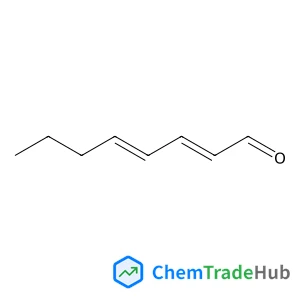
(2E,4E)-2,4-Octadienal(CAS: 5577-44-6)
CAS Number
Related Products
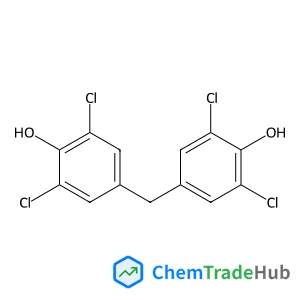
Tetrachloro-BPF
CAS Number: 3933-88-8
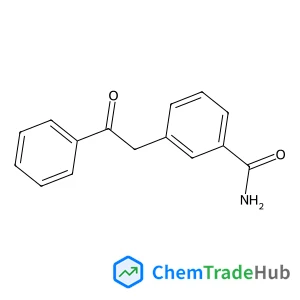
3-(2-Oxo-2-phenylethyl)benzamide
CAS Number: 465514-78-7
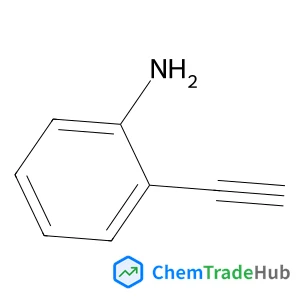
2-ethynylaniline
CAS Number: 52670-38-9
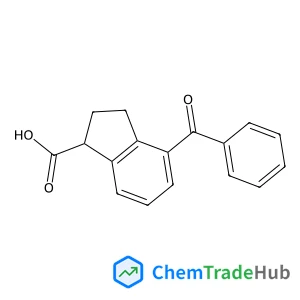
4-Benzoyl-1-indanecarboxylic acid
CAS Number: 56461-33-7
![N-(4-{[(2-Amino-4-oxo-1,4,5,6,7,8-hexahydropyrido[3,2-d]pyrimidin-6-yl)methyl]amino}benzoyl)-L-glutamic acid](https://static.chemtradehub.com/structs/519/51989-29-8-63d5.webp)
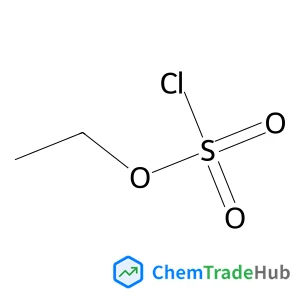
Ethyl sulfurochloridate
CAS Number: 625-01-4

Articaine-014
CAS Number: 23964-64-9
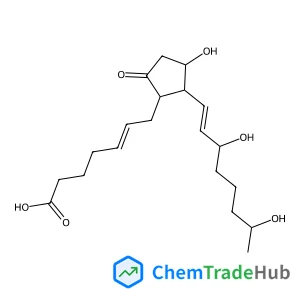
15(R)-19(R)-Hydroxy prostaglandin E2
CAS Number: 54142-29-9
Other Suppliers for (2E,4E)-2,4-Octadienal

Basic Information
Molecular Formula
C8H12O
Molecular Weight
124.18 g/mol
Physical Properties
Boiling Point
198.2±9.0 ºC (760 Torr),
Density
0.875 g/mL at 25 °C (lit.)
Flash Point
83.0±11.0 ºC,
Chemical Identifiers
SMILES
CCCC=CC=CC=O
InChIKey
DVVATNQISMINCX-YTXTXJHMSA-N
Database References
MDL Number
MFCD00014676
FAQ
(2E,4E)-2,4-Octadienal is a colorless to light yellow liquid with a strong aldehyde odor. Its molecular weight is approximately 132.17 g/mol. The compound is slightly soluble in water but soluble in most organic solvents. It is moderately reactive, especially towards nucleophiles and reductive aminations. It has a melting point of -31°C and a boiling point of 175°C under standard conditions.
(2E,4E)-2,4-Octadienal can be synthesized through the dehydration of (2E,4E)-2,4-octadien-1-ol or by the Wittig reaction using triphenylphosphonium bromide and octenyl bromide. The synthesis usually involves heating the reactants under reflux conditions, followed by distillation to purify the product. This method provides good yield and selectivity, making it a common route for industrial production.
(2E,4E)-2,4-Octadienal is widely used in the fragrance and flavor industry due to its characteristic odor. It also finds applications in the pharmaceutical industry for the synthesis of certain compounds. Additionally, it is used as a precursor in the polymer industry, where it can be incorporated into polymer structures. Its reactivity makes it useful in sensor technology and semiconductor manufacturing processes.
When handling (2E,4E)-2,4-Octadienal, proper personal protective equipment (PPE) such as gloves, goggles, and a lab coat is essential. Work should be conducted in a well-ventilated area or fume hood to avoid inhalation of the volatile compound. Spills should be carefully absorbed with inert materials and disposed of according to local regulations. Always refer to a Safety Data Sheet (SDS) for detailed handling and emergency procedures.
Safety Notice
Please verify product specifications and safety data before use. Contact the supplier for detailed safety information.
Always follow proper handling procedures
Contact Information
Contact Person
Xiao Zhang
2012558459@qq.com