



AD
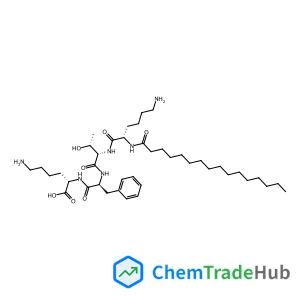
N~2~-Palmitoyl-L-lysyl-L-threonyl-L-phenylalanyl-L-lysine(CAS: 887140-79-6)
CAS Number
Related Products
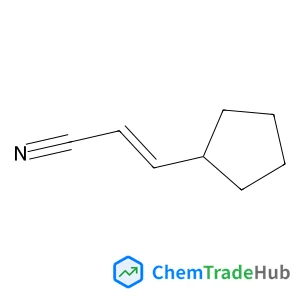
(2E)-3-Cyclopentylacrylonitrile
CAS Number: 591769-05-0
![[1-(Ethylsulfonyl)-3-azetidinylidene]acetonitrile](https://static.chemtradehub.com/structs/118/1187595-85-2-c54e.webp)
![(2R,3R)-2,3-Bis[(4-methylbenzoyl)oxy]succinic acid - (3R,4R)-1-benzyl-N,4-dimethyl-3-piperidinamine (1:2)](https://static.chemtradehub.com/structs/477/477600-71-8-71b4.webp)
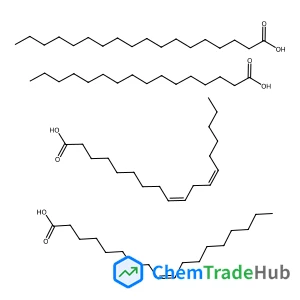
Sesame Oil
CAS Number: 8008-74-0
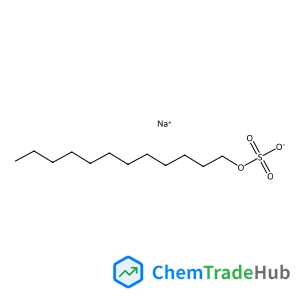
Sodium dodecyl sulfate
CAS Number: 151-21-3
![Ethyl {5-[(4-methylphenyl)sulfonyl]-5H-pyrrolo[2,3-b]pyrazin-2-yl}carbamate](https://static.chemtradehub.com/structs/186/1869118-24-0-6f80.webp)
Other Suppliers for N~2~-Palmitoyl-L-lysyl-L-threonyl-L-phenylalanyl-L-lysine


Basic Information
Molecular Formula
C41H72N6O7
Molecular Weight
761.06 g/mol
Chemical Identifiers
SMILES
CCCCCCCCCCCCCCCC(=O)N[C@@H](CCCCN)C(=O)N[C@@H]([C@@H](C)O)C(=O)N[C@@H](Cc1ccccc1)C(=O)N[C@@H](CCCCN)C(=O)O
InChIKey
XCEMXBAGNZCOHW-JPZUFNMASA-N
Database References
FAQ
N-2-Palmitoyl-L-lysyl-L-threonyl-L-phenylalanyl-L-lysine (CAS: 887140-79-6) falls under multiple regulatory guidelines. It must comply with the GHS classification, which includes health, environmental, and physical hazards. In the EU, it is subject to REACH regulations for the registration, evaluation, authorization, and restriction of chemicals. FDA and EPA guidelines apply for its use in the U.S., including safety and environmental impact assessments.
For synthesizing peptides similar to N-2-Palmitoyl-L-lysyl-L-threonyl-L-phenylalanyl-L-lysine (CAS: 887140-79-6), there are alternative reagents and methods. Commonly used alternatives include TFA-based deprotection, solid-phase peptide synthesis (SPPS), and alternative protecting groups. These alternatives offer flexibility in the synthesis process and can be chosen based on the specific requirements of the research or industrial application.
The market and research trends for N-2-Palmitoyl-L-lysyl-L-threonyl-L-phenylalanyl-L-lysine (CAS: 887140-79-6) are focused on its use in pharmaceuticals and biotechnology. There is a growing interest in its potential as a novel therapeutic agent, particularly in areas such as drug delivery systems and targeted protein therapies. Research is also exploring its role in understanding protein-protein interactions and its use in developing new diagnostic tools.
Handling waste containing N-2-Palmitoyl-L-lysyl-L-threonyl-L-phenylalanyl-L-lysine (CAS: 887140-79-6) requires careful management to ensure environmental safety. Waste liquid should be collected and stored in appropriate containers lined with impermeable materials. Incineration or professional waste disposal services are recommended to dispose of the waste. Environmental protection precautions include ensuring no spillage and proper labeling of containers to prevent accidental exposure. Compliance with local regulations is essential to avoid fines and environmental damage.
Safety Notice
Please verify product specifications and safety data before use. Contact the supplier for detailed safety information.
Always follow proper handling procedures
Contact Information
Contact Person
Mr. Ye
info@domanchem.com