AD
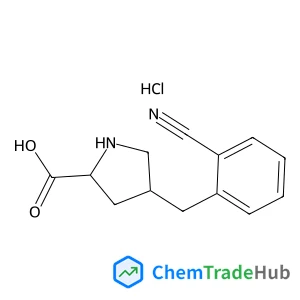
(2S,4R)-4-(2-Cyanobenzyl)pyrrolidine-2-carboxylic acid hydrochloride(CAS: 1049743-86-3)
CAS Number
Related Products
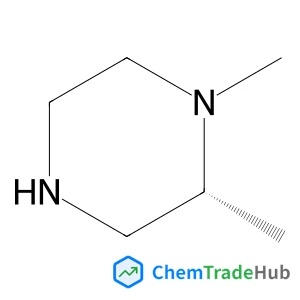
(2R)-1,2-Dimethylpiperazine
CAS Number: 623586-02-7
![(2S)-4-Hydroxy-7-(hydroxymethyl)-2-(2-hydroxy-2-propanyl)-2,3-dihydro-5H-furo[3,2-g]chromen-5-one](https://static.chemtradehub.com/structs/496/49624-66-0-7116.webp)
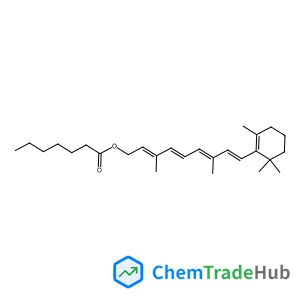
O~15~-Heptanoylretinol
CAS Number: 88641-44-5
![1-Methoxy-2-[1-(4-methoxyphenyl)propyl]benzene](https://static.chemtradehub.com/structs/334/33451-22-8-2ef2.webp)
CAS Number: 1350524-27-4
Other Suppliers for (2S,4R)-4-(2-Cyanobenzyl)pyrrolidine-2-carboxylic acid hydrochloride






Basic Information
Molecular Formula
C13H15ClN2O2
Molecular Weight
219.28 g/mol
Chemical Identifiers
SMILES
C1C(CNC1C(=O)O)CC2=CC=CC=C2C#N.Cl
InChIKey
CCANPXGPMAXDIM-KATIXKQHSA-N
Database References
MDL Number
MFCD06659431
FAQ
(2S,4R)-4-(2-Cyanobenzyl)pyrrolidine-2-carboxylic acid hydrochloride is a white crystalline solid with a molecular weight of approximately 302.25 g/mol. It has a low aqueous solubility but good solubility in organic solvents. This compound is known for its high reactivity, particularly towards nucleophilic substitution and amide formation. It is stable under normal storage conditions but should be protected from prolonged exposure to light and moisture.
(2S,4R)-4-(2-Cyanobenzyl)pyrrolidine-2-carboxylic acid hydrochloride can be synthesized via a multistep process involving the formation of a pyrrolidine ring and subsequent cyanobenzylation. The reaction is typically catalyzed by a palladium complex, and the yield is around 80-85%. The key steps include protection of the amino group, cyclization, and cyanobenzylation, followed by hydrolysis and acidification to form the hydrochloride salt.
This compound finds applications in the pharmaceutical industry for its potential use as a drug intermediate or scaffold. It is also used in the synthesis of various organic compounds and materials. In the sensor industry, it can be used as a functional group for modifying surfaces or as a component in sensor arrays. Its use in the semiconductor industry is less common but may be utilized in the development of certain types of organic semiconductors.
When handling (2S,4R)-4-(2-Cyanobenzyl)pyrrolidine-2-carboxylic acid hydrochloride, it is essential to use appropriate personal protective equipment (PPE), including gloves, goggles, and a lab coat. The compound should be handled in a well-ventilated area or a fume hood to minimize inhalation risk. Spills should be carefully cleaned up and disposed of according to local regulations. For safety information, always refer to the Material Safety Data Sheet (MSDS) or SDS for detailed handling instructions and emergency procedures.
Safety Notice
Please verify product specifications and safety data before use. Contact the supplier for detailed safety information.
Always follow proper handling procedures