



AD
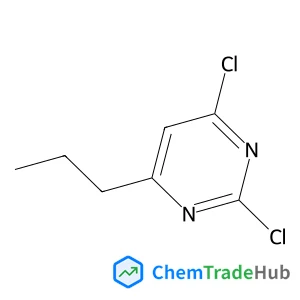
2,4-Dichloro-6-propylpyrimidine(CAS: 89938-07-8)
CAS Number
Related Products
![2-Methyl-2-propanyl [(2R)-1-hydroxy-2-propanyl]carbamate](https://static.chemtradehub.com/structs/106/106391-86-0-8397.webp)

3-Bromo-2,2-bis(bromomethyl)-1-propanol
CAS Number: 1522-92-5
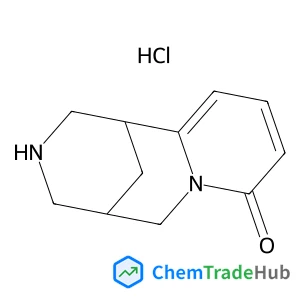
Cytisine hydrochloride
CAS Number: 6047-01-4
Atorvastatin Impurity 55
CAS Number: 141942-85-0
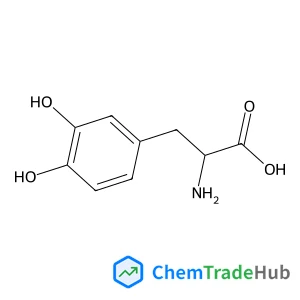
3-Hydroxy-D-tyrosine
CAS Number: 5796-17-8
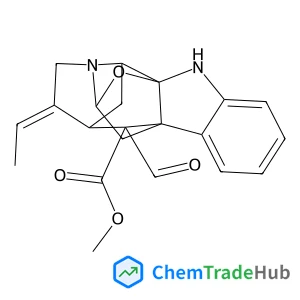
Picralinal
CAS Number: 20045-06-1
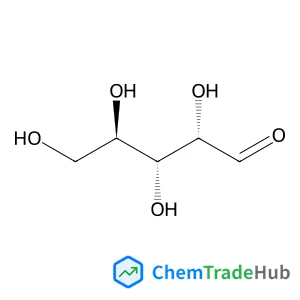
D-Arabinose
CAS Number: 9032-75-1
![(3aS,9R,9aS,9bS)-9-Hydroxy-6,9-dimethyl-3-methylene-3a,4,5,7,8,9,9a,9b-octahydroazuleno[4,5-b]furan-2(3H)-one](https://static.chemtradehub.com/structs/683/68370-47-8-daf4.webp)
Other Suppliers for 2,4-Dichloro-6-propylpyrimidine



Basic Information
Molecular Formula
C7H8Cl2N2
Molecular Weight
191.06 g/mol
Chemical Identifiers
SMILES
CCCC1=CC(=NC(=N1)Cl)Cl
InChIKey
XUJXLDZCRUCDJC-UHFFFAOYSA-N
Database References
MDL Number
MFCD18803468
FAQ
2,4-Dichloro-6-propylpyrimidine (CAS: 89938-07-8) is subject to various regulatory guidelines. Globally, it falls under the GHS (Globally Harmonized System of Classification and Labelling of Chemicals) and should be classified and labeled according to its hazardous properties. In the European Union, it is regulated under REACH (Registration, Evaluation, Authorisation and Restriction of Chemicals). For use in the United States, it is overseen by the EPA (Environmental Protection Agency) and may require registration or notification under the Toxic Substances Control Act (TSCA).
There are alternatives to 2,4-Dichloro-6-propylpyrimidine (CAS: 89938-07-8) that can be used in synthesis. Commonly, chemists may opt for other pyrimidine derivatives with different substituents, such as 2,4-Dichloropyrimidine or 2,4-Difluoropyrimidine, which offer similar functional groups but with varying reactivity and toxicity profiles.
The market for 2,4-Dichloro-6-propylpyrimidine (CAS: 89938-07-8) is currently stable, with ongoing research focusing on its applications in agriculture and pharmaceuticals. Recent trends indicate increased interest in its use as a herbicide and potential therapeutic agents. However, due to its toxicity, there is a growing emphasis on developing safer alternatives and understanding its environmental impact.
Waste containing 2,4-Dichloro-6-propylpyrimidine (CAS: 89938-07-8) should be handled with caution due to its hazardous nature. It should be collected in appropriate containers and stored in a secure, well-ventilated area. Proper waste disposal methods should be followed, typically involving incineration or professional waste disposal services that specialize in hazardous waste. Environmental protection measures, including the use of personal protective equipment and adherence to local regulations, should be strictly observed during handling and disposal.
Safety Notice
Please verify product specifications and safety data before use. Contact the supplier for detailed safety information.
Always follow proper handling procedures
Contact Information
2423903095@qq.com