



AD
Cerous caibonate(CAS: 77520-94-6)

CAS Number
Related Products
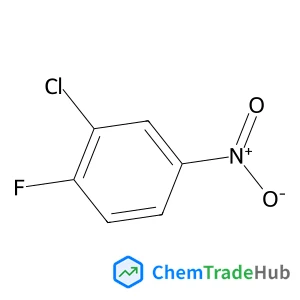
2-Chloro-1-fluoro-4-nitrobenzene
CAS Number: 350-30-1

Zinc dioxido(oxo)zirconium
CAS Number: 53807-65-1



Potassium (9Z)-9-octadecenoate
CAS Number: 143-18-0
![5-[(2R)-2-(2,5-Difluorophenyl)-1-pyrrolidinyl]pyrazolo[1,5-a]pyrimidin-3-amine](https://static.chemtradehub.com/structs/122/1223404-88-3-f8cd.webp)
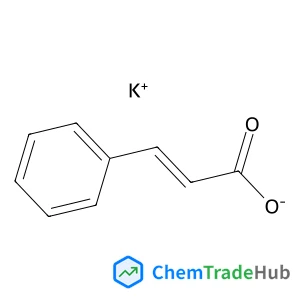
Potassium (2E)-3-phenylacrylate
CAS Number: 16089-48-8
![N-{[2,5-Dichloro-4-(1,1,2,3,3,3-hexafluoropropoxy)phenyl]carbamoyl}-2,6-difluorobenzamide](https://static.chemtradehub.com/structs/103/103055-07-8-c079.webp)

Other Suppliers for Cerous caibonate





Basic Information
Molecular Formula
C49H52Cl4N4O6
Molecular Weight
934.8 g/mol
Physical Properties
Boiling Point
333.6°Cat760mmHg
Flash Point
169.8°C
Chemical Identifiers
SMILES
CCCCCCCCCCCCCCCCC=CC1CC(=O)N(C1=O)C(=O)C2=CC=C(C3=CC=CC=C32)OC(=O)C4=CC(=C(C=C4)Cl)NC5=NN(C(=O)C5)C6=C(C=C(C=C6Cl)Cl)Cl
InChIKey
NBIBTFVVYUQVMW-LVZFUZTISA-N
Database References
FAQ
Cerous carbonate, or cerium(IV) carbonate (CAS: 77520-94-6), is a white powdery solid with a molecular weight of approximately 241.95 g/mol. It has a relatively low solubility in water and is known for its stability in air. Cerium(IV) carbonate is less reactive compared to other cerium compounds and does not typically undergo hydrolysis under normal conditions.
Cerous carbonate can be synthesized by reacting cerium(IV) oxide or cerium(III) oxide with carbon dioxide in the presence of water. The reaction can be catalyzed by various acids or bases, and the process yields a high purity product with good selectivity. The synthesis typically requires careful control of temperature and pressure to ensure the desired crystalline form.
Cerous carbonate (CAS: 77520-94-6) finds applications in several industries, including pharmaceuticals, where it serves as a source of cerium in drug formulations. It is also used in the production of high-frequency ceramics, as a raw material in the synthesis of cerium-based catalysts, and in the manufacturing of certain types of glass and ceramics. Additionally, it has applications in the development of sensors and in the preparation of cerium-containing polymers.
When handling cerous carbonate (CAS: 77520-94-6), it is important to use appropriate personal protective equipment (PPE) such as gloves, safety goggles, and a lab coat. Work should be conducted in a well-ventilated area or under a fume hood due to its potential for dust generation. Spills should be cleaned up carefully using appropriate absorbent materials, and the area should be thoroughly washed down. Always consult the Safety Data Sheet (SDS) for specific handling and disposal instructions.
Safety Notice
Please verify product specifications and safety data before use. Contact the supplier for detailed safety information.
Always follow proper handling procedures
Contact Information
Contact Person
Miss Wu
504149541@qq.com