



AD
Fructosazine(CAS: 13185-73-4)

CAS Number
Related Products
![1-[4-Amino-3-chloro-5-(trifluoromethyl)phenyl]-2-[(2-methyl-2-propanyl)amino]ethanol hydrochloride (1:1)](https://static.chemtradehub.com/structs/542/54240-36-7-06e4.webp)
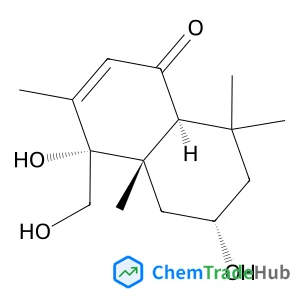

2',4-Dihydroxy-4',6'-dimethoxychalcone
CAS Number: 37308-75-1
![8-({(3R,4R,5S)-3-[(4,4-Difluorocyclohexyl)methoxy]-5-methoxy-4-piperidinyl}amino)-3-methyl-5-(5-methyl-3-pyridinyl)-1,7-naphthyridin-2(1H)-one](https://static.chemtradehub.com/structs/199/1997369-78-4-ea15.webp)

2-(3,4-Dihydroxyphenyl)ethyl acetate
CAS Number: 69039-02-7
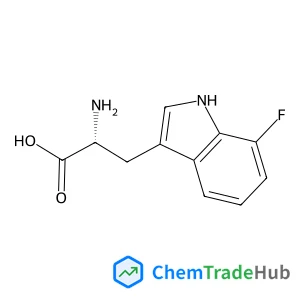
7-Fluorotryptophan
CAS Number: 138514-98-4
![5-[(1S)-1-{(1R,2R)-2-[(1R,3R)-2,2-Dimethyl-3-(3-oxobutyl)cyclopropyl]-1-methyl-3-oxocyclopentyl}-3-methylbutyl]-2,4,6-trihydroxyisophthalaldehyde](https://static.chemtradehub.com/structs/221/221899-21-4-fc5c.webp)

Andrographidine C
CAS Number: 113963-39-6
![(2E)-3-(6-Bromo-2-pyridinyl)-2-cyano-N-[(1S)-1-phenylethyl]acrylamide](https://static.chemtradehub.com/structs/857/857064-38-1-2c6b.webp)
Other Suppliers for Fructosazine







Basic Information
Molecular Formula
C12H20N2O8
Molecular Weight
320.3 g/mol
Physical Properties
Melting Point
>150°C (dec.)
Boiling Point
764.9°Cat760mmHg
Density
1.68
Flash Point
416.4°C
Chemical Identifiers
SMILES
C1=C(N=CC(=N1)C(C(C(CO)O)O)O)C(C(C(CO)O)O)O
InChIKey
NPWQIVOYGNUVEB-PAUJSFGCSA-N
Database References
MDL Number
MFCD00057748
FAQ
Fructosazine (CAS: 13185-73-4) is subject to various regulatory guidelines. It is classified under the Globally Harmonized System (GHS) of Classification and Labelling of Chemicals, which includes specific hazard statements and pictograms. In Europe, it falls under the REACH regulation, requiring manufacturers and importers to register the substance with the European Chemicals Agency. In the USA, the Environmental Protection Agency (EPA) and the Food and Drug Administration (FDA) may have specific requirements for handling and reporting of this chemical.
Fructosazine (CAS: 13185-73-4) can be synthesized using various alternative reagents and methods depending on the specific application. Common alternatives include other polyol derivatives and related compounds. For instance, using glucose or fructose as starting materials can yield similar products. Researchers often explore these alternatives to achieve better yields, purity, or specific functional groups.
The market for Fructosazine (CAS: 13185-73-4) is currently experiencing growth due to its potential applications in food additives, pharmaceuticals, and cosmetics. Recent research trends focus on understanding its biological activities, such as antioxidant and anti-inflammatory properties. Additionally, there is a growing interest in its use as a natural colorant and flavor enhancer in the food industry. As the demand for natural and functional ingredients continues to rise, the demand for Fructosazine is expected to increase.
Waste containing Fructosazine (CAS: 13185-73-4) should be collected in appropriate containers lined with compatible materials and stored in a well-ventilated area. Proper incineration or professional waste disposal services should be used to ensure safe disposal. Environmental protection measures include following local regulations and guidelines, such as avoiding direct contact with soil or water, and ensuring the waste is properly identified and labeled for disposal. It is crucial to consult with hazardous waste experts to ensure compliance with all regulations regarding waste management.
Safety Notice
Please verify product specifications and safety data before use. Contact the supplier for detailed safety information.
Always follow proper handling procedures
Contact Information
2851167780@qq.com
Mobile
13348961525
Fax
028-81705658
Visit Website
https://www.weikeqi-biotech.com