



AD
1-(2,5-Dioxo-1-pyrrolidinyl) 4-(2-methyl-2-propanyl) N-{[(2-methyl-2-propanyl)oxy]carbonyl}-L-aspartate(CAS: 50715-50-9)
![1-(2,5-Dioxo-1-pyrrolidinyl) 4-(2-methyl-2-propanyl) N-{[(2-methyl-2-propanyl)oxy]carbonyl}-L-aspartate](https://static.chemtradehub.com/structs/507/50715-50-9-969e.webp "1-(2,5-Dioxo-1-pyrrolidinyl) 4-(2-methyl-2-propanyl) N-{[(2-methyl-2-propanyl)oxy]carbonyl}-L-aspartate")
CAS Number
Related Products
![Naphtho[1,2-c]furan-1,3-dione](https://static.chemtradehub.com/structs/534/5343-99-7-5dbe.webp)
Naphtho[1,2-c]furan-1,3-dione
CAS Number: 5343-99-7
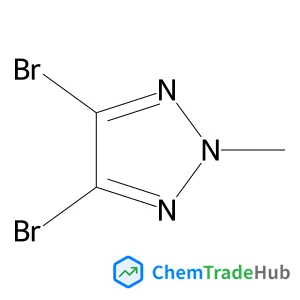
4,5-Dibromo-2-methyl-2H-1,2,3-triazole
CAS Number: 28938-17-2
![1-[Chloro(1-pyrrolidinyl)methylene]pyrrolidinium tetrafluoroborate](https://static.chemtradehub.com/structs/115/115007-14-2-7aa4.webp)
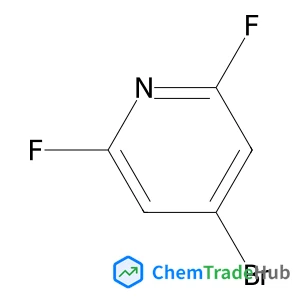
4-Bromo-2,6-difluoropyridine
CAS Number: 903513-58-6
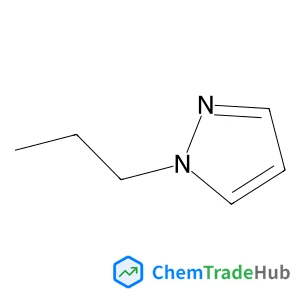
1-propyl-1H-pyrazole
CAS Number: 32500-67-7
![N~5~-[N-(Mesitylsulfonyl)carbamimidoyl]-N~2~-{[(2-methyl-2-propanyl)oxy]carbonyl}-L-ornithine](https://static.chemtradehub.com/structs/682/68262-71-5-07ff.webp)
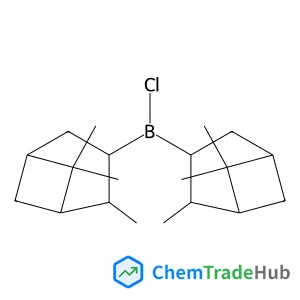
(-)-DIP-chloride (~60% in Heptane)
CAS Number: 85116-37-6
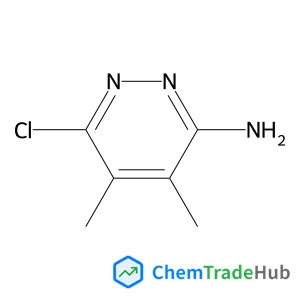
6-Chloro-4,5-dimethyl-3-pyridazinamine
CAS Number: 76593-36-7
Other Suppliers for 1-(2,5-Dioxo-1-pyrrolidinyl) 4-(2-methyl-2-propanyl) N-{[(2-methyl-2-propanyl)oxy]carbonyl}-L-aspartate
![1-(2,5-Dioxo-1-pyrrolidinyl) 4-(2-methyl-2-propanyl) N-{[(2-methyl-2-propanyl)oxy]carbonyl}-L-aspartate — Bachem](https://static.chemtradehub.com/suppliers/67cec83c2b2de6e8e95a50cd/67cec83c2b2de6e8e95a50cd-logo.webp)
![1-(2,5-Dioxo-1-pyrrolidinyl) 4-(2-methyl-2-propanyl) N-{[(2-methyl-2-propanyl)oxy]carbonyl}-L-aspartate — JiangSuAiKangShengWuYiYaoYanFa Co Ltd](https://static.chemtradehub.com/suppliers/67cec9452b2de6e8e95a52fa/67cec9452b2de6e8e95a52fa-logo.webp)
![1-(2,5-Dioxo-1-pyrrolidinyl) 4-(2-methyl-2-propanyl) N-{[(2-methyl-2-propanyl)oxy]carbonyl}-L-aspartate — Beijing Bailingwei Technology Co., Ltd.](https://static.chemtradehub.com/suppliers/67cde31e57537e5c8069aebf/67cde31e57537e5c8069aebf-logo.webp)
![1-(2,5-Dioxo-1-pyrrolidinyl) 4-(2-methyl-2-propanyl) N-{[(2-methyl-2-propanyl)oxy]carbonyl}-L-aspartate — Shanghai Yuyeh Biotechnology Co., Ltd.](https://static.chemtradehub.com/suppliers/67ce9f132b2de6e8e95a48fe/67ce9f132b2de6e8e95a48fe-logo.webp)
![1-(2,5-Dioxo-1-pyrrolidinyl) 4-(2-methyl-2-propanyl) N-{[(2-methyl-2-propanyl)oxy]carbonyl}-L-aspartate — Shanghai Jixiang Biotechnology Co., Ltd.](https://static.chemtradehub.com/suppliers/67ce6f4d2b2de6e8e95a45bf/67ce6f4d2b2de6e8e95a45bf-logo.webp)
![1-(2,5-Dioxo-1-pyrrolidinyl) 4-(2-methyl-2-propanyl) N-{[(2-methyl-2-propanyl)oxy]carbonyl}-L-aspartate — ShenZhenAiTaHuaXue Co Ltd](https://static.chemtradehub.com/suppliers/67ced0fb2b2de6e8e95a67fa/67ced0fb2b2de6e8e95a67fa-logo.webp)
Basic Information
Molecular Formula
C17H26N2O8
Molecular Weight
386.4 g/mol
Physical Properties
Melting Point
98-102 °C
Chemical Identifiers
SMILES
CC(C)(C)OC(=O)CC(C(=O)ON1C(=O)CCC1=O)NC(=O)OC(C)(C)C
InChIKey
PIITZDSTZQZNQH-JTQLQIEISA-N
Database References
MDL Number
MFCD00063389
FAQ
1-(2,5-Dioxo-1-pyrrolidinyl) 4-(2-methyl-2-propanyl) N-{[(2-methyl-2-propanyl)oxy]carbonyl}-L-aspartate is a colorless crystalline compound with a molecular weight of approximately 432.5 g/mol. It is soluble in methanol and slightly soluble in water. The compound exhibits typical amide reactivity, with potential for nucleophilic substitution and esterification reactions. It has a melting point around 190-192°C.
This compound is typically synthesized through a multi-step process involving the protection of the aspartic acid, formation of the pyrrolidine ring, and subsequent derivatization. Commonly, the synthesis involves the use of various protecting groups and catalysts, with yields around 80-90%. The exact methodology may vary depending on the specific conditions and reagents used.
1-(2,5-Dioxo-1-pyrrolidinyl) 4-(2-methyl-2-propanyl) N-{[(2-methyl-2-propanyl)oxy]carbonyl}-L-aspartate is primarily used in the pharmaceutical industry for the development of novel drugs. It may also be applied in the polymer industry for the synthesis of biomedical polymers, and in the sensor industry for the development of chemical sensors due to its reactivity and functional groups.
When handling this compound, ensure proper personal protective equipment (PPE) is worn, including gloves, goggles, and a lab coat. Work should be conducted in a well-ventilated area or a fume hood to minimize inhalation risks. Spills should be handled with care, using absorbent materials, and the material safety data sheet (MSDS) should be consulted for specific spill procedures. This compound is not highly toxic but can cause skin and eye irritation.
Safety Notice
Please verify product specifications and safety data before use. Contact the supplier for detailed safety information.
Always follow proper handling procedures

Contact Information
Contact Person
Jin Jinle (National Unified Telephone Line)
hnjjlchem@126.com
Telephone
10106090
Visit Website
https://www.jinjinlechem.com/Address
Changsha Kaifu District Tongtai Street Zhongshan Road 589 Kaifu Wangdawei Square C District 3rd Office Building 2905