



AD
Chloro(difluoro)acetic anhydride(CAS: 2834-23-3)
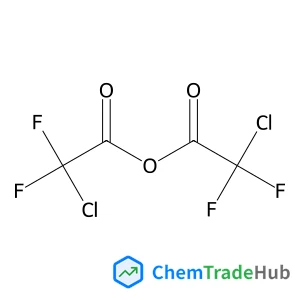
CAS Number
Related Products
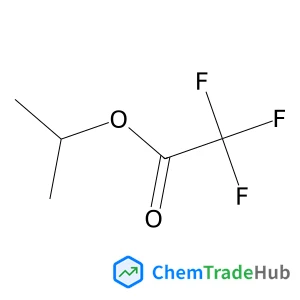
Isopropyl trifluoroacetate
CAS Number: 400-38-4
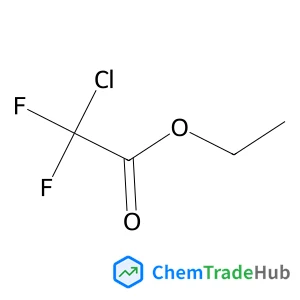
Ethyl chloro(difluoro)acetate
CAS Number: 383-62-0
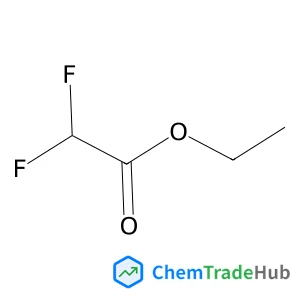
Ethyl difluoroacetate
CAS Number: 454-31-9
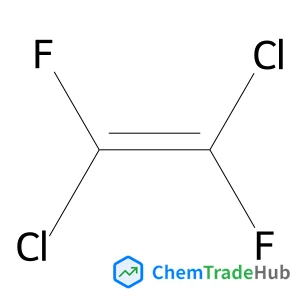
(E)-1,2-Dichloro-1,2-difluoroethene
CAS Number: 27156-03-2
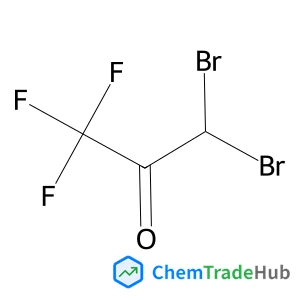
3,3-Dibromo-1,1,1-trifluoroacetone
CAS Number: 431-67-4
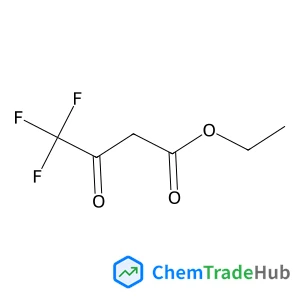
Ethyl 4,4,4-trifluoro-3-oxobutanoate
CAS Number: 372-31-6
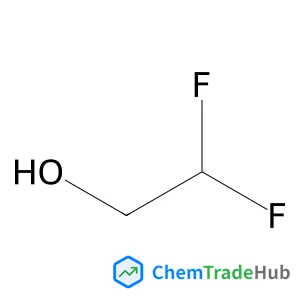
2,2-difluoroethan-1-ol
CAS Number: 359-13-7
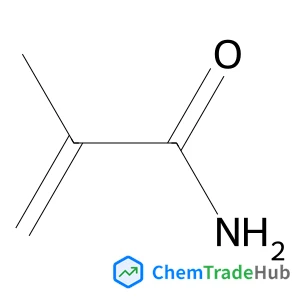
Methacrylamide
CAS Number: 79-39-0
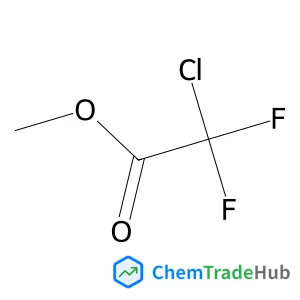
Methyl chloro(difluoro)acetate
CAS Number: 1514-87-0
Other Suppliers for Chloro(difluoro)acetic anhydride





Basic Information
Molecular Formula
C4Cl2F4O3
Molecular Weight
242.94 g/mol
Physical Properties
Boiling Point
96-97 °C(lit.)
Flash Point
25.9±15.1 ºC,
Water Solubility
Slightly Soluble in water. (1.4 g/L) (25°C)
Chemical Identifiers
SMILES
C(=O)(C(F)(F)Cl)OC(=O)C(F)(F)Cl
InChIKey
VBJIFLOSOQGDRZ-UHFFFAOYSA-N
Database References
MDL Number
MFCD00000774
Beilstein Registry Number
1912832
FAQ
Chloro(difluoro)acetic anhydride (CAS: 2834-23-3) is classified under the Globally Harmonized System of Classification and Labelling of Chemicals (GHS) as a Category 1A skin corrosion/irritation agent. In the European Union, it falls under REACH regulations, requiring suppliers to register substances above 1 tonne per year. The FDA and EPA have specific requirements for the handling, storage, and disposal of this compound, emphasizing its potential for skin and eye irritation, and the need for proper labeling and safety data sheets.
Alternative reagents like trifluoroacetic anhydride can be used as substitutes in some synthetic processes. However, the choice of alternative depends on the specific requirements of the reaction. For instance, trifluoroacetic anhydride is a more commonly used alternative due to its similar reactivity and better solubility in organic solvents. It is important to evaluate the compatibility and efficiency of these alternatives in the specific context of the synthesis.
The market for Chloro(difluoro)acetic anhydride (CAS: 2834-23-3) is driven by its use in the synthesis of pharmaceuticals and agrochemicals. Recent research trends indicate a growing interest in developing more environmentally friendly and safer alternatives. There is also an increasing focus on understanding the toxicological profiles of such compounds and exploring their potential applications in new materials and polymers.
Waste containing Chloro(difluoro)acetic anhydride (CAS: 2834-23-3) should be collected in appropriate containers and stored in a well-ventilated area away from incompatible materials. It is essential to ensure that the waste is properly neutralized and treated to minimize environmental impact. Incineration is a common disposal method, provided that the facility is equipped to handle hazardous waste. Professional waste disposal services are recommended to ensure compliance with regulations and environmental safety.
Safety Notice
Please verify product specifications and safety data before use. Contact the supplier for detailed safety information.
Always follow proper handling procedures
Contact Information
Contact Person
Zhang Jia
327162612@qq.com