



AD
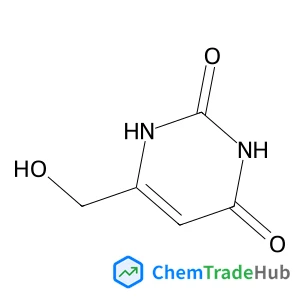
6-(Hydroxymethyl)uracil(CAS: 22126-44-9)
CAS Number
Related Products
![2-[(6-Methoxy-1H-benzimidazol-2-yl)methyl]-3,5-dimethyl-4(1H)-pyridinone](https://static.chemtradehub.com/structs/138/1384163-92-1-9a16.webp)
![N-[(2'-Cyano-4-biphenylyl)methyl]-N-pentanoyl-L-valine](https://static.chemtradehub.com/structs/443/443093-86-5-91f8.webp)
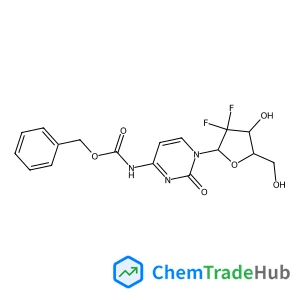
N-Carboxybenzyl Gemcitabine
CAS Number: 138685-83-3
![3-(6-Chloro-5-fluoropyrimidin-4-YL)-2-(2,4-difluorophenyl)-1-[1,2,4]triazol-1-YL-butan-2-OL](https://static.chemtradehub.com/structs/137/137234-75-4-eadc.webp)
![1-[[(2E)-3-Phenyl-2-propen-1-yl]oxy]naphthalene](https://static.chemtradehub.com/structs/109/1091626-77-5-7310.webp)
![5-[(2S)-2-{[2-(2-Ethoxyphenoxy)ethyl]amino}propyl]-2-methoxybenzenesulfonamide](https://static.chemtradehub.com/structs/106/106138-88-9-ea21.webp)
Other Suppliers for 6-(Hydroxymethyl)uracil





Basic Information
Molecular Formula
C5H6N2O3
Molecular Weight
142.11 g/mol
Chemical Identifiers
SMILES
C1=C(NC(=O)NC1=O)CO
InChIKey
JVZRLPFSWSIONO-UHFFFAOYSA-N
Database References
MDL Number
MFCD00797681
FAQ
6-(Hydroxymethyl)uracil (CAS: 22126-44-9) is subject to various regulatory guidelines including the Globally Harmonized System of Classification and Labelling of Chemicals (GHS) for hazardous product classification. It is also regulated under the Registration, Evaluation, Authorisation and Restriction of Chemicals (REACH) directive in the European Union. In the United States, it is overseen by the FDA and EPA for manufacturing, distribution, and use. Detailed documentation and compliance with these regulations are essential for handling and managing this compound.
There are several alternatives to 6-(Hydroxymethyl)uracil in synthesis, including other uracil derivatives such as 5-bromouracil and 5-(hydroxymethyl)uracil. Isomers like 4-hydroxymethyl-5-uracil can also be used as alternatives. In some cases, alternative reagents like thymidine or cytosine may serve as substitutes depending on the specific application. These alternatives offer similar functionalities but with different chemical properties.
The market for 6-(Hydroxymethyl)uracil (CAS: 22126-44-9) is primarily driven by its applications in pharmaceuticals and research. Recent research trends highlight its use as an intermediate in the synthesis of antiviral drugs and as a nucleoside for study in molecular biology. Market trends indicate an increasing demand for this compound due to its role in developing new therapeutic agents and its importance in academic research.
Waste containing 6-(Hydroxymethyl)uracil (CAS: 22126-44-9) should be managed according to local and international regulations. Proper collection and storage are essential, and the waste should be neutralized if necessary. Incineration is a common method for disposal, but it must be done in an appropriately licensed facility. Other options include professional waste disposal services that are equipped to handle hazardous chemicals. Environmental protection measures should be followed to prevent contamination of soil and water sources.
Safety Notice
Please verify product specifications and safety data before use. Contact the supplier for detailed safety information.
Always follow proper handling procedures
Contact Information
Contact Person
Wang Manager
3008058303@qq.com