



AD
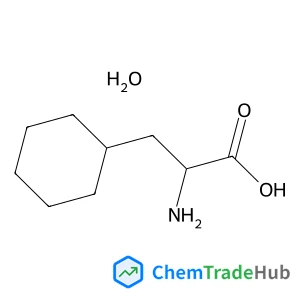
3-Cyclohexylalanine hydrate (1:1)(CAS: 307310-72-1)
CAS Number
Related Products
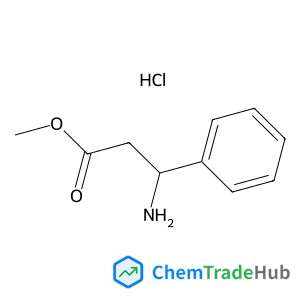
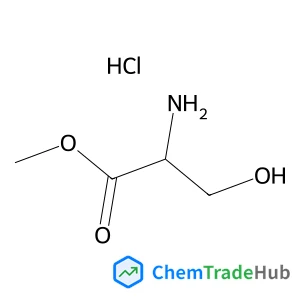
Methyl L-serinate hydrochloride (1:1)
CAS Number: 5680-80-8
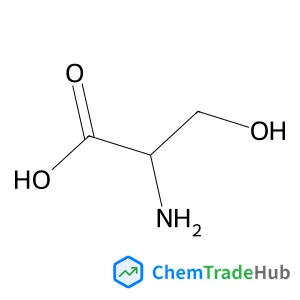
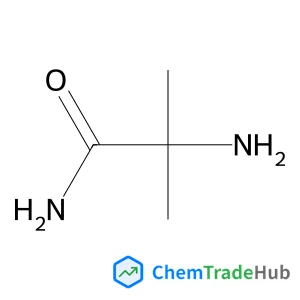
2-Amino-2-methylpropanamide
CAS Number: 16252-90-7
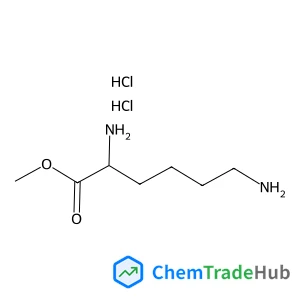
Methyl D-lysinate dihydrochloride
CAS Number: 67396-08-1
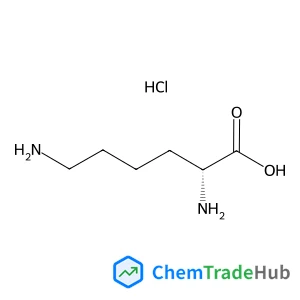
D-Lysine hydrochloride (1:1)
CAS Number: 7274-88-6
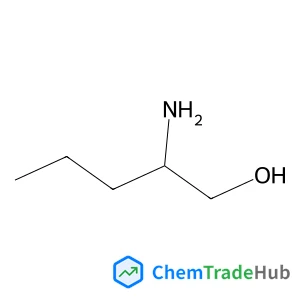
(2S)-2-Amino-1-pentanol
CAS Number: 22724-81-8
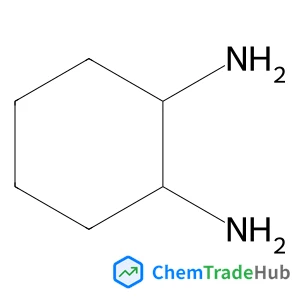
trans-1,2-Cyclohexanediamine
CAS Number: 1121-22-8
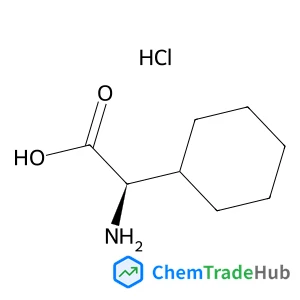
Other Suppliers for 3-Cyclohexylalanine hydrate (1:1)





Basic Information
Molecular Formula
C9H19NO3
Molecular Weight
189.26 g/mol
Physical Properties
Melting Point
234-237 °C (lit.)
Boiling Point
387°C at 760 mmHg
Flash Point
187.9°C
Chemical Identifiers
SMILES
C1CCC(CC1)CC(C(=O)O)N.O
InChIKey
HDJQIWAIDCEDEF-QRPNPIFTSA-N
Database References
MDL Number
MFCD00153484
FAQ
3-Cyclohexylalanine hydrate (1:1) is a crystalline solid with a molecular weight of approximately 230.32 g/mol. It has a water solubility of around 0.5 g/L at 25°C. Chemically, it is less reactive than its anhydrous counterpart, showing moderate reactivity with strong acids and bases. It exhibits good stability under standard storage conditions.
3-Cyclohexylalanine hydrate (1:1) is typically synthesized by reacting cyclohexylalanine with water in the presence of a mild acid catalyst. The reaction involves the hydrolysis of the ester bond to form the hydrate. The process yields high purity product with good selectivity, and the reaction is carried out under mild conditions to ensure a high yield.
3-Cyclohexylalanine hydrate (1:1) is used in the pharmaceutical industry for the development of custom peptides and amino acid-based drugs. It also finds applications in the polymer industry for the synthesis of biodegradable polymers. Additionally, it is used in the sensor and semiconductor industries for specific chemical sensing and electronic applications.
What precautions should be taken when handling 3-Cyclohexylalanine hydrate (1:1) (CAS: 307310-72-1)?
When handling 3-Cyclohexylalanine hydrate (1:1), it is important to use personal protective equipment (PPE) such as gloves, goggles, and a lab coat. Operations should be conducted in a well-ventilated area or a fume hood. Spills should be immediately cleaned up with appropriate absorbent materials. Refer to the Safety Data Sheet (SDS) for detailed handling and disposal information.
Safety Notice
Please verify product specifications and safety data before use. Contact the supplier for detailed safety information.
Always follow proper handling procedures

Contact Information
thbiochem@126.com
Mobile
15366717998
Telephone
15366717998
Fax
052386201489
Visit Website
https://www.thbiochem.com