



AD
(S)-(-)-3-Acetylthio-2-methylpropionic Acid(CAS: 76497-39-7)
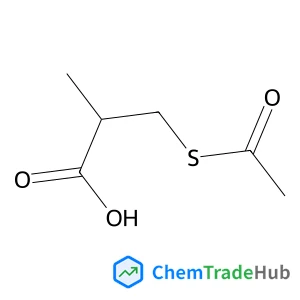
CAS Number
Related Products
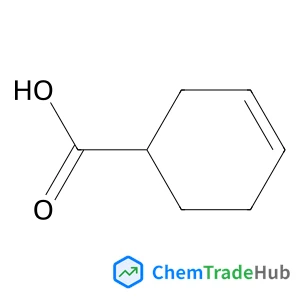
(1S)-3-Cyclohexene-1-carboxylic acid
CAS Number: 5708-19-0
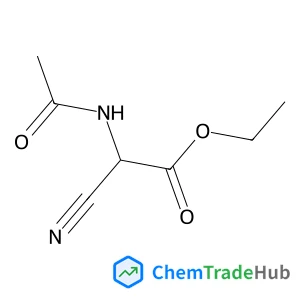
Ethyl Acetamidocyanoacetate
CAS Number: 4977-62-2
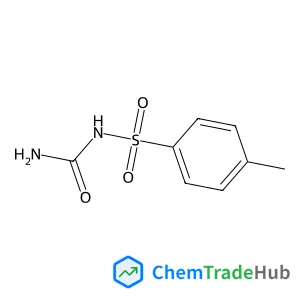
N-Carbamoyl-4-methylbenzenesulfonamide
CAS Number: 1694-06-0
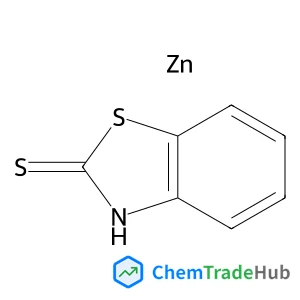
Zinc bis(1,3-benzothiazole-2-thiolate)
CAS Number: 155-04-4
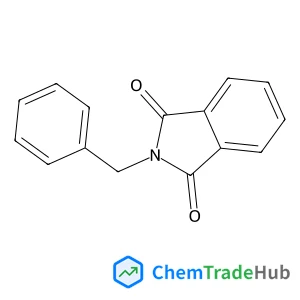
2-Benzyl-1H-isoindole-1,3(2H)-dione
CAS Number: 2142-01-0
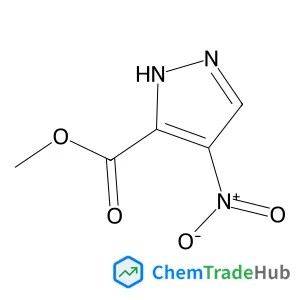
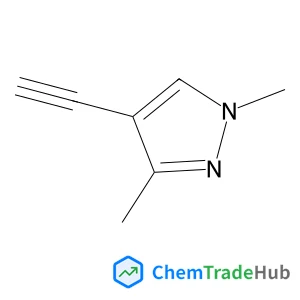
4-Ethynyl-1,3-dimethyl-1H-pyrazole
CAS Number: 61514-53-2
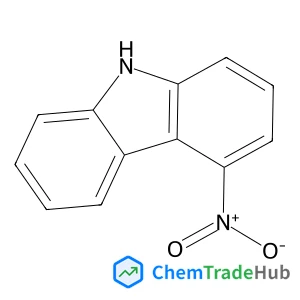
1-Nitro-9H-carbazole
CAS Number: 57905-76-7
Other Suppliers for (S)-(-)-3-Acetylthio-2-methylpropionic Acid




Basic Information
Molecular Formula
C6H10O3S
Molecular Weight
162.21 g/mol
Physical Properties
Melting Point
5 ºC
Boiling Point
120-132 ºC (1 mmHg)
Density
1.178
Flash Point
162 ºC
Chemical Identifiers
SMILES
CC(CSC(=O)C)C(=O)O
InChIKey
VFVHNRJEYQGRGE-SCSAIBSYSA-N
Database References
MDL Number
MFCD00038563
FAQ
Regulatory guidelines for (S)-(-)-3-Acetylthio-2-methylpropionic Acid (CAS: 76497-39-7) include GHS classification, which categorizes it as a skin and eye irritant. It is also subject to REACH regulations in the EU, requiring registration for substances above 1 tonne per annum. In the USA, the FDA may regulate its use in pharmaceuticals, and the EPA may manage its environmental release and disposal. Specific handling and disposal protocols must be followed to ensure compliance with local and international regulations.
Alternatives to (S)-(-)-3-Acetylthio-2-methylpropionic Acid (CAS: 76497-39-7) in synthesis include other thioesters and related compounds. Common alternatives include (R)-(+)-3-Acetylthio-2-methylpropionic Acid, its enantiomer, and other 2-methylpropionic acid derivatives. These alternatives can offer similar functional groups for diverse synthetic pathways, though specific choice depends on the desired product and reaction conditions.
The market for (S)-(-)-3-Acetylthio-2-methylpropionic Acid (CAS: 76497-39-7) is growing due to its applications in pharmaceuticals and as a chiral intermediate. Research trends focus on its use in drug development and as a building block for stereoselective synthesis. Emerging studies also explore its potential in biocatalysis and as a precursor for chiral compounds, driven by increasing demand for chiral drugs and sustainable chemistry practices.
Waste containing (S)-(-)-3-Acetylthio-2-methylpropionic Acid (CAS: 76497-39-7) should be collected in appropriate containers and stored in a well-ventilated area. For disposal, professional waste handling services should be used, especially if quantities exceed safe handling limits. Environmental precautions include minimizing spill risks and ensuring proper incineration or chemical treatment to prevent contamination of soil and water. Compliance with local waste management regulations is essential.
Safety Notice
Please verify product specifications and safety data before use. Contact the supplier for detailed safety information.
Always follow proper handling procedures
Contact Information
jacschem@163.com