



AD
Ethyl 2-chloro-4-methyl-1,3-thiazole-5-carboxylate(CAS: 7238-62-2)
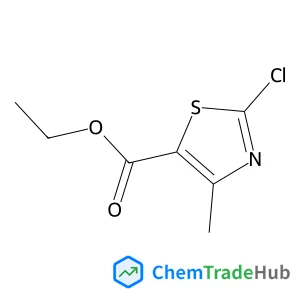
CAS Number
Related Products
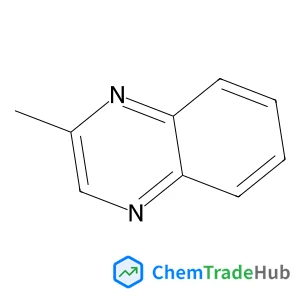
2-Methylquinoxaline
CAS Number: 7251-61-8
![4-(4-Pyridinyl)-4,5,6,7-tetrahydro-1H-imidazo[4,5-c]pyridine](https://static.chemtradehub.com/structs/727/7271-08-1-67c5.webp)
![2-Methylpyrazolo[1,5-a]pyrimidine](https://static.chemtradehub.com/structs/785/78562-32-0-122f.webp)
2-Methylpyrazolo[1,5-a]pyrimidine
CAS Number: 78562-32-0
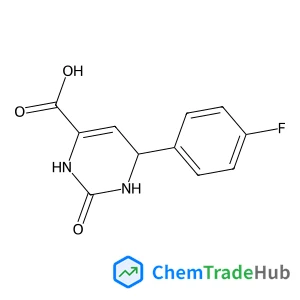
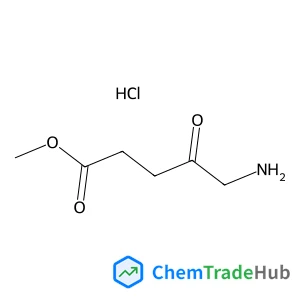
Methylaminolevulinate HCl
CAS Number: 79416-27-6
Other Suppliers for Ethyl 2-chloro-4-methyl-1,3-thiazole-5-carboxylate





Basic Information
Molecular Formula
C7H8ClNO2S
Molecular Weight
205.67 g/mol
Physical Properties
Melting Point
51 ºC
Boiling Point
116 ºC
Density
1.328±0.06 g/cm3 (20 ºC 760 Torr),
Flash Point
130.4±25.1 ºC,
Chemical Identifiers
SMILES
CCOC(=O)C1=C(N=C(S1)Cl)C
InChIKey
VUARUZUFHDNJSY-UHFFFAOYSA-N
Database References
MDL Number
MFCD02956798
FAQ
Ethyl 2-chloro-4-methyl-1,3-thiazole-5-carboxylate (CAS: 7238-62-2) is a crystalline compound with a molecular weight of approximately 222.05 g/mol. It has a solubility of 1.1 g/L in water and is slightly soluble in organic solvents. This compound is known for its reactivity, particularly in nucleophilic substitution reactions. It exhibits good stability under normal conditions but reacts readily with strong bases.
Ethyl 2-chloro-4-methyl-1,3-thiazole-5-carboxylate (CAS: 7238-62-2) is typically synthesized using a two-step process. In the first step, 2-chloro-4-methyl-1,3-thiazole reacts with ethyl acetoacetate in the presence of a base like sodium hydride to form the thiazole-5-carboxylic acid. In the second step, this acid is esterified with ethyl alcohol to yield the final compound. This process requires careful control of temperature and reaction conditions to ensure high yield and selectivity.
Ethyl 2-chloro-4-methyl-1,3-thiazole-5-carboxylate (CAS: 7238-62-2) is primarily used in the pharmaceutical industry for the synthesis of various drugs, particularly those targeting metabolic and inflammatory diseases. It is also used in the polymer industry as a monomer for the production of functional polymers. Additionally, it has applications in the sensor and semiconductor industries due to its unique chemical properties.
When handling Ethyl 2-chloro-4-methyl-1,3-thiazole-5-carboxylate (CAS: 7238-62-2), it is essential to use appropriate personal protective equipment (PPE), including gloves, goggles, and a lab coat. Work should be conducted in a well-ventilated area or a fume hood to minimize exposure to vapors. Spills should be cleaned up using appropriate materials and procedures, and the Material Safety Data Sheet (MSDS) should be consulted for specific handling guidelines. This compound may require storage under specific conditions to maintain its stability.
Safety Notice
Please verify product specifications and safety data before use. Contact the supplier for detailed safety information.
Always follow proper handling procedures