



AD
TRIPROPYLENE GLYCOL MONOMETHYL ETHER(CAS: 25498-49-1)
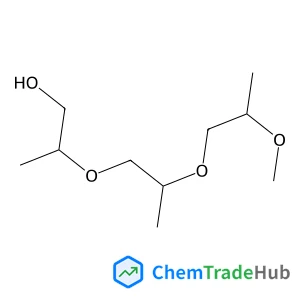
CAS Number
Related Products
![1-[(1-Butoxy-2-propanyl)oxy]-2-propanol](https://static.chemtradehub.com/structs/299/29911-28-2-847c.webp)
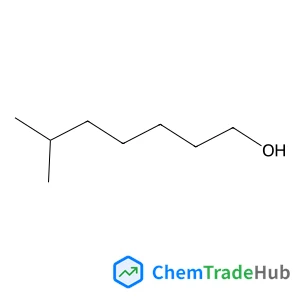
Isooctanol
CAS Number: 26952-21-6
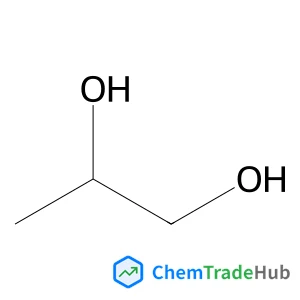
Propylene glycol
CAS Number: 57-55-6
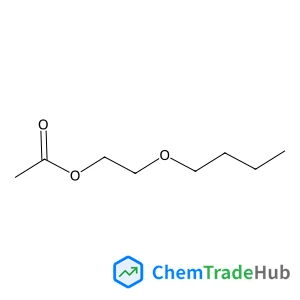
2-Butoxyethyl acetate
CAS Number: 112-07-2
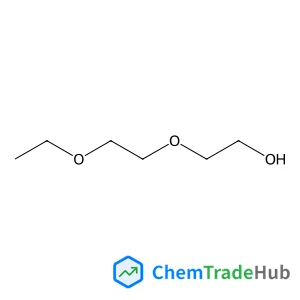
2-(2-Ethoxyethoxy)ethanol
CAS Number: 111-90-0
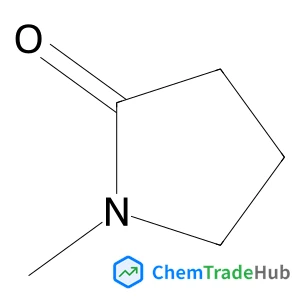
1-Methyl-2-pyrrolidinone
CAS Number: 872-50-4
![1-({1-[(1-Butoxy-2-propanyl)oxy]-2-propanyl}oxy)-1-propanol](https://static.chemtradehub.com/structs/559/55934-93-5-ccf2.webp)
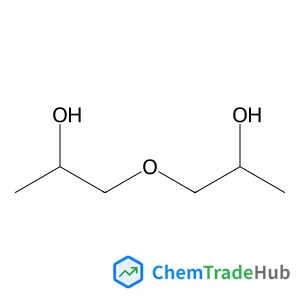
1,1'-Oxydi(2-propanol)
CAS Number: 110-98-5
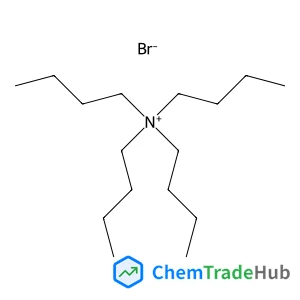
N,N,N-Tributyl-1-butanaminium bromide
CAS Number: 10549-76-5
Other Suppliers for TRIPROPYLENE GLYCOL MONOMETHYL ETHER






Basic Information
Molecular Formula
C10H22O4
Molecular Weight
206.28 g/mol
EINECS
247-045-4
Physical Properties
Melting Point
-79°C(lit.)
Boiling Point
100 °C2 mm Hg(lit.)
Density
0.968 g/mL at 25 °C
Flash Point
>230 °F
Water Solubility
Soluble in water
Chemical Identifiers
SMILES
O(C([H])([H])C([H])(C([H])([H])[H])OC([H])([H])[H])C([H])(C([H])([H])[H])C([H])([H])OC([H])(C([H])([H])[H])C([H])([H])O[H]
InChIKey
WAEVWDZKMBQDEJ-UHFFFAOYSA-N
Database References
MDL Number
MFCD00059142
FAQ
TRIPROPYLENE GLYCOL MONOMETHYL ETHER (CAS: 25498-49-1) is a colorless, sweet-smelling liquid with a molecular weight of approximately 180.26 g/mol. It is highly miscible with water and other organic solvents. Chemically, it is reactive towards acids and bases, and it can undergo etherification and esterification reactions. Its physical properties include a boiling point of 153°C and a density of about 0.91 g/cm³.
TRIPROPYLENE GLYCOL MONOMETHYL ETHER (CAS: 25498-49-1) is synthesized via the reaction of propylene oxide with methanol in the presence of a strong acid catalyst, such as sulfuric acid. The process involves the methylation of propylene glycol, followed by etherification. The yield is typically high, and the selectivity towards the desired ether is good due to the mild reaction conditions.
TRIPROPYLENE GLYCOL MONOMETHYL ETHER (CAS: 25498-49-1) is widely used in the pharmaceutical, polymer, and sensor industries. It serves as a co-solvent in pharmaceutical formulations, a plasticizer in polymers, and a component in sensor solutions. Additionally, it finds application in semiconductor manufacturing as a cleaning agent due to its low toxicity and good solvency properties.
When handling TRIPROPYLENE GLYCOL MONOMETHYL ETHER (CAS: 25498-49-1), appropriate personal protective equipment (PPE) should be worn, including gloves, safety goggles, and a laboratory coat. It should be stored in a cool, well-ventilated area away from heat sources and incompatible materials. Fume hoods should be used when mixing or handling this compound. In case of a spill, it should be contained and cleaned up with appropriate absorbent materials. It is advisable to consult the Safety Data Sheet (SDS) for detailed handling and emergency procedures.
Safety Notice
Please verify product specifications and safety data before use. Contact the supplier for detailed safety information.
Always follow proper handling procedures
Contact Information
Contact Person
Yin Hao
1512631840@qq.com