



AD
1-(3,4-Dichlorophenyl)-2-oxopyrrolidine-4-carboxylic acid(CAS: 91064-25-4)
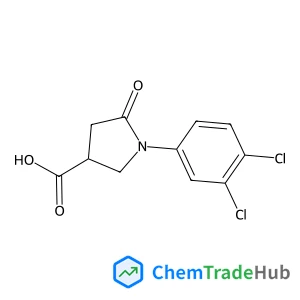
CAS Number
Related Products
![3-[4-Fluoro-2-(trifluoromethyl)phenyl]propanoic acid](https://static.chemtradehub.com/structs/916/916420-73-0-ee37.webp)
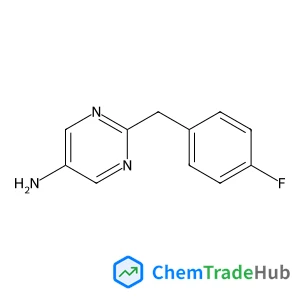
2-(4-Fluorobenzyl)-5-pyrimidinamine
CAS Number: 1152557-45-3
![Methyl [4-cyano-3-(3-thienyl)-1H-pyrazol-1-yl]acetate](https://static.chemtradehub.com/structs/209/2098083-01-1-68bf.webp)
![3-[4-Cyclopentyl-5-(methylsulfanyl)-4H-1,2,4-triazol-3-yl]-1-propanamine hydroiodide (1:1)](https://static.chemtradehub.com/structs/119/1197609-28-1-10f2.webp)
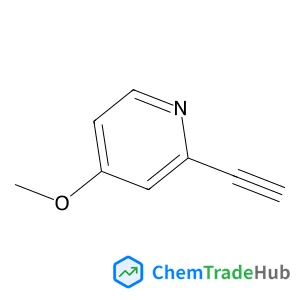
2-Ethynyl-4-methoxypyridine
CAS Number: 1211533-95-7
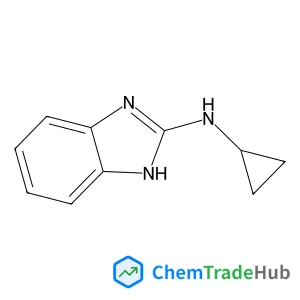
N-Cyclopropyl-1H-benzimidazol-2-amine
CAS Number: 941266-08-6
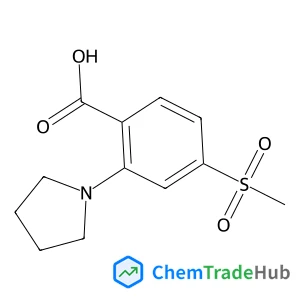
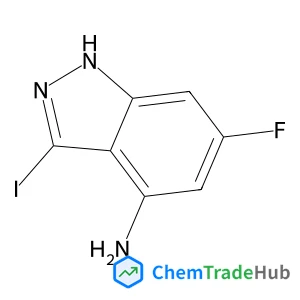
4-AMINO-6-FLUORO-3-IODO (1H)INDAZOLE
CAS Number: 885523-02-4
Other Suppliers for 1-(3,4-Dichlorophenyl)-2-oxopyrrolidine-4-carboxylic acid






Basic Information
Molecular Formula
C11H9Cl2NO3
Molecular Weight
274.1 g/mol
Chemical Identifiers
SMILES
C1C(CN(C1=O)C2=CC(=C(C=C2)Cl)Cl)C(=O)O
InChIKey
WMACFMOMYRKMOJ-UHFFFAOYSA-N
Database References
MDL Number
MFCD00665764
FAQ
1-(3,4-Dichlorophenyl)-2-oxopyrrolidine-4-carboxylic acid is a white to off-white crystalline solid with a molecular weight of approximately 280.03 g/mol. It has a low solubility in water but is more soluble in organic solvents like methanol and acetonitrile. This compound is known for its stability, but it can undergo hydrolysis under basic conditions. It is also prone to esterification and amide formation reactions.
1-(3,4-Dichlorophenyl)-2-oxopyrrolidine-4-carboxylic acid can be synthesized via a multi-step process involving the chlorination of a phenol followed by the formation of a pyrrolidine ring and the introduction of a carboxylic acid functionality. Commonly, this involves the use of acyl chlorides and amines as key reagents, with careful control of reaction conditions to ensure selectivity and high yield.
1-(3,4-Dichlorophenyl)-2-oxopyrrolidine-4-carboxylic acid is used in the pharmaceutical industry for the synthesis of various medicinal compounds. It is also utilized in the polymer industry for the development of special polymers with enhanced properties, and in the sensor and semiconductor industries for electronic applications requiring specific chemical functionalities.
When handling 1-(3,4-Dichlorophenyl)-2-oxopyrrolidine-4-carboxylic acid, it is essential to wear appropriate personal protective equipment (PPE), including gloves, goggles, and a lab coat. Handling should be conducted in a fume hood to minimize inhalation risks. Spills should be cleaned up immediately using appropriate absorbent materials, and the area should be ventilated. Always refer to the Safety Data Sheet (SDS) for detailed safety information and emergency procedures.
Safety Notice
Please verify product specifications and safety data before use. Contact the supplier for detailed safety information.
Always follow proper handling procedures
Contact Information
3641133981@qq.com