



AD
Dicyclopentyldichlorosilane(CAS: 139147-73-2)
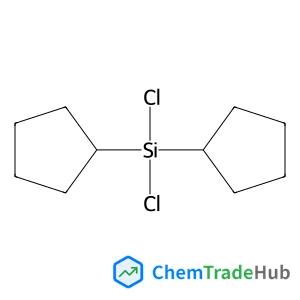
CAS Number
Related Products
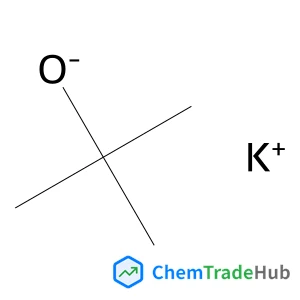
Potassium 2-methyl-2-propanolate
CAS Number: 865-47-4
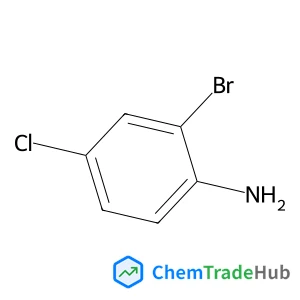
2-Bromo-4-chloroaniline
CAS Number: 873-38-1
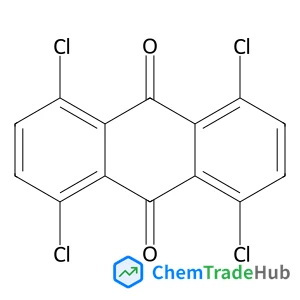
1,4,5,8-Tetrachloro-9,10-anthraquinone
CAS Number: 81-58-3
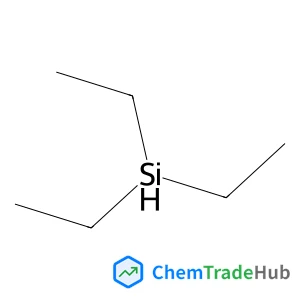
Triethylsilane
CAS Number: 617-86-7
![7-Methylimidazo[1,2-a]pyridine-2-carboxylic acid](https://static.chemtradehub.com/structs/803/80353-94-2-2ec9.webp)
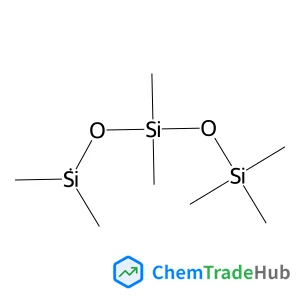
1,1,1,3,3,5,5-Heptamethyltrisiloxane
CAS Number: 2895-07-0
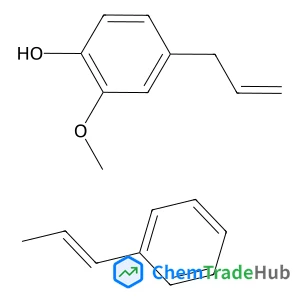
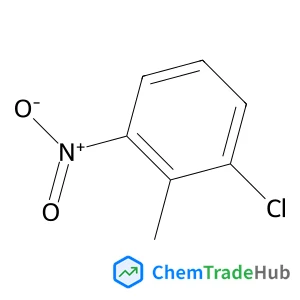
1-Chloro-2-methyl-3-nitrobenzene
CAS Number: 83-42-1
![3-[(Trimethylsilyl)ethynyl]pyridine](https://static.chemtradehub.com/structs/806/80673-00-3-70bc.webp)
3-[(Trimethylsilyl)ethynyl]pyridine
CAS Number: 80673-00-3
Other Suppliers for Dicyclopentyldichlorosilane




Basic Information
Molecular Formula
C10H18Cl2Si
Molecular Weight
237.25 g/mol
Physical Properties
Boiling Point
105-107 ºC (10 Torr)
Density
1.110 g/cm3
Flash Point
108.9±14.1 ºC,
Chemical Identifiers
SMILES
C1CCC(C1)[Si](C2CCCC2)(Cl)Cl
InChIKey
DRMVGLWQJKLGKR-UHFFFAOYSA-N
Database References
MDL Number
MFCD01320947
FAQ
Dicyclopentyldichlorosilane (CAS: 139147-73-2) is regulated under the Globally Harmonized System of Classification and Labelling of Chemicals (GHS), which includes specific hazard classifications and labeling requirements. Additionally, it is subject to the Registration, Evaluation, Authorisation and Restriction of Chemicals (REACH) regulations in the European Union, which require detailed safety assessments and potential restrictions. In the United States, the Material Safety Data Sheet (MSDS) or Safety Data Sheet (SDS) should comply with Occupational Safety and Health Administration (OSHA) and Environmental Protection Agency (EPA) guidelines.
Alternatives to Dicyclopentyldichlorosilane (CAS: 139147-73-2) include other dichlorosilane derivatives such as trichlorosilane or hexachlorosilane, which are commonly used as precursors in silicon chemistry. Other alternatives may include siloxanes or silicones, which can serve similar roles in some synthesis reactions. The choice of alternative depends on the specific reaction conditions and desired product properties.
The market for Dicyclopentyldichlorosilane (CAS: 139147-73-2) is closely tied to its applications in the production of organosilicon compounds and polymers. Research trends focus on developing more efficient and environmentally friendly synthesis methods, as well as exploring new uses in electronics and coatings. There is also growing interest in sustainable alternatives to traditional silicon-containing compounds.
Waste containing Dicyclopentyldichlorosilane (CAS: 139147-73-2) should be collected in appropriate containers and stored in a well-ventilated area away from ignition sources. It should be disposed of according to local regulations and preferably through a licensed hazardous waste disposal service. Incineration may be an option, but it must be conducted in a controlled and safe manner. Environmental protection measures include ensuring proper containment to prevent spills and minimizing the release of chlorinated compounds into the environment.
Safety Notice
Please verify product specifications and safety data before use. Contact the supplier for detailed safety information.
Always follow proper handling procedures
Contact Information
sales@worldyachem.com
Telephone
86-021-56795718
Fax
86-021-56795266
Visit Website
https://www.worldyachem.com