



AD
N-Biotinylcaproylaminocaproic Acid(CAS: 89889-51-0)
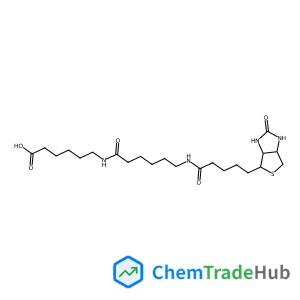
CAS Number
Related Products
![(3Z,6R,14aR,14bR)-3-Ethylidene-6-hydroxy-6-methyl-5-methylene-3,4,5,6,9,11,13,14,14a,14b-decahydro[1,6]dioxacyclododecino[2,3,4-gh]pyrrolizine-2,7-dione 12-oxide](https://static.chemtradehub.com/structs/387/38710-26-8-724c.webp)
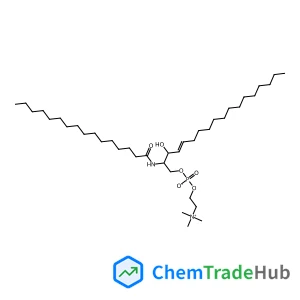
Sphingomyelin d18:1-C16:0
CAS Number: 383907-87-7
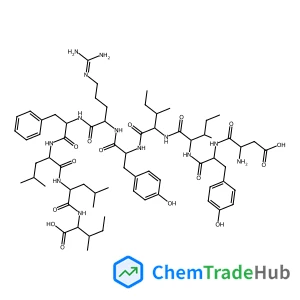
VP7 (31-40) peptide
CAS Number: 152687-39-3
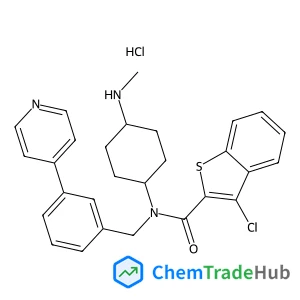
SAG hydrochloride
CAS Number: 2095432-58-7
![(3S)-2-[(2S)-2-[[(2S)-1-ethoxy-1-oxo-4-phenylbutan-2-yl]amino]propanoyl]-6,7-dimethoxy-3,4-dihydro-1H-isoquinoline-3-carboxylic acid;hydrochloride](https://static.chemtradehub.com/structs/825/82586-52-5-119f.webp)
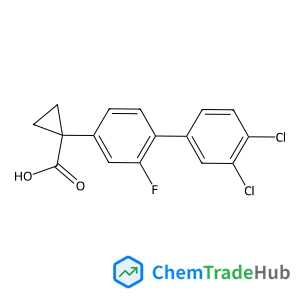
Temporins; Temporin G
CAS Number: 188713-78-2
![2-Hydroxy-5-[(E)-2-(4-nitrophenyl)diazen-1-yl]benzoic acid](https://static.chemtradehub.com/structs/224/2243-76-7-ec6a.webp)
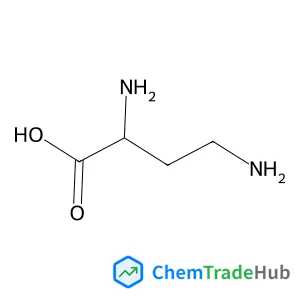
(2S)-2,4-diaminobutanoic acid
CAS Number: 1758-80-1
Other Suppliers for N-Biotinylcaproylaminocaproic Acid




Basic Information
Molecular Formula
C22H38N4O5S
Molecular Weight
470.64 g/mol
Physical Properties
Melting Point
185-195°C
Density
1.168±0.06 g/cm3 (20 ºC 760 Torr),
Chemical Identifiers
SMILES
C1C2C(C(S1)CCCCC(=O)NCCCCCC(=O)NCCCCCC(=O)O)NC(=O)N2
InChIKey
SRKRKWYAHKIBEW-FIKGOQFSSA-N
Database References
MDL Number
MFCD06796002
FAQ
N-Biotinylcaproylaminocaproic Acid is a solid with a crystalline form. Its molecular weight is approximately 562.4 g/mol. It has low solubility in water but good solubility in organic solvents such as DMSO and acetonitrile. The compound is moderately reactive, particularly towards nucleophiles and bases. It is stable under normal conditions but should be stored in a cool, dry place away from direct sunlight.
N-Biotinylcaproylaminocaproic Acid is synthesized via a multi-step process. Commonly, it involves the coupling of biotin to caproylaminocaproic acid using a carbodiimide coupling agent, such as EDAC. The reaction is typically carried out in the presence of a water-miscible solvent like DMF, with good yield and high selectivity. The product is then purified by column chromatography or recrystallization.
N-Biotinylcaproylaminocaproic Acid is primarily used in pharmaceuticals for drug conjugation and in biotechnology for immobilizing biomolecules. It is also utilized in the polymer industry for modifying surfaces and in the semiconductor industry for functionalizing substrates. Additionally, it can be found in sensor technology for biofunctionalization applications.
What precautions should be taken when handling N-Biotinylcaproylaminocaproic Acid (CAS: 89889-51-0)?
When handling N-Biotinylcaproylaminocaproic Acid, proper personal protective equipment (PPE) should be worn, including gloves, goggles, and a lab coat. The compound should be handled in a fume hood due to its reactivity. In case of a spill, it should be cleaned up immediately using appropriate absorbent materials. Safety data sheets (SDS) should be consulted for detailed safety information and emergency procedures. Storage should be in a cool, dry place away from direct sunlight and heat sources.
Safety Notice
Please verify product specifications and safety data before use. Contact the supplier for detailed safety information.
Always follow proper handling procedures
Contact Information
Contact Person
Gong Siyu
3193328036@qq.com
Mobile
17801761073
Telephone
010-50973130
Visit Website
https://www.solarbio.comAddress
Beijing Solabio Technology Co., Ltd.