



AD
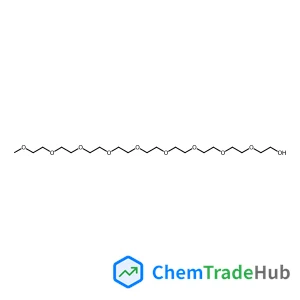
2,5,8,11,14,17,20,23,26-Nonaoxaoctacosan-28-ol(CAS: 6048-68-6)
CAS Number
Related Products
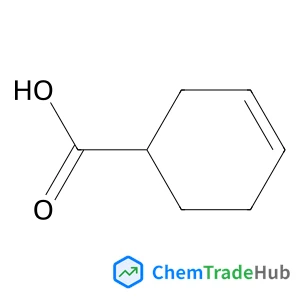
(1S)-3-Cyclohexene-1-carboxylic acid
CAS Number: 5708-19-0
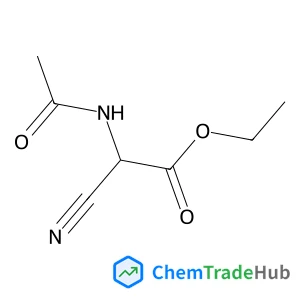
Ethyl Acetamidocyanoacetate
CAS Number: 4977-62-2
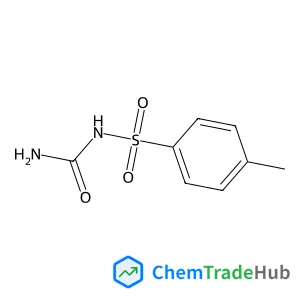
N-Carbamoyl-4-methylbenzenesulfonamide
CAS Number: 1694-06-0
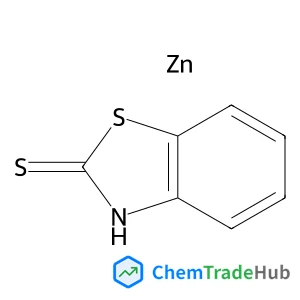
Zinc bis(1,3-benzothiazole-2-thiolate)
CAS Number: 155-04-4
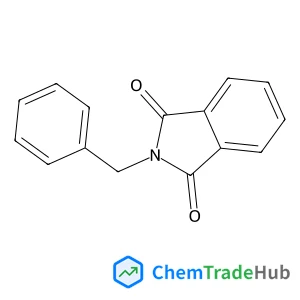
2-Benzyl-1H-isoindole-1,3(2H)-dione
CAS Number: 2142-01-0
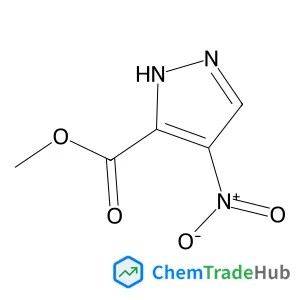
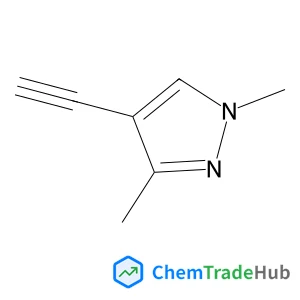
4-Ethynyl-1,3-dimethyl-1H-pyrazole
CAS Number: 61514-53-2
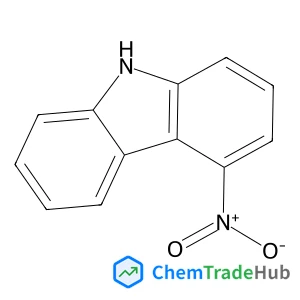
1-Nitro-9H-carbazole
CAS Number: 57905-76-7
Other Suppliers for 2,5,8,11,14,17,20,23,26-Nonaoxaoctacosan-28-ol






Basic Information
Molecular Formula
C19H40O10
Molecular Weight
428.52 g/mol
Physical Properties
Melting Point
14°C(lit.)
Density
1.10
Chemical Identifiers
SMILES
COCCOCCOCCOCCOCCOCCOCCOCCOCCO
InChIKey
VVHAVLIDQNWEKF-UHFFFAOYSA-N
Database References
MDL Number
MFCD06797148
FAQ
2,5,8,11,14,17,20,23,26-Nonaoxaoctacosan-28-ol is a white crystalline solid with a high molecular weight of approximately 692.84 g/mol. It is poorly soluble in water but soluble in organic solvents like ethanol and acetone. This compound has limited reactivity under normal conditions, but caution is advised during synthesis due to its complex structure.
2,5,8,11,14,17,20,23,26-Nonaoxaoctacosan-28-ol is synthesized through a multi-step process involving the use of Wittig reagents and condensation reactions. The synthesis typically requires careful control of reaction conditions to achieve high yields and selectivity. Catalysts such as triphenylphosphine are often used to facilitate the reaction.
2,5,8,11,14,17,20,23,26-Nonaoxaoctacosan-28-ol is used in various industries, particularly in pharmaceuticals for certain specialized applications. It may also find use in polymer chemistry for the development of novel materials. Its complex structure makes it suitable for advanced research and development in analytical chemistry and material science.
When handling 2,5,8,11,14,17,20,23,26-Nonaoxaoctacosan-28-ol, it is essential to wear appropriate personal protective equipment (PPE) such as gloves, goggles, and a lab coat. Ensure that all work is conducted in a well-ventilated area or fume hood to minimize inhalation risks. Spills should be cleaned up immediately using appropriate absorbents, and the area should be thoroughly flushed with water. Always consult the Safety Data Sheet (SDS) for detailed handling instructions.
Safety Notice
Please verify product specifications and safety data before use. Contact the supplier for detailed safety information.
Always follow proper handling procedures
Contact Information
jacschem@163.com