



AD
Molybdenyl acetylacetonate(CAS: 17524-05-9)
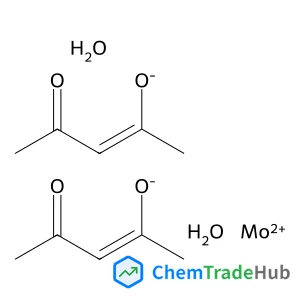
CAS Number
Related Products
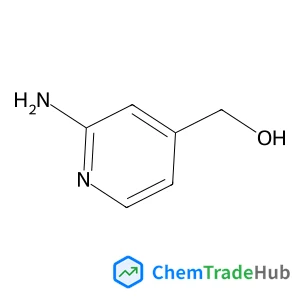
(2-Amino-4-pyridinyl)methanol
CAS Number: 105250-17-7
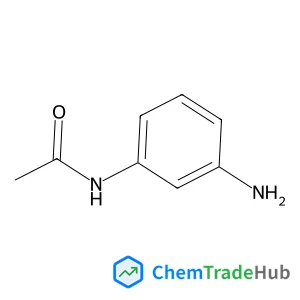
N-(3-Aminophenyl)acetamide
CAS Number: 102-28-3
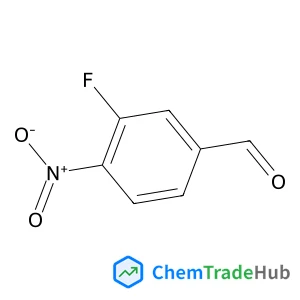
3-Fluoro-4-nitrobenzaldehyde
CAS Number: 160538-51-2
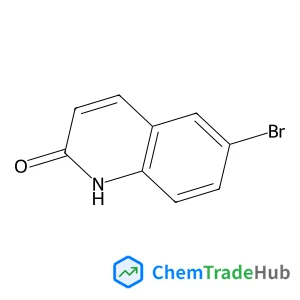
6-Bromo-2(1H)-quinolinone
CAS Number: 1810-66-8
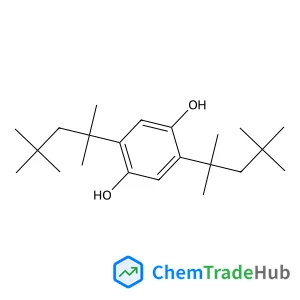
![N,N-Dimethyl-N-[3-(trimethoxysilyl)propyl]-1-octadecanaminium chloride](https://static.chemtradehub.com/structs/276/27668-52-6-f54e.webp)
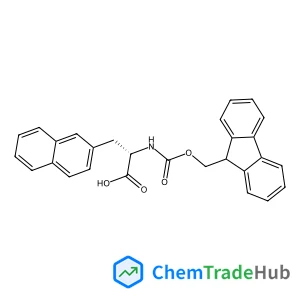
Fmoc-2-Nal-OH
CAS Number: 112883-43-9
Other Suppliers for Molybdenyl acetylacetonate





Basic Information
Molecular Formula
C10H18MoO6
Molecular Weight
330.21 g/mol
EINECS
241-522-0
Physical Properties
Melting Point
184 °C (dec.) (lit.)
Density
1,64 g/cm3
Water Solubility
8.52 g/100 mL (20 ºC)
Chemical Identifiers
SMILES
[O-]/C(=C\C(=O)C)/C.[O-]/C(=C\C(=O)C)/C.O.O.[Mo+2]
InChIKey
SKMUJBBRXZPAJY-VGKOASNMSA-L
Database References
MDL Number
MFCD06252274
FAQ
Molybdenyl acetylacetonate (CAS: 17524-05-9) is an inorganic compound with a crystalline structure. Its molecular weight is approximately 388.13 g/mol. This compound is poorly soluble in water but readily soluble in organic solvents such as methanol and acetone. It shows moderate reactivity, particularly in coordination chemistry and catalysis applications.
Molybdenyl acetylacetonate is typically synthesized by reacting molybdenum trioxide (MoO3) with acetylacetonate in a solvent like dimethylformamide (DMF) at elevated temperatures. This process involves the coordination of acetylacetonate to the molybdenum center, yielding a stable complex. The yield is generally high, and the method is known for its reproducibility and simplicity.
Molybdenyl acetylacetonate (CAS: 17524-05-9) is used in various industries, including catalysis for hydrogenation reactions, as a precursor in the synthesis of molybdenum-based materials, and in the development of sensors for detecting certain gases and metals. It also plays a role in the formulation of certain pharmaceuticals and as a co-catalyst in organic synthesis.
When handling Molybdenyl acetylacetonate (CAS: 17524-05-9), it is essential to use personal protective equipment (PPE) such as gloves, goggles, and a laboratory coat. Work should be conducted in a well-ventilated area or a fume hood to minimize inhalation risks. Spills should be cleaned up using appropriate methods and gloves should be changed after handling. Always consult the Safety Data Sheet (SDS) for detailed information on handling and storage.
Safety Notice
Please verify product specifications and safety data before use. Contact the supplier for detailed safety information.
Always follow proper handling procedures
Contact Information
Contact Person
Manager Gong
3663049642@qq.com