



AD
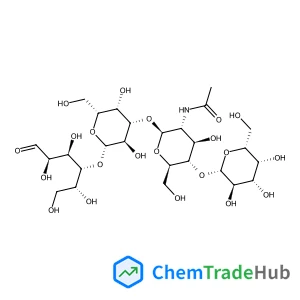
Lacto-N-neotetraose(CAS: 13007-32-4)
CAS Number
Related Products
![1-[4-Amino-3-chloro-5-(trifluoromethyl)phenyl]-2-[(2-methyl-2-propanyl)amino]ethanol hydrochloride (1:1)](https://static.chemtradehub.com/structs/542/54240-36-7-06e4.webp)
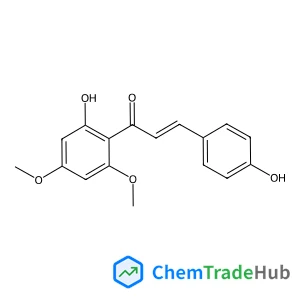
2',4-Dihydroxy-4',6'-dimethoxychalcone
CAS Number: 37308-75-1
![8-({(3R,4R,5S)-3-[(4,4-Difluorocyclohexyl)methoxy]-5-methoxy-4-piperidinyl}amino)-3-methyl-5-(5-methyl-3-pyridinyl)-1,7-naphthyridin-2(1H)-one](https://static.chemtradehub.com/structs/199/1997369-78-4-ea15.webp)
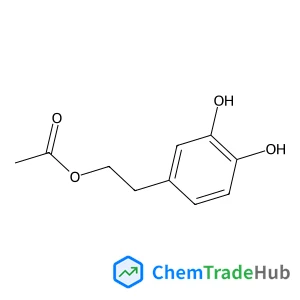
2-(3,4-Dihydroxyphenyl)ethyl acetate
CAS Number: 69039-02-7
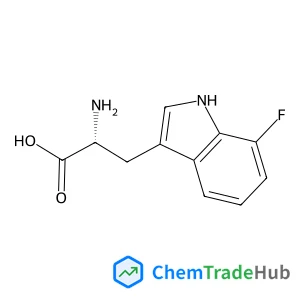
7-Fluorotryptophan
CAS Number: 138514-98-4
![5-[(1S)-1-{(1R,2R)-2-[(1R,3R)-2,2-Dimethyl-3-(3-oxobutyl)cyclopropyl]-1-methyl-3-oxocyclopentyl}-3-methylbutyl]-2,4,6-trihydroxyisophthalaldehyde](https://static.chemtradehub.com/structs/221/221899-21-4-fc5c.webp)
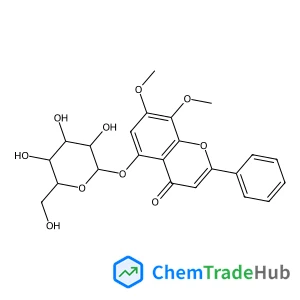
Andrographidine C
CAS Number: 113963-39-6
![(2E)-3-(6-Bromo-2-pyridinyl)-2-cyano-N-[(1S)-1-phenylethyl]acrylamide](https://static.chemtradehub.com/structs/857/857064-38-1-2c6b.webp)
Other Suppliers for Lacto-N-neotetraose





Basic Information
Molecular Formula
C26H45NO21
Molecular Weight
707.63 g/mol
Physical Properties
Boiling Point
1173.6±65.0 °C(Predicted)
Density
1.72±0.1 g/cm3(Predicted)
Chemical Identifiers
SMILES
OC[C@H]([C@H]([C@@H]([C@H](C=O)O)O)O[C@@H]1O[C@H](CO)[C@@H]([C@@H]([C@H]1O)O[C@@H]1O[C@H](CO)[C@H]([C@@H]([C@H]1NC(=O)C)O)O[C@@H]1O[C@H](CO)[C@@H]([C@@H]([C@H]1O)O)O)O)O
InChIKey
RBMYDHMFFAVMMM-PLQWBNBWSA-N
Database References
MDL Number
MFCD00467190
FAQ
Lacto-N-neotetraose is a monosaccharide with the molecular formula C12H22O11. It crystallizes in the form of white, odorless needles. The compound has a high molecular weight of approximately 342.29 g/mol. It is poorly soluble in water but dissolves readily in hot water. Lacto-N-neotetraose is reactive and can undergo various chemical transformations, including reduction and esterification.
Lacto-N-neotetraose can be synthesized via enzymatic methods using lactose as a starting material. Specific enzymes like β-galactosidase and β-galactosidase from Bacteroides thetaiotaomicron are commonly used. The synthesis process yields Lacto-N-neotetraose with good selectivity and high yield, typically over 90%.
Lacto-N-neotetraose is primarily used in the pharmaceutical industry for its prebiotic properties, enhancing the growth of beneficial bacteria in the gut. It is also utilized in the food industry as a natural sweetener and in the production of infant formula. Additionally, it has applications in the cosmetic industry for its potential in skin care products.
When handling Lacto-N-neotetraose, it is crucial to wear appropriate personal protective equipment (PPE) including gloves, goggles, and a lab coat. Work in a well-ventilated area or a fume hood to avoid inhalation of any airborne particles. Spills should be cleaned up using appropriate absorbent materials, and the area should be decontaminated. Always refer to the Safety Data Sheet (SDS) for detailed handling and emergency procedures.
Safety Notice
Please verify product specifications and safety data before use. Contact the supplier for detailed safety information.
Always follow proper handling procedures
Contact Information
2851167780@qq.com
Mobile
13348961525
Fax
028-81705658
Visit Website
https://www.weikeqi-biotech.com